

The Tiger's Wife
Téa Obreht · b. 1985 · Serbia / United States
Why it matters
A young doctor in an unnamed Balkan country investigates her grandfather's death, braiding in his own folktales of a deathless man and a tiger that bonded with a deaf-mute woman during wartime. A dazzling debut, published when Obreht was twenty-five, that treats war and folklore as two sides of one grief.
At a glance
Three interwoven timelines and folkloric digression ask for attentive tracking.
Deep dive
Two folktales her grandfather carried his whole life, the deathless man and the tiger's wife, turn out to be doing the same work as the war itself: teaching a family how to survive what cannot be explained.
Written for readers who have finished the book. No plot recap, and nothing here is safe to read first.
Themes & symbolism
Natalia's search for the circumstances of her grandfather's last days runs parallel, chapter by chapter, to the two stories he told her throughout her childhood, and Obreht structures the novel so the present-day investigation and the inherited folklore explain each other rather than simply alternating. The deathless man, Gavran Gaile, claims to be Death's nephew and cannot himself die; he recurs across her grandfather's whole life, at the exact moments history turns violent around him, offering a coffee-ground reading of the future and a strange, weary companionship that has nothing to do with comfort. He is not a symbol of hope so much as a working theory: that a person can carry on inside a catastrophe too large to make sense of by finding, or inventing, one impossible thing that stays constant.
The second story, the one that gives the book its title, returns to Galina during the Second World War, when a tiger escapes the bombed Belgrade zoo and wanders into the countryside, eventually attaching itself to Luka the butcher's deaf-mute wife, a woman the village had already marked as strange before the tiger ever arrived. Obreht never resolves whether the bond between the woman and the animal is companionship, projection, or a village's need for someone to blame; what she is precise about is the mechanism of the fear itself, how quickly a starving, terrified community turns a silent woman and a lost animal into a single, monstrous rumor it can hunt.
The Diggers in the Vineyard
A family in a nearby village spends the novel's present timeline exhuming a vineyard, convinced that a relative's improperly buried remains, a man who died during the recent war and was never given last rites, are the reason for the sickness plaguing their household. Natalia, a doctor trained in evidence and diagnosis, ends up assisting the dig instead of dismissing it, and Obreht uses the parallel deliberately: her grandfather, also a physician his entire career, never once let his rational vocation crowd out his belief in the deathless man. The novel's real argument is that this isn't a contradiction particular to the Balkans or to superstition, it's what any family does with an unburied, unexplained death, medical training included.
The last seal: what actually happens, and why it lands the way it does.
The ending, explained
Natalia eventually learns that her grandfather, already dying of cancer he had hidden from the family, made one last trip to see Gavran Gaile before succumbing alone in the border town of Zdrevkov, still carrying the copy of The Jungle Book that the deathless man had given him decades earlier. She recovers his belongings and brings the book home to her grandmother, less a resolution than a formal handing-over of the story itself, the same way her grandfather passed it to her. In the vineyard, the diggers finally recover the bones they were searching for and rebury them properly, and the household's sense of its own luck turns. Neither ending offers proof that the folklore was ever literally true. What Obreht insists on instead is that treating the story as true, giving it a body to bury or a book to carry home, is the only remedy either family has for a war that left too many deaths without an explanation attached.
Where to go next
 Shehan Karunatilaka · 2022The Seven Moons of Maali AlmeidaLvl 6Fast paced
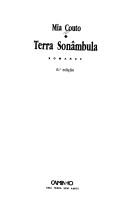 Mia Couto · 1992Sleepwalking LandLvl 7Slow burn
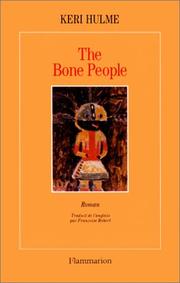 Keri Hulme · 1984The Bone PeopleLvl 7Slow burn
 Jesmyn Ward · 2017Sing, Unburied, SingLvl 5Medium pace
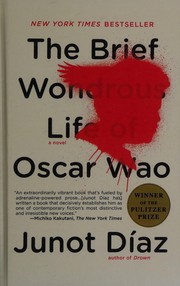 Junot Díaz · 2007The Brief Wondrous Life of Oscar WaoLvl 7Fast paced
 Ludmila Ulitskaya · 2010The Big Green TentLvl 5Medium pace