
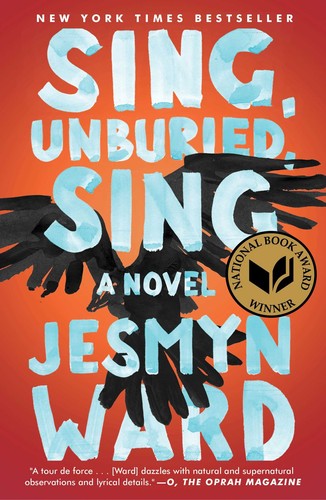
Sing, Unburied, Sing
Jesmyn Ward · b. 1977 · United States
Why it matters
A Mississippi boy, his addict mother, and the ghost of a boy who died at Parchman Farm ride together to collect his father from prison. Ward's second National Book Award winner sets Faulkner's ghosts loose in the contemporary Gulf South.
At a glance
Ghost narrators and a road-trip structure interweave myth with realism.
Deep dive
Why a ghost decades older than Jojo attaches himself to a car crossing Mississippi, and what kind of truth-telling this novel's title insists the dead are actually owed.
Written for readers who have finished the book. No plot recap, and nothing here is safe to read first.
Themes & symbolism
Ward restages Faulkner's haunted South but puts a Black family at its center instead of its margins: Jojo, thirteen and doing the actual work of parenting his little sister, absorbs his grandfather Pop's stories about Parchman Farm as inheritance, the way Faulkner's sons inherit land and guilt. Leonie is the novel's hardest case — she can see her dead brother Given, but only when high, and she can't see Richie at all, a blindness the book treats as moral rather than supernatural. Care, in this family, doesn't run in a straight line down from parent to child; it detours around Leonie entirely and pools instead in Pop and Mam, and in Jojo himself, still a child and already the one holding everyone else together.
Richie is a ghost of a boy who died decades before Jojo was born, and he attaches himself to the car because Jojo's blood — Pop's grandson — pulls at him; he needs the true story of his own death before he can stop being stranded between worlds. The title's command reframes the whole book as an invocation: a Black Southern cosmology, built from Leonie's crushed-root remedies and the goat Pop guts before the trip, in which the dead don't rest until someone sings them the truth rather than a comforting story. Parchman itself works less as setting than as an open wound in the land — Michael's incarceration and Richie's death, decades apart, happen at the identical coordinates, as if the prison manufactures ghosts on a schedule regardless of what century calls it slavery and what century calls it corrections.
Three Narrators, One Wound
Ward splits narration between Jojo, Leonie, and — increasingly, as the novel goes on — Richie, whose sections let a dead boy's voice carry as much authority as the living. The effect isn't just formal variety; it insists that a thirteen-year-old's plain, watchful sentences and a strung-out mother's self-lacerating ones are equally reliable witnesses to the same history, and that a ghost's testimony about 1940s Parchman belongs in the same book as a contemporary road trip, because for this family it is the same continuous event.
The last seal: what actually happens, and why it lands the way it does.
The ending, explained
At Pop's insistence, he finally tells Richie the truth he's withheld the whole novel: decades ago at Parchman, Pop tried to help the boy escape a work detail, but when the escape collapsed and a mob went hunting Richie with dogs, Pop killed him himself — a mercy killing meant to spare him a much worse death, and a decision that has haunted Pop ever since. Hearing it lets something in Richie finally settle; he can stop riding with the family and be, in some sense, at rest. But the novel doesn't let the reckoning stay private: its final image is a tree at the family's house crowded with other ghosts, unnamed victims of Mississippi's long history of racial violence, visible now to Jojo and singing back at him — Richie's story was never singular, just the one the book had time to tell in full.
Where to go next
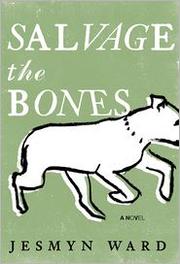 Jesmyn Ward · 2011Salvage the BonesLvl 5Medium pace
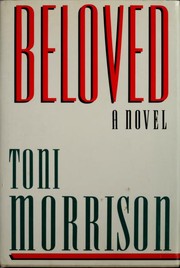 Toni Morrison · 1987BelovedLvl 8Slow burn
 William Faulkner · 1930As I Lay DyingLvl 9Medium pace
 Eudora Welty · 1972The Optimist's DaughterLvl 4Medium pace
 Cormac McCarthy · 1992All the Pretty HorsesLvl 6Medium pace
 Gabriel García Márquez · 1967One Hundred Years of SolitudeLvl 6Medium pace