
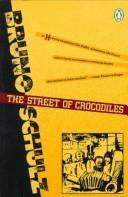
The Street of Crocodiles
Bruno Schulz · 1892–1942 · Poland (Galicia)
Originally Sklepy Cynamonowe (Polish)
Why it matters
A Galician shop town transfigured: Father breeds birds in the attic and argues with tailors' dummies about matter's suffering. Prose as dense as poetry: one of the two slim books by which Schulz outlived his murderers.
At a glance
Densely metaphorical, image-saturated prose with little conventional plot to orient the reader.
Deep dive
A provincial Galician childhood gets rebuilt as private mythology: a father who breeds exotic birds in the attic and slowly seems to turn into one himself, and a commercial district that only pretends, badly, to be a real place.
Written for readers who have finished the book. No plot recap, and nothing here is safe to read first.
Themes & symbolism
Schulz's linked stories reimagine his own childhood in Drohobycz not as memoir but as cosmology, narrated by a boy named Bruno whose father, Jakub, is less a realistic parent than a demiurge working through a private, escalating series of obsessions: breeding a rooftop aviary of magnificent, exotic birds until the maid destroys it in disgust, then withdrawing into a long physical and mental decline that the stories render as a slow transformation into something closer to an insect, a crab, finally, implicitly, a bird himself. Schulz never explains these metamorphoses as illness or metaphor in any way that would let a reader settle them; they simply happen, narrated in the same hushed, wondering register as the ordinary furniture of the house.
'The Street of Crocodiles,' the story that gives the collection its title, describes a commercial district of Drohobycz that has sprung up in imitation of a real modern city and gotten everything slightly, tellingly wrong: cardboard-thin buildings, goods with no real substance behind their packaging, a fraudulent, hollow modernity that Schulz's narrator treats as a moral rather than merely architectural failure, a place actively worse than the honest, decaying old town it apes. Underneath the fantastical surface, Schulz's real subject across the whole collection is his father's own philosophy of matter, delivered in mock-lecture form: that all substance is provisional, endlessly capable of being reshaped into new and lesser forms, a belief the stories treat as equal parts heresy, grief, and cosmic joke.
Jakub's Lectures on Degraded Matter
In 'Tailors' Dummies,' Jakub delivers an extended, half-mad sermon on what he calls the demiurge's laziness, arguing that creation didn't stop with God's original masterworks but continues endlessly downward into cheaper, more degraded forms, tailors' dummies and stuffed birds and wax figures included, each one still carrying a diminished trace of life. The lecture reads as comic set piece and genuine metaphysics simultaneously, Schulz's father-narrator working out an entire private theology of matter, decline, and creation from inside what everyone else in the household treats as an old man's eccentric monologue.
A Writer Murdered in the Streets He Mapped
Schulz spent his whole life in Drohobycz and was shot dead in its Jewish ghetto in November 1942 by a Gestapo officer, in what witnesses described as a private act of retaliation against a rival officer who had been protecting Schulz as his personal artist; his body was buried in an unmarked grave and most of his remaining manuscripts, including a long-rumored novel called The Messiah, were never recovered. The Street of Crocodiles' fantastical, self-enclosed Drohobycz is now effectively the only version of the town that survives at full imaginative scale, its real streets having outlived their chronicler by less than a generation before their Jewish population, Schulz included, was destroyed.
Where to go next
 Bruno Schulz · 1937Sanatorium Under the Sign of the HourglassLvl 8Slow burn
 Franz Kafka · 1915The MetamorphosisLvl 4Medium pace
 Witold Gombrowicz · 1937FerdydurkeLvl 7Fast paced
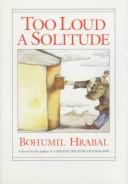 Bohumil Hrabal · 1976Too Loud a SolitudeLvl 6Slow burn
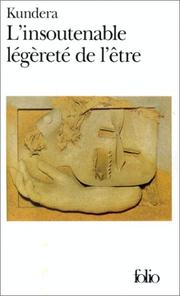 Milan Kundera · 1984The Unbearable Lightness of BeingLvl 5Slow burn
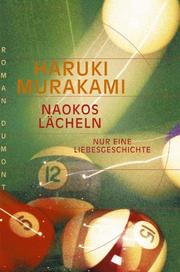 Haruki Murakami · 1987Norwegian WoodLvl 3Fast paced