
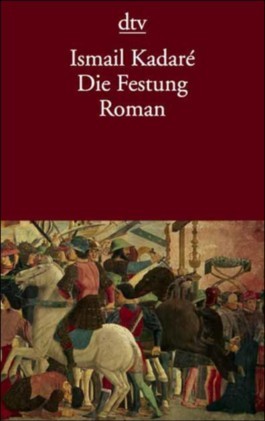
The Siege
Ismail Kadare · 1936–2024 · Albania
Originally Kështjella (Albanian)
Why it matters
An Ottoman army lays siege to an Albanian mountain fortress in a campaign of engineering, propaganda, and attrition, narrated as much from the besiegers' camp as the defenders' walls. Kadare's widest-lens historical novel, five centuries deep into a conflict his country never stopped refighting.
At a glance
Multiple shifting vantage points and period military detail ask for steady attention.
Deep dive
An Ottoman army settles in for a long, engineered siege of an Albanian mountain fortress, and Kadare spends most of the book inside the besiegers' camp, watching a chronicler decide, in real time, how the campaign should be remembered.
Written for readers who have finished the book. No plot recap, and nothing here is safe to read first.
Themes & symbolism
Kadare narrates the siege overwhelmingly from the Ottoman side, following the Pasha commanding the campaign, his quartermaster tracking supplies and casualties with grim administrative precision, an astrologer reading omens the Pasha needs to hear regardless of what the stars actually indicate, and Mevla Çelebi, the court chronicler charged with composing the official record of a campaign whose outcome nobody in the camp can yet predict. That choice of vantage is the novel's real subject: siege warfare here is as much a problem of engineering and logistics, towers, tunnels, the arithmetic of starving a fortress out, as it is a problem of narrative, since Mevla Çelebi has to keep revising his glorious account to match a war that keeps refusing to go the empire's way.
The Albanian defenders remain almost entirely offstage, a wall the narrative keeps bouncing off of rather than a set of characters the reader gets to know directly, and that deliberate blankness is itself an argument: Kadare denies the empire's chronicler, and by extension a reader used to conqueror's-eye narratives, any real access to the people being besieged, who exist in the text only as effects, casualties, and the stubborn fact of the fortress still standing. Writing under Enver Hoxha's isolated, historically obsessed regime, Kadare found in a five-century-old campaign a way to dramatize a national self-image built on outlasting invasion after invasion without ever once naming his own country's twentieth-century isolation directly.
Mevla Çelebi's Chronicle Keeps Getting Rewritten
Kadare gives the reader direct access to Mevla Çelebi's drafts, letting the same event get described first as triumph, then, chapters later, as a setback quietly reframed once the campaign's fortunes turn. The device makes the chronicle itself a character, an instrument of state narrative that has to keep lying just enough to stay useful, and it is Mevla Çelebi's private unease at his own revisions, never voiced aloud to the Pasha, that carries what conscience the novel allows the occupying side at all. His journal entries, interleaved between the campaign's set-piece battles, become the novel's quietest and most damning strand precisely because he is the one character in the camp paid to notice the gap between what happened and what will be recorded.
The last seal: what actually happens, and why it lands the way it does.
The ending, explained
The siege ends in Ottoman failure: disease, an early winter, and the fortress's stubborn defense force the army to withdraw having taken nothing, and Mevla Çelebi is left to somehow compose a record of a defeat for an empire that does not record defeats, quietly rewriting his drafts toward ambiguity rather than a falsehood he can't sustain. Kadare denies the withdrawal any sense of final resolution: the novel's last pages show preparations for a future campaign already underway under a different Pasha, the fortress's survival treated by the empire not as a lesson but as an administrative delay before the next attempt. The Albanians inside the walls, never granted their own chapters, are left exactly where the book found them, standing, unnarrated, and certain to be besieged again.
Where to go next
 Ismail Kadare · 1963The General of the Dead ArmyLvl 5Medium pace
 Ismail Kadare · 1971Chronicle in StoneLvl 4Medium pace
 Ismail Kadare · 1978Broken AprilLvl 5Medium pace
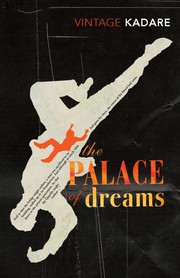 Ismail Kadare · 1981The Palace of DreamsLvl 5Medium pace
 Aleksandr Solzhenitsyn · 1962One Day in the Life of Ivan DenisovichLvl 3Fast paced
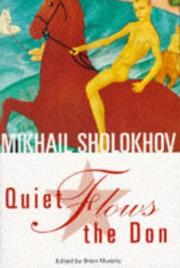 Mikhail Sholokhov · 1928And Quiet Flows the DonLvl 5Medium pace