
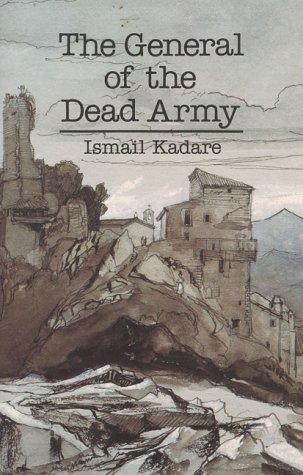
The General of the Dead Army
Ismail Kadare · 1936–2024 · Albania
Originally Gjenerali i Ushtrisë së Vdekur (Albanian)
Why it matters
An Italian general is sent to exhume his country's war dead from the mud of Albania. Kadare's mordant parable of futility and memory, which smuggled dissent past a Stalinist regime inside myth.
At a glance
A clear road-trip structure carries symbolic weight without syntactic difficulty.
Deep dive
An Italian general is sent into the mud of Albania to dig up his country's war dead and bring them home with dignity — a bureaucratic mission the landscape itself seems determined to refuse.
Written for readers who have finished the book. No plot recap, and nothing here is safe to read first.
Themes & symbolism
The general's mission to exhume, identify, and repatriate Italy's WWII dead keeps failing on its own terms: every body pulled from the Albanian mud, whether tagged by dog tags or catalogued simply as unknown, dissolves the neat national narrative of heroic sacrifice his errand is meant to formalize back into what it actually was, chaos and waste with no coherent shape. Kadare, writing under Albania's isolated Stalinist dictatorship, sets his critique safely offstage in a defeated Italian expedition rather than anything touching his own country's regime, which let the book pass censorship while still landing, for any attentive reader, as a broader parable about every regime's need to curate death into usable, morally simple memory.
The general's slow psychological unraveling is the novel's real plot: his initial imperial contempt for Albania and its people erodes, mission by muddy mission, into something closer to shared, exhausted recognition of the war's common human cost, a recognition the bureaucratic ritual he's performing was never built to accommodate. Mud itself becomes the book's controlling image — the one substance that refuses every attempt, however solemn or thorough, to organize anonymous bone into heroism.
Kadare, writing his debut novel at twenty-six and drawing on stories he'd heard of real postwar Italian repatriation missions, gave Albanian literature one of its first genuinely international successes, and the general's slow disillusionment, watched by a priest traveling with him who supplies a quieter, faith-based counterpoint to the general's crumbling secular sense of mission, lets Kadare stage a debate about what, if anything, organized religion or the state can actually offer in the face of mass, anonymous death. The novel's international success, translated widely within a decade of its Albanian publication, gave Kadare a rare degree of protective visibility abroad that likely shielded him from the harsher consequences other Albanian writers faced under Enver Hoxha's regime for far milder dissent. Kadare returned to the general and his mission-driven melancholy repeatedly across his later fiction, treating the exhumation of the dead as a recurring figure for his own lifelong preoccupation with how totalitarian regimes rewrite the past to suit the present.
The last seal: what actually happens, and why it lands the way it does.
The ending, explained
The general completes his catalogue, more or less — plenty of the dead remain unidentifiable or unrecoverable, an incompleteness the novel treats as the mission's basic condition rather than a twist — and returns to Italy without the national honor or existential closure he arrived expecting. What he brings home instead is a quiet, wordless collapse: an unshakeable awareness that the dead resist every effort to make their deaths mean something coherent, no matter how carefully the bureaucracy tries to repatriate them into a story. Kadare's bleak final note is that the ritual, however solemnly performed, cannot do the symbolic work of closure it promises — only its exhausting, muddy imitation.
Where to go next
 Ismail Kadare · 1970The SiegeLvl 5Medium pace
 Ismail Kadare · 1971Chronicle in StoneLvl 4Medium pace
 Ismail Kadare · 1978Broken AprilLvl 5Medium pace
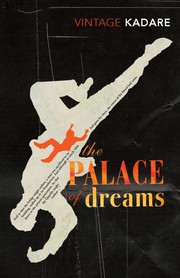 Ismail Kadare · 1981The Palace of DreamsLvl 5Medium pace
 Aleksandr Solzhenitsyn · 1962One Day in the Life of Ivan DenisovichLvl 3Fast paced
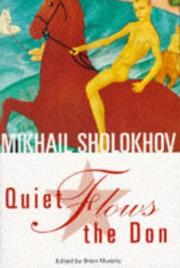 Mikhail Sholokhov · 1928And Quiet Flows the DonLvl 5Medium pace