
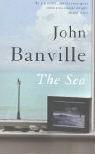
The Sea
John Banville · b. 1945 · Ireland
Why it matters
A grieving widower returns to the seaside town of a childhood tragedy he has never fully processed. Banville's Booker winner renders mourning and memory in sentences of cold, jeweled beauty.
At a glance
Dense, ornate sentences and a non-linear structure moving between past and present grief.
Deep dive
Why an unfinished monograph on a painter who kept repainting his dead wife is the real key to Max Morden's grief, and what his jeweled sentences are working so hard to avoid saying plainly.
Written for readers who have finished the book. No plot recap, and nothing here is safe to read first.
Themes & symbolism
Max Morden is an art historian who has spent years failing to finish a monograph on Pierre Bonnard, the painter who spent four decades repainting his wife Marthe in her bath, often continuing to paint her as young and freshly bathed for years after her actual death. Banville makes this professional detail the novel's real thesis: Bonnard's canvases are a technology for keeping the dead undead, and Max's own prose — recollecting Anna in fine, controlled detail even as she dies of cancer offstage in the present-tense chapters — performs exactly the same operation. The unfinished monograph isn't a subplot; it's Max admitting, without quite admitting it, that he doesn't actually want to finish looking, because finishing would mean letting both women, wife and dead childhood infatuation alike, become properly past.
Grief, in this novel, doesn't invent new material — it goes looking for old wounds to reopen, and Max's return to the seaside house where the well-off Grace family once summered lets one loss borrow the shape of the other. As a grocer's son besotted first with the indolent, gin-scented Mrs. Grace and then with her daughter Chloe, young Max wanted less a girl than an entire class's ease and unearned confidence; that class envy curdles, decades later, into the same acquisitive watching he directs at Anna's illness, cataloguing her decline with the same connoisseur's eye he once turned on the Graces' bodies and rooms. Banville's sentences are famously overdressed — jeweled, Latinate, self-consciously beautiful — and the effect isn't decoration but defense: a narrator this fluent, this in love with his own cadences, is a narrator working very hard not to say the plain, unbearable thing directly.
A Novel Told in Two Tides
The book alternates, chapter by chapter and often paragraph by paragraph, between the weeks after Anna's death and the single childhood summer decades earlier, with almost no signposting beyond verb tense — a formal choice that puts the reader inside the same undifferentiated flood Max is drowning in, where a fifty-year-old wound and a fresh one arrive with equal force. Banville lets digression stand in for plot: Max circles the same handful of images — Mrs. Grace's damp swimsuit, Anna's hospital gown, the particular gray-green of the sea — returning to each with slightly more information every time, so that understanding accumulates the way memory actually works, in passes, rather than the way conventional narrative delivers it, in a line.
Winning the Booker, and the Backlash
The Sea's 2005 Booker win was, and remains, one of the prize's most contested — critics who found the novel mannered and airless argued it beat more emotionally direct competition largely on the strength of its sentences rather than its human stakes. That objection misses what the prose is doing: the ornateness is Max's, not just Banville's, a grieving man's defense mechanism dressed up as style, and the chilliness readers complain about is the novel's subject as much as its texture — a portrait of a man who has always preferred describing feeling to having it.
Where to go next
 John Banville · 1989The Book of EvidenceLvl 6Medium pace
 Javier Marías · 1992A Heart So WhiteLvl 8Slow burn
 Friedrich Dürrenmatt · 1958The PledgeLvl 5Fast paced
 Elfriede Jelinek · 1983The Piano TeacherLvl 7Slow burn
 Julian Barnes · 2011The Sense of an EndingLvl 4Medium pace
 Graham Swift · 1996Last OrdersLvl 5Medium pace