
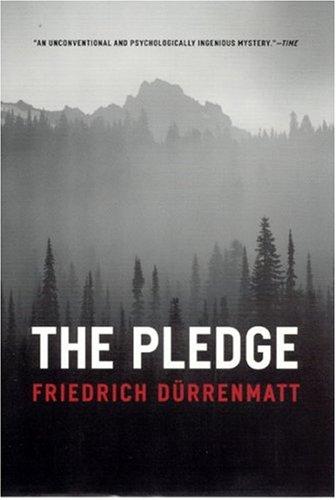
The Pledge
Friedrich Dürrenmatt · 1921–1990 · Switzerland
Originally Das Versprechen (German)
Why it matters
A brilliant retired inspector, convinced the confessed killer of a child is innocent, stakes his career and his sanity on proving it through nothing but patient, old-fashioned detection. Dürrenmatt's 'requiem for the detective novel' dismantles the genre's basic promise that reason solves everything.
At a glance
Brisk, controlled prose, though its anti-genre logic subverts expectations built early on.
Deep dive
A meticulous inspector's plan to catch a child's killer runs on flawless logic, and Dürrenmatt spends the whole novel proving that flawless logic was never the thing standing between him and the truth.
Written for readers who have finished the book. No plot recap, and nothing here is safe to read first.
Themes & symbolism
Dürrenmatt frames the entire case as a story told years later by a retired police commissioner to a crime novelist giving a lecture on the genre, and that frame is the point as much as anything in the plot: detective fiction runs on the promise that a sufficiently rigorous mind can always reconstruct what happened, and the commissioner is telling this story specifically to demonstrate why that promise is a lie. Matthäi, brilliant and methodical, works out from the pattern of a child's killing near a rural road, and from a hand-carved hedgehog toy, that the murderer is a traveling salesman who preys on girls matching a very specific type, then sets an elaborate, patient trap using a young girl named Annemarie as bait at a remote gas station.
Everything about Matthäi's reasoning turns out to be correct, which is exactly what makes the book brutal rather than reassuring: the killer really is who and what Matthäi deduced, and really was driving toward Annemarie on the day the trap was set. What derails the whole design isn't a flaw in the logic but a car crash on an unrelated road, a piece of pure contingency the genre's tidy plots don't have room for. Dürrenmatt's subtitle, a requiem for the detective novel, names this directly: reason can map the world correctly and still be defeated by something reason never had any way of accounting for.
The Wrong Man Who Confesses Anyway
Before Matthäi even begins his private investigation, an itinerant peddler is arrested, subjected to a punishing overnight interrogation, and confesses to a murder he almost certainly didn't commit, then hangs himself in his cell, closing the official case to everyone's satisfaction but Matthäi's. Dürrenmatt uses this false confession to show how easily institutional pressure manufactures the closure a real detective story would treat as an ending, and how alone Matthäi becomes once he's the only person left in the canton still asking a question the file has already marked solved.
The last seal: what actually happens, and why it lands the way it does.
The ending, explained
The actual killer, on his way to keep his ritual appointment with Annemarie, dies in a car accident before he can arrive, so Matthäi's stakeout waits for a man who was already gone, and after months of watching an empty road he's dismissed as unstable and loses his position entirely. Confirmation only surfaces years later, through a dying woman's confession describing the man's habits and confiding what she'd long suspected and shielded, by which point Matthäi has degenerated into a drunk fixture at the same gas station, unable to process being told his method had worked all along. Dürrenmatt gives the reader the vindication the genre would normally hand its detective, and then makes sure it arrives too late and to a man no longer capable of understanding it.
Where to go next
 Franz Kafka · 1915The MetamorphosisLvl 4Medium pace
 Elias Canetti · 1935Auto-da-FéLvl 7Slow burn
 Alain Robbe-Grillet · 1957JealousyLvl 8Slow burn
 W. G. Sebald · 1995The Rings of SaturnLvl 7Slow burn
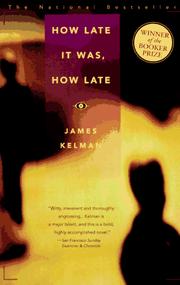 James Kelman · 1994How Late It Was, How LateLvl 7Slow burn
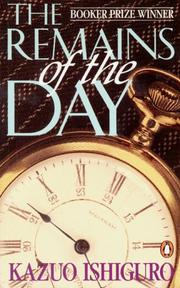 Kazuo Ishiguro · 1989The Remains of the DayLvl 5Slow burn