
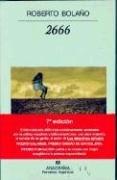
2666
Roberto Bolaño · 1953–2003 · Chile / Mexico / Spain
Originally 2666 (Spanish) · translated by Natasha Wimmer
Why it matters
Five novels orbiting Santa Teresa and its unsolved murders of women: criticism, madness, boxing, war, and an elusive German novelist. Published posthumously: the twenty-first century's first monument, staring straight into the abyss.
At a glance
Five sprawling, loosely linked novels of enormous scope with a deliberately unresolved mystery.
Deep dive
Why a novel that spends hundreds of pages cataloging real, Ciudad Juárez-style murders in flat forensic prose refuses to give you a detective, and what an elusive German novelist could possibly have to do with any of it.
Written for readers who have finished the book. No plot recap, and nothing here is safe to read first.
Themes & symbolism
"The Part About the Crimes" is the novel's center of gravity and its most radical formal choice: hundreds of pages cataloging individual murders in flat, forensic, near-identical prose — age, cause of death, condition of the body, whether a suspect was ever named — with almost no narrative arc, no detective who closes in, no cathartic reveal. Bolaño is modeling the prose on the actual, unresolved femicides of Ciudad Juárez, and the effect of the repetition is to make the reader feel the same fatigue, the same numbing accumulation, that has let the real killings continue for decades without a reckoning. The refusal to individualize each victim into a satisfying mini-story is the point: any one murder rendered as a self-contained tragedy would console the reader with meaning the real crimes have never received.
The critics who open the novel, four European academics fixated on the possibly mythical Archimboldi, function as an indictment of literature's own relationship to atrocity — their obsessive, erudite pursuit of a novelist is staged in exactly the city where women are being murdered by the hundreds, and their scholarly passion never quite manages to look sideways at what's happening around them. Bolaño isn't sparing his own trade: criticism, translation, literary devotion, all the machinery the critics represent, is shown as capable of enormous refinement and total moral blindness at the same time. Amalfitano's slow unraveling — hanging a geometry textbook on a clothesline for no explained reason — and Fate's accidental entanglement in the murders as a journalist who came to cover a boxing match extend the same idea: proximity to the crimes doesn't guarantee anyone actually reckons with them. Even the novel's structure enacts this indictment: publishing all five parts as one continuous book, rather than the five separate volumes Bolaño reportedly considered for his heirs' financial benefit, forces the aesthetic pleasures of the critics' and Amalfitano's and Fate's sections to sit permanently adjacent to the crimes catalog, so that no reader gets to enjoy the novel's more conventional pleasures without the murders still running underneath.
Archimboldi's War
The novel saves its most conventional, sustained narrative — a full biographical arc — for last, and it's not about the murders at all: Archimboldi turns out to be Hans Reiter, a German soldier who survived the Eastern Front and reinvented himself under a pseudonym. Placing a WWII narrative at the end of a novel about a Mexican border city's femicides is Bolaño's clearest statement of theme: the systemic violence of the twentieth century's greatest atrocity and the systemic violence of globalized, neoliberal Mexico's maquiladora economy aren't unrelated case studies, they're the same capacity for mass, bureaucratized cruelty recurring in a new register, decades and continents apart, with an elusive novelist as the fragile thread trying to connect them.
The last seal: what actually happens, and why it lands the way it does.
The ending, explained
2666 ends without solving anything: the killings that fill "The Part About the Crimes" are never attributed to a single culprit, arrested suspects are cleared or vanish from the narrative, and the novel's five parts converge only in the loosest sense — Archimboldi learns his nephew has been arrested in Santa Teresa and sets off for Mexico, and the book ends on the verge of that arrival rather than depicting it. Bolaño, who died before finishing his revisions, left a novel structurally incapable of resolution by design: the real Ciudad Juárez murders it's modeled on remain unsolved to this day, and any tidy ending would have falsified the one truth the novel insists on — that some atrocities are simply too large, too endemic, and too protected by power to be closed by a plot.
Where to go next
 Roberto Bolaño · 1998The Savage DetectivesLvl 7Medium pace
 Julio Cortázar · 1959Blow-Up and Other StoriesLvl 6Medium pace
 Jorge Luis Borges · 1944FiccionesLvl 7Slow burn
 Italo Calvino · 1972Invisible CitiesLvl 5Slow burn
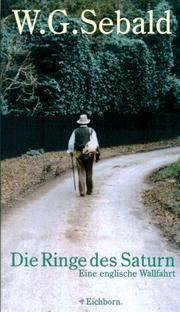 W. G. Sebald · 1995The Rings of SaturnLvl 7Slow burn
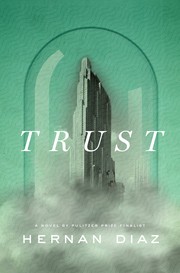 Hernán Diaz · 2022TrustLvl 6Medium pace