
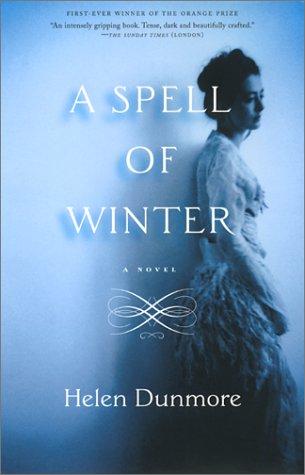
A Spell of Winter
Helen Dunmore · 1952–2017 · England
Why it matters
Orphaned siblings drift into an incestuous relationship under their eccentric grandfather's roof, its consequences shadowing them for decades. The inaugural Orange Prize winner, a gothic family drama as atmospheric as it is quietly devastating.
At a glance
Brooding, image-heavy prose and dark subject matter reward patient, attentive reading.
Deep dive
A brother and sister raised behind a grandfather's locked gates fall into something the house's other secrets were always going to make possible, and the novel spends decades finding out what it costs to break the spell.
Written for readers who have finished the book. No plot recap, and nothing here is safe to read first.
Themes & symbolism
Cathy and Rob grow up on their grandfather's crumbling estate after their mother abandons the family for the Continent and their father is committed to an asylum, and Dunmore builds the house itself into a kind of accomplice: shuttered rooms, a locked studio, a garden gone to seed, all of it teaching the children that secrecy is simply how this family operates. The grandfather, 'the man from nowhere,' supplies no history of his own to counterbalance the children's growing isolation, and his silence about his own daughter's childhood, about where his money came from, about why the house feels the way it does, models the exact withholding that lets Cathy and Rob's relationship curdle into something neither of them was equipped to see coming.
The governess Miss Gallagher functions as the novel's moral chorus without ever earning the authority to be one, her prying and her religiosity making her a figure the children can despise rather than heed, and Cathy's decision to abandon her in the woods after frightening her with ghost stories, followed by Miss Gallagher's death from an apparent heart attack, gives the novel its clearest instance of guilt displaced onto the one adult who might have named what was happening in the house. Dunmore lets that guilt sit unresolved rather than punishing Cathy for it outright, which is the book's more unsettling move: consequence in this novel rarely lands on the person whose choice caused it.
Winter itself, the title's governing image, marks the years Cathy spends unable to leave the emotional climate the house created, a state Dunmore treats less as metaphor than as literal arrested development: the pregnancy, the illegal abortion Kate arranges, Rob's departure and eventual return from the war, all happen to a Cathy who cannot yet imagine a version of herself outside the estate's gravitational pull. The First World War arrives almost as relief, an external catastrophe large enough to finally break the family's private one open.
The Orange Prize's First Winner
Published in 1995 and awarded the inaugural Orange Prize for Fiction in 1996, the novel helped establish what the prize would come to reward: literary fiction by women willing to sit inside taboo material without softening it into a cautionary tale. Dunmore, primarily a poet before this novel, brings a poet's attention to the natural world into the prose, the estate's seasons doing as much narrative work as any of the human plot, which is part of why the incest reads as inevitable climate rather than shock twist.
The last seal: what actually happens, and why it lands the way it does.
The ending, explained
Rob leaves for Canada, is reported missing and presumed dead once the war reaches France, and Cathy spends the war years alone with her declining grandfather, cut off from the one relationship the whole novel has organized itself around. When peace finally comes, the neighboring landowner Mr. Bullivant persuades a hesitant Cathy to travel with him to Brittany, where her mother has been living all along, and the novel closes on that reunion rather than on any resolution between the siblings. The ending trades the expected reckoning between Cathy and Rob for something quieter: a woman choosing, for the first time in the book, to walk toward a relationship rather than away from one, even a broken one she never asked to need.
Where to go next
 Rose Tremain · 2007The Road HomeLvl 3Medium pace
 Alan Hollinghurst · 2004The Line of BeautyLvl 5Slow burn
 Graham Swift · 1996Last OrdersLvl 5Medium pace
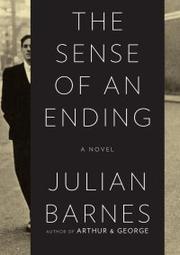 Julian Barnes · 2011The Sense of an EndingLvl 4Medium pace
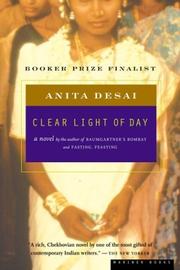 Anita Desai · 1980Clear Light of DayLvl 5Slow burn
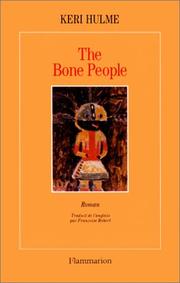 Keri Hulme · 1984The Bone PeopleLvl 7Slow burn