
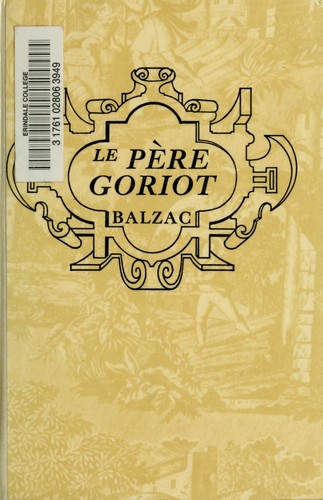
Père Goriot
Honoré de Balzac · 1799–1850 · France
Originally Le Père Goriot (French)
Why it matters
A boarding house, a discarded father, and young Rastignac's education in how Paris actually works. The cornerstone of the Comédie humaine and the template for every novel where an ambitious provincial meets the machinery of money.
At a glance
Dense social description opens the novel before the plot's clear momentum takes hold.
Deep dive
How a father's love gets converted into francs until there's nothing left of him — and what it costs Rastignac to watch it happen.
Written for readers who have finished the book. No plot recap, and nothing here is safe to read first.
Themes & symbolism
Goriot's devotion to his daughters is denominated entirely in money: he made his fortune in vermicelli, then spent it converting them into aristocrats through dowries and allowances, and the novel tracks his physical decline in lockstep with his bank balance, as though love itself were a resource being drawn down to zero. Critics have long called this Balzac's Lear, and the comparison holds past the obvious — like Lear, Goriot's ruin is self-authored, a devotion so total it strips him of every claim on the daughters he financed into indifference, and Paris obliges by treating a poor father as no father at all.
Vautrin's great set-piece speech to Rastignac — offering him a shortcut to fortune through a marriage made possible by murder — is the novel's cynical thesis stated outright: that a legal career and a criminal one arrive at the same wealth by different speeds, and that Restoration Paris runs on unacknowledged violence either way, whether it's a duel arranged in the shadows or an inheritance law quietly starving a family. Rastignac refuses the deal in the moment and absorbs its logic anyway, which is the education the title of the book's genre — a novel of formation — is actually about.
Vautrin's Lecture
Vautrin, later revealed as the escaped convict Jacques Collin, functions as a demonic tutor rather than a mere schemer, laying out Restoration society's actual mechanics with a clarity none of the novel's respectable characters can afford to voice. Rastignac rejects the specific proposition — he won't be party to arranging a murder — but the diagnosis stays with him regardless, quietly authorizing the calculating ambition he spends the rest of the book, and the rest of the Comédie humaine, acting on.
The Return of Characters
Balzac refined here the device that would define his whole project: Rastignac, Vautrin, and the Nucingens all recur across dozens of later novels, aging and reappearing in new configurations as if Paris itself were a single continuous world readers could re-enter book after book. It's a founding move for the modern novel-cycle, one Zola and Proust would each inherit and reshape, and it gives Père Goriot's ending its unusual charge — this isn't a character exiting the stage, it's a character walking offstage into an entire fictional century still waiting for him.
The last seal: what actually happens, and why it lands the way it does.
The ending, explained
Goriot dies in delirious poverty, mixing up his two daughters in his ravings, while both Anastasie and Delphine — the very daughters his fortune built into aristocrats — fail to reach his deathbed in time, sending excuses instead. Only Rastignac and his medical-student friend Bianchon are present, and Rastignac pays for the funeral himself out of borrowed money since Goriot's estate is empty. The daughters send their empty carriages, bearing their titled husbands' coats of arms, as a show of status without the substance of grief. Afterward, alone at Père-Lachaise looking down over Paris, Rastignac utters his famous challenge to the city, 'À nous deux, maintenant!' — and walks straight off to dine with Delphine, accepting the very economy that just finished consuming her father.
Where to go next
 Honoré de Balzac · 1831The Wild Ass's SkinLvl 5Fast paced
 Honoré de Balzac · 1832Colonel ChabertLvl 3Medium pace
 Honoré de Balzac · 1833Eugénie GrandetLvl 3Medium pace
 Honoré de Balzac · 1837Lost IllusionsLvl 5Medium pace
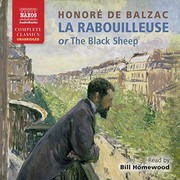 Honoré de Balzac · 1842The Black SheepLvl 5Medium pace
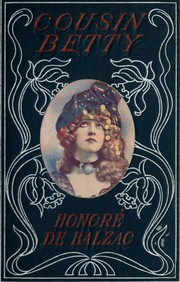 Honoré de Balzac · 1846Cousin BetteLvl 5Medium pace