
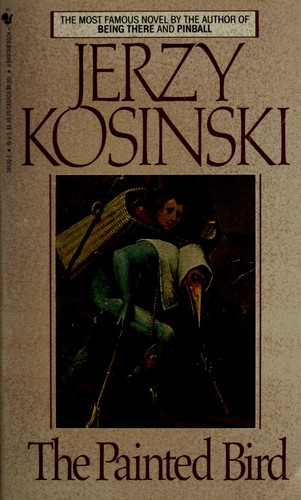
The Painted Bird
Jerzy Kosiński · 1933–1991 · Poland / USA
Why it matters
A dark-haired boy wanders wartime Eastern Europe from village to village, encountering casual atrocity at every turn. Brutal and fiercely disputed as memoir or invention, it remains one of the era's most unforgettable war novels.
At a glance
Episodic and plainly narrated, though the unrelenting brutality demands emotional stamina.
Deep dive
A boy marked by his dark hair wanders from village to village collecting an escalating catalogue of peasant cruelty — and the book's most famous image asks what happens to a creature painted just different enough that its own flock no longer knows it.
Written for readers who have finished the book. No plot recap, and nothing here is safe to read first.
Themes & symbolism
The bird-catcher Lekh's habit of painting a captured bird's feathers before releasing it back to its flock, who then attack it as an intruder because they no longer recognize one of their own, supplies the novel's central and most quoted metaphor: the boy, dark-haired and dark-eyed among blond Slavic peasants who take him for a Jew, a Roma, or simply a bearer of the evil eye, is marked for destruction by communities that under any other circumstance would have no reason to expel him. Kosiński builds an escalating case, village after village, that ordinary people, isolated and brutalized by a war that has suspended any functioning moral or legal order, are entirely capable of atrocities as severe as anything organized by the war itself.
The boy's survival requires him to absorb the very logic of cruelty and superstition he's subjected to, and the novel is genuinely ambivalent about how much of his original capacity for ordinary human connection survives that absorption — after one especially traumatic assault he goes mute for a period, his voice itself a casualty of what he's had to learn to survive. Whether read as testimony or invention, the book's real subject is how thin the membrane is between civilization and the casual, superstition-driven violence it depicts, and how a child can be remade by that discovery long before he understands what's happening to him.
Memoir, Invention, and the 1982 Exposé
Kosiński originally let the book stand as closely autobiographical, and its impact for decades depended on readers believing it was testimony rather than fiction. A damaging 1982 Village Voice investigation argued that Kosiński's actual wartime childhood was far less brutal, spent sheltered by a Catholic family rather than wandering alone — a revelation that never fully settled and that permanently complicates how the novel's brutality should be read: as documentary witness, or as a deliberately extreme, fable-like fiction using the war as backdrop for an examination of cruelty that doesn't require its narrator to have lived it. The controversy also revived older accusations that Kosiński relied heavily on editors and even ghost-translators for his English prose, further muddying who exactly was responsible for the book's voice, though none of it dislodged the novel's place in the war-literature canon once the shock of the exposé itself faded.
The last seal: what actually happens, and why it lands the way it does.
The ending, explained
The boy survives to the war's end through increasingly hardened, self-protective cunning and is eventually returned to his parents, but Kosiński refuses to make the reunion straightforwardly redemptive — the years of wandering have altered him in ways that look permanent, his capacity for trust and ordinary attachment badly compromised. The novel's closing note, his regaining of speech after a moment of sudden physical urgency breaks through the muteness the assault left him with, offers only a fragile, ambiguous suggestion that some recovery might be possible, not a clear return to the child he was before the war found him.
Where to go next
 Jerzy Kosiński · 1968StepsLvl 7Slow burn
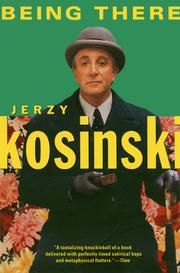 Jerzy Kosiński · 1970Being ThereLvl 3Fast paced
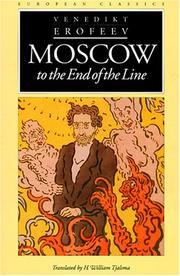 Venedikt Yerofeev · 1970Moscow-PetushkiLvl 7Fast paced
 Aleksandr Solzhenitsyn · 1962One Day in the Life of Ivan DenisovichLvl 3Fast paced
 Ismail Kadare · 1963The General of the Dead ArmyLvl 5Medium pace
 Witold Gombrowicz · 1937FerdydurkeLvl 7Fast paced