
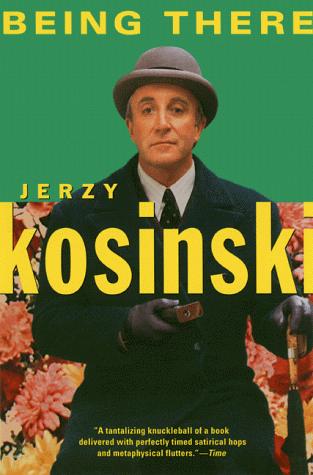
Being There
Jerzy Kosiński · 1933–1991 · Poland / USA
Why it matters
An illiterate gardener who has only ever watched television is mistaken for a sage by Washington's elite and rises toward the presidency. Kosiński's slim, savage satire of media, power, and mistaken profundity.
At a glance
Short, plain, deadpan prose makes this an easy, fast read.
Deep dive
An illiterate gardener who has only ever learned about the world from television gets mistaken for a sage the moment he steps outside the one house he's ever lived in, and Washington never stops to check.
Written for readers who have finished the book. No plot recap, and nothing here is safe to read first.
Themes & symbolism
Chance has spent his entire life tending the private garden of an elderly benefactor, absorbing everything he knows about human interaction from television, and when his employer dies and turns him out into the world for the first time, he has no autobiography to offer anyone, only a wardrobe of expensive inherited suits and a handful of flat, literal sentences about plants and seasons. Kosiński's satire depends entirely on what Washington's elite do with that emptiness: because Chance speaks in calm, unhurried non sequiturs about gardens, listeners primed to hear a Delphic economic metaphor in every sentence supply the depth Chance never claims to have, mistaking his total vacancy for reticence, his television-trained blankness for gravitas.
Benjamin Rand, the dying financier who takes Chance in and mistakes his gardening talk for shrewd allegory about the national economy, becomes the novel's engine for elevating Chance, now renamed Chauncey Gardiner, toward the President's own inner circle, and Kosiński never lets Chance correct anyone's misreading, because Chance genuinely cannot tell that a misreading is occurring; he has no interior life sophisticated enough to recognize the gap between what he means and what everyone around him hears. Eve Rand's attraction to him works the same way in miniature: Chance's total incomprehension of desire reads, to her, as serene detachment rather than blankness, one more instance of an empty vessel filled entirely by whoever happens to be looking at it.
A Man Made Entirely of Television
Kosiński gives Chance one recurring, literalized gag for how completely television has replaced any independent sense of self: when a real situation stops matching what he expects from a screen, Chance instinctively reaches for a remote control that isn't there, trying to change the channel on his own life. The joke does real satirical work, since the same reflex that makes him useless at ordinary conversation is precisely what convinces powerful men he's above it. Kosiński wrote the novel at the height of American television's cultural dominance, and Chance's condition reads less like an exaggeration than a diagnosis pushed one honest step further than anyone around him is willing to follow.
The last seal: what actually happens, and why it lands the way it does.
The ending, explained
As Rand dies, the men managing his estate and the country's political apparatus begin quietly considering Chance, a man with no verifiable past, no paper trail, and no opinions he didn't just invent on the spot, as a plausible running mate for the next presidential ticket, and nothing in the novel suggests any of them will ever discover the truth, because nobody with the power to disqualify him has any incentive to look. Kosiński's famous closing image finds Chance wandering into Rand's garden and, without any apparent awareness that it should be impossible, walking out onto the surface of a pond. Kosiński refuses to explain the moment away: whether it's authorial fantasy, a submerged walkway, or a flat assertion that this particular blank vessel has become untouchable by ordinary consequence, the ambiguity is the joke's final turn.
Where to go next
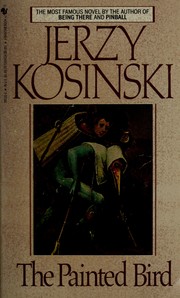 Jerzy Kosiński · 1965The Painted BirdLvl 5Fast paced
 Jerzy Kosiński · 1968StepsLvl 7Slow burn
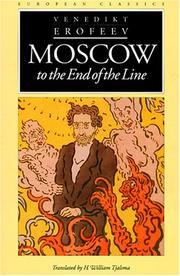 Venedikt Yerofeev · 1970Moscow-PetushkiLvl 7Fast paced
 Aleksandr Solzhenitsyn · 1962One Day in the Life of Ivan DenisovichLvl 3Fast paced
 Ismail Kadare · 1963The General of the Dead ArmyLvl 5Medium pace
 Witold Gombrowicz · 1937FerdydurkeLvl 7Fast paced