
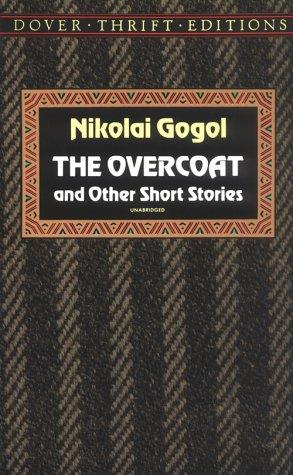
The Overcoat
Nikolai Gogol · 1809–1852 · Ukraine / Russia
Originally Shinel (Russian)
Why it matters
A copying clerk scrimps for months to afford a new overcoat, only to have it stolen on the very night he finally wears it. 'We all came out from under Gogol's Overcoat': the little man's tragedy that begat Dostoevsky and a century of Russian fiction.
At a glance
A short, plainly told tale, though its ironic narrative voice rewards close attention.
Deep dive
A poor Petersburg copying clerk finally saves enough for a decent coat, and Gogol spends the rest of the story deciding exactly how much the world owes a man nobody has ever bothered to really see.
Written for readers who have finished the book. No plot recap, and nothing here is safe to read first.
Themes & symbolism
Akaky Akakievich is introduced almost as a joke, a clerk so devoted to the mechanical act of copying documents that he takes work home for the pleasure of it, so poor and so invisible to his colleagues that Gogol's narrator can barely be bothered to settle on the precise spelling of his name. That comic distance is deliberate and it's also the story's real subject: Gogol keeps mocking Akaky's smallness right up until the moment the coat, the one object he's ever wanted badly enough to save and suffer for, gives that smallness a shape worth taking seriously, and the narrator's own condescension starts to look like exactly the failure of attention the story is diagnosing in Petersburg at large.
The 'person of consequence,' the official Akaky appeals to for help after the coat is stolen, cares more about performing authority in front of a visiting friend than about the actual theft, and dresses Akaky down for daring to approach him through the wrong channels; Gogol makes clear that this reflex, humiliating a subordinate to look important to a superior, is simply how the whole bureaucratic hierarchy runs, from the pettiest clerk's office up. The coat itself, ordinary as it is, becomes the story's clearest measure of how little it takes to expose a social order that has never once had to account for what it costs the people at its bottom.
The Line Every Russian Writer After Gogol Inherited
Dostoevsky, or more likely a later critic paraphrasing him, is credited with the line that 'we all came out from under Gogol's Overcoat,' and whether or not he said those exact words, the claim tracks something real: the sympathetic treatment of a poor, humiliated clerk as a subject worthy of serious literature, rather than comic relief, became a direct template for Dostoevsky's own Poor Folk and for a whole tradition of Russian fiction preoccupied with the dignity of society's most overlooked people.
The last seal: what actually happens, and why it lands the way it does.
The ending, explained
Akaky, stripped of his new coat by robbers in an empty square and rebuffed everywhere he turns for help, sickens with fever and does not recover, entirely unmourned by the office that barely registered his decades of loyal service. Petersburg then starts reporting a ghost near the bridge where he was robbed, snatching overcoats off passersby regardless of rank, and when the apparition finally corners the 'person of consequence' himself, now genuinely frightened for the first time in the story, and strips his coat too, the haunting abruptly stops. Gogol never explains whether the ghost was truly Akaky's restless spirit or simply Petersburg folklore attaching itself to an unsolved string of robberies, and the ambiguity is the point: a man ignored his whole life gets, in death, exactly one moment of being impossible to ignore, and Gogol isn't interested in letting it look like justice.
Where to go next
 Nikolai Gogol · 1835Diary of a MadmanLvl 4Medium pace
 Nikolai Gogol · 1835Taras BulbaLvl 4Fast paced
 Nikolai Gogol · 1836The NoseLvl 3Fast paced
 Nikolai Gogol · 1836The Government InspectorLvl 3Fast paced
 Nikolai Gogol · 1842Dead SoulsLvl 5Medium pace
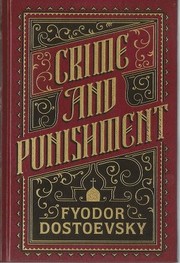 Fyodor Dostoevsky · 1866Crime and PunishmentLvl 6Fast paced