

The Nose
Nikolai Gogol · 1809–1852 · Ukraine / Russia
Originally Nos (Russian)
Why it matters
A St Petersburg official wakes to find his nose has fled his face and taken up a superior post around town, outranking him in a grander uniform. Gogol's purest absurdist tale offers no explanation and needs none.
At a glance
A short, deadpan tale whose absurdity requires no unpacking, just a tolerance for nonsense.
Deep dive
A Petersburg bureaucrat outranked, quite literally, by a body part that walks off wearing a bigger uniform than his own, and why Gogol refuses the reader any explanation for it.
Written for readers who have finished the book. No plot recap, and nothing here is safe to read first.
Themes & symbolism
Collegiate Assessor Kovalyov wakes to find his face smooth where his nose used to be, and spends the story less devastated by the disfigurement than humiliated by what it costs him socially: without a nose he cannot be seen courting the women he's cultivating, and he insists to everyone he meets on being addressed as 'Major', a rank he holds by courtesy rather than the civil service proper. Gogol makes the missing organ almost incidental next to the status injury, which is the story's real subject.
The Nose itself reappears around the city dressed as a State Councillor, several grades above Kovalyov's own rank, praying with visible piety at Kazan Cathedral and brushing off its former owner's attempt to address it as an inferior would a superior. That inversion, a body part outranking the body it left, pushes the Table of Ranks itself to its logical, absurd end: if a uniform and a title are what confer a self in this system, a nose in a good coat is entitled to more deference than a man without one. Kovalyov's own theory for what happened stays inside that same logic: he settles on the idea that Madame Podtochina, a staff-officer's widow whose daughter he had been courting for months without any intention of proposing, must have hired a witch to curse him out of spite for his evasiveness, a would-be explanation that reveals more about his guilty conscience than it does about sorcery.
A Barber, a Loaf of Bread, and No Cause
The story opens not with Kovalyov but with the barber Ivan Yakovlevich, who finds the nose baked into his morning bread and panics about being blamed for the disappearance rather than about how a nose came to be in a loaf at all. Gogol never supplies an origin for the separation, no curse, no accident is named, and the town's officials treat the case with the same bureaucratic caution they'd give a lost passport: the newspaper office refuses to print Kovalyov's classified ad about a missing nose because it might damage the paper's reputation for seriousness. Absurdity here is processed entirely through paperwork and rank rather than through any attempt to understand it, and even the police inspector Kovalyov appeals to responds less with alarm than with mild professional irritation at an unclassifiable complaint.
A Table of Ranks Neither Man Actually Holds
Kovalyov's insistence on being addressed as 'Major' is its own small act of inflation: Collegiate Assessor sits only eighth among the fourteen grades in Peter the Great's Table of Ranks, a middling civil post he dresses up with a military title that never mapped onto the civil service to begin with. The Nose, by contrast, appears around town in the uniform of a State Councillor, five grades above him, so Kovalyov spends the whole story outranked twice over, once by a runaway body part and once by the gap between the rank he claims and the rank he actually holds.
The last seal: what actually happens, and why it lands the way it does.
The ending, explained
A police officer catches the Nose disguised in civilian clothes attempting to leave town by stagecoach and returns it, wrapped in paper, to Kovalyov, who then cannot get it to reattach: a doctor examines it and states flatly that sticking it back on is beyond medicine. Weeks later, with no more explanation than the disappearance had, Kovalyov wakes to find the nose simply back on his face. Gogol closes with a narrator's aside admitting how implausible the entire episode is and declining to draw a moral from it, insisting only that such things do happen, rarely, in this world. That refusal to resolve the mechanism is the point: explaining the nose would turn a study of status anxiety back into a fairy tale.
Where to go next
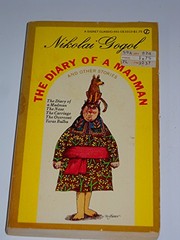 Nikolai Gogol · 1835Diary of a MadmanLvl 4Medium pace
 Nikolai Gogol · 1835Taras BulbaLvl 4Fast paced
 Nikolai Gogol · 1836The Government InspectorLvl 3Fast paced
 Nikolai Gogol · 1842Dead SoulsLvl 5Medium pace
 Nikolai Gogol · 1842The OvercoatLvl 3Medium pace
 Fyodor Dostoevsky · 1866Crime and PunishmentLvl 6Fast paced