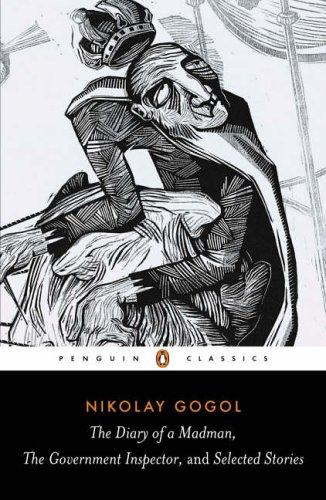
The Government Inspector
Nikolai Gogol · 1809–1852 · Ukraine / Russia
Originally Revizor (Russian)
Why it matters
A provincial town mistakes a penniless nobody passing through for the dreaded inspector sent to audit its corruption, and falls over itself with bribes and flattery. Russia's founding stage satire, so lethal about official venality that Tsar Nicholas I approved it himself.
At a glance
A fast, farcical stage comedy with clear scenes and broadly drawn comic types.
Deep dive
A broke, minor clerk gets mistaken for the auditor a corrupt provincial town is terrified of, and discovers that the easiest way to become powerful is to let everyone else's guilt do the inventing for him.
Written for readers who have finished the book. No plot recap, and nothing here is safe to read first.
Themes & symbolism
Every official in Gogol's provincial town, the Mayor foremost among them, is guilty of something specific and mundane: embezzled funds, a hospital where patients are fed worse than they'd manage themselves, a judge who takes payment in hunting dogs rather than cash, and word that an inspector is traveling incognito to audit them sends the whole town into a panic that has nothing to do with the actual stranger who arrives. Khlestakov, a penniless, foolish government clerk stranded at the local inn because he can't pay his bill, is nothing like an inspector, and Gogol's joke is that it doesn't matter in the slightest: the town has already decided who he is before he says a single word, and every claim he then improvises, each more absurd than the last, simply gets absorbed into a fiction the officials built for themselves.
Khlestakov accepts each official's bribe as a 'loan,' courts both the Mayor's wife and daughter simultaneously, and grows more expansive in his fabricated Petersburg importance in direct proportion to how eagerly the town believes him, so that his lies function as a kind of mirror held up to everyone else's guilt rather than as deception in any conventional sense. Gogol coined, almost by accident, an entire idiom for this: 'khlestakovism' entered the Russian language as shorthand for exactly this kind of hollow, self-inflating bluster that only works because an audience desperate to believe something keeps supplying the credibility the liar never actually earns.
A Satire the Tsar Personally Approved
The Government Inspector cleared Russian censorship and reached the stage in 1836 only because Tsar Nicholas I personally intervened to allow its production, reportedly remarking after the premiere that everyone in the play had gotten what was coming to them, and that he had gotten it worse than anyone. That endorsement didn't shield Gogol from a furious backlash among the officials and provincial gentry the play skewered, and he left Russia for several years shortly afterward, unsettled by how personally the satire's targets had taken a play the sovereign himself had laughed at.
The last seal: what actually happens, and why it lands the way it does.
The ending, explained
Just as Khlestakov's fabricated importance is about to unravel under the town's own growing scrutiny, he manages to leave with a fortune in extorted 'loans' and a hasty engagement to the Mayor's daughter, escaping before anyone catches on. The play's true climax arrives only after he's gone: a gendarme announces that the real government inspector has arrived and is demanding to see everyone immediately, and Gogol's stage direction calls for the entire cast to freeze in silent horror, the famous 'dumb scene,' held for a suspended, unscripted length of time before the curtain falls with no further action at all. Nothing is resolved on stage. The town's punishment is left entirely to the audience's imagination, which Gogol trusted, correctly, to supply something worse than anything he could have staged.