
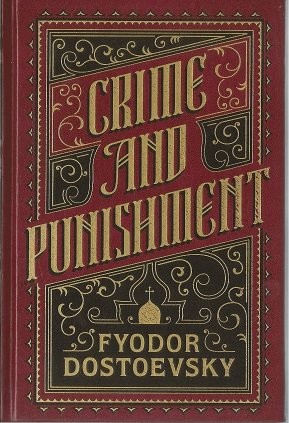
Crime and Punishment
Fyodor Dostoevsky · 1821–1881 · Russia
Originally Prestuplenie i Nakazanie (Russian)
Why it matters
A student murders a pawnbroker to prove himself extraordinary, then discovers what conscience actually is. The great psychological thriller of world literature: theory versus the human fact, played out in fevered St Petersburg.
At a glance
Feverish interior monologue and dense ideological debate slow a gripping surface plot.
Deep dive
Raskolnikov's 'extraordinary man' theory doesn't survive contact with an axe — this is Dostoevsky's rebuttal to the nihilists of his own day, staged as psychological horror.
Written for readers who have finished the book. No plot recap, and nothing here is safe to read first.
Themes & symbolism
Raskolnikov commits the murder to test a theory, not for money — his essay argues that history's great men, his example is Napoleon, are permitted to "step over" ordinary morality because their ends justify it. The novel's cruelty is that it grants him the crime and then withholds the payoff: no cool exhilaration, no proof of extraordinariness, just fever, isolation, and a body that seems to punish him from the inside before the law ever touches him. Dostoevsky's real subject is that conscience is not an idea you can argue away — it's a physiological fact, and Raskolnikov's collapse is proof that his theory was always a fiction built to justify what he already wanted to do.
Sonya Marmeladova is his structural opposite and his only way out. She has also crossed a moral line — prostitution, taken up to feed her family — but where Raskolnikov's transgression isolates him in pride, hers is undertaken in self-abnegating love, and it leaves her soul intact. When Raskolnikov asks her to read him the story of Lazarus, Dostoevsky is not being subtle: Raskolnikov is the man in the tomb, and confession followed by suffering, not cleverness, is the only route back to life. Svidrigailov, the novel's other double, shows what happens to a man who commits real evil and finds no Sonya, no faith, no way to suffer meaningfully — only suicide.
Doubling: Svidrigailov and Sonya
Dostoevsky flanks Raskolnikov with two mirrors of where his crime could lead. Svidrigailov is nihilism with nothing underneath it — a man capable of real predation who, imagining eternity as "a room like a bathhouse in the country, black with soot, with spiders in every corner," shoots himself the night before Raskolnikov confesses, as if demonstrating the abyss Raskolnikov only theorized about. Sonya is the opposite mirror: transgression absorbed into love and faith rather than pride. Between them they frame the novel's actual argument — that what determines a soul's fate isn't the size of the sin but whether it's carried with humility or arrogance.
Written Against the Nihilists
Dostoevsky conceived the novel partly as a direct answer to the radical utilitarianism sweeping 1860s Russia — especially Chernyshevsky's What Is to Be Done?, which argued rational self-interest could remake society and produced a generation of young radicals happy to justify violence by arithmetic. Raskolnikov's "extraordinary man" essay is that logic taken to its endpoint. Dostoevsky, writing after his own mock execution and years of Siberian exile, wasn't interested in refuting the theory intellectually — he built a novel to refute it physiologically, through fever, guilt, and a body that will not let its owner live comfortably inside an idea.
The last seal: what actually happens, and why it lands the way it does.
The ending, explained
Raskolnikov confesses to the police, not out of moral clarity but exhaustion — Sonya's presence outside the station is what finally moves his feet inside. The Siberian epilogue, often skipped in adaptations, is where the novel actually resolves: for months in the prison camp he remains proud, cold even to Sonya, and the other convicts sense his contempt and turn on him. His conversion arrives suddenly, almost outside narration — he falls at Sonya's feet and finally weeps, and Dostoevsky signals that love has begun to restore what pride had killed in him, the Gospel again on the table between them. The novel ends deliberately unfinished, calling what follows the story of a man's gradual renewal that could fill a new book — punishment is over; redemption has only just begun.
Where to go next
 Fyodor Dostoevsky · 1864Notes from UndergroundLvl 7Slow burn
 Fyodor Dostoevsky · 1867The GamblerLvl 4Fast paced
 Fyodor Dostoevsky · 1869The IdiotLvl 7Slow burn
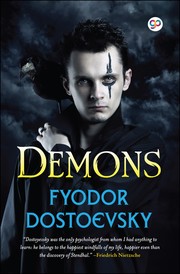 Fyodor Dostoevsky · 1872DemonsLvl 8Medium pace
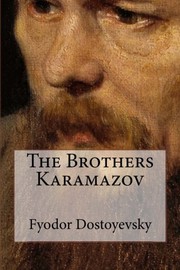 Fyodor Dostoevsky · 1880The Brothers KaramazovLvl 8Slow burn
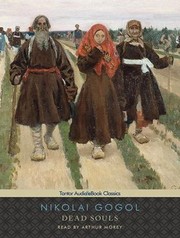 Nikolai Gogol · 1842Dead SoulsLvl 5Medium pace