
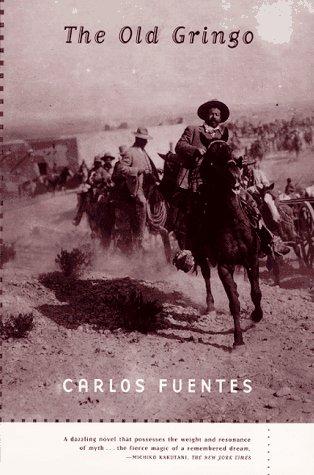
The Old Gringo
Carlos Fuentes · 1928–2012 · Mexico
Originally Gringo viejo (Spanish) · translated by Margaret Sayers Peden
Why it matters
An aging American writer rides into the Mexican Revolution to die on his own terms and vanishes into Pancho Villa's army instead. Fuentes's tribute to Ambrose Bierce's real disappearance: the first novel by a Mexican writer to top U.S. bestseller lists.
At a glance
A linear, image-driven narrative shifts between three converging points of view.
Deep dive
An aging American writer rides into the Mexican Revolution looking for a good way to die, and finds it entangled with a general fighting to burn one hacienda's entire claim on the land his family worked, and a schoolteacher caught between both men's very different ideas of honor.
Written for readers who have finished the book. No plot recap, and nothing here is safe to read first.
Themes & symbolism
Fuentes builds the novel from the real, unresolved disappearance of Ambrose Bierce, the American writer and Civil War veteran who crossed into Mexico in 1913, at the height of the Revolution, and was never seen again. Fuentes's fictional old gringo goes looking for exactly the death Bierce's own late journalism seemed to court, riding with General Tomás Arroyo's forces less out of political conviction than a wish to be killed usefully, on someone else's terms, rather than fade out unnoticed in the United States he's spent decades savaging in print. Arroyo, in turn, is fighting a war that is intensely personal underneath its revolutionary banner: he is the hacienda owner's illegitimate son, and the land documents he burns in a symbolic bonfire are the very papers that once defined his own people, and his own birth, as property rather than citizens.
Harriet Winslow, an American governess who arrives at the same hacienda to tutor children who no longer exist, completes a triangle in which each character projects onto Mexico a different fantasy: the gringo wants his death to mean something, Arroyo wants his birthright acknowledged by force, and Harriet wants a version of moral order she can still recognize as her own. Fuentes uses their mutual incomprehension to dramatize what he frames as the deeper condition running under a century of United States and Mexican relations, two countries bound together by proximity and history that keep fatally misreading what the other one actually wants.
Bierce's Own Prose Bleeding into Fuentes's
Fuentes threads the real Bierce's reputation for mordant, unsentimental war writing, most famously An Occurrence at Owl Creek Bridge, directly into the fictional old gringo's own voice and outlook, so that the novel reads at points like a dialogue between Fuentes's prose and Bierce's remembered style rather than a straightforward historical pastiche. The device lets Fuentes treat the old gringo's disappearance not just as an unsolved historical mystery but as a kind of authorial afterlife, a real writer's persona surviving into a fiction that finally gives his vanishing an ending, even if an invented one, that his actual biography never provided.
The last seal: what actually happens, and why it lands the way it does.
The ending, explained
After the gringo destroys the hacienda's land documents alongside Arroyo, a provocation that humiliates the general in front of his own men, Arroyo has him shot, an act closer to the death the old man had been courting all along than to a battlefield casualty. When Pancho Villa's forces later sweep through and learn an American was killed by one of his generals without orders, Villa has Arroyo executed in turn, unwilling to let a foreign death become a pretext for United States intervention in the Revolution. Harriet, left to negotiate the return of the gringo's body to American soil, ultimately arranges for its exhumation years later, and the novel closes with her recalling an aged, defeated Villa, the Revolution's grand promise having narrowed, for all three central characters, into a private reckoning none of them got to survive on their own terms.
Where to go next
 Carlos Fuentes · 1958Where the Air Is ClearLvl 8Slow burn
 Carlos Fuentes · 1962The Death of Artemio CruzLvl 8Slow burn
 Carlos Fuentes · 1962AuraLvl 6Medium pace
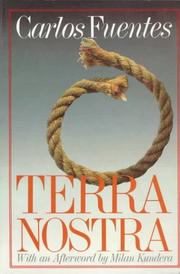 Carlos Fuentes · 1975Terra NostraLvl 10Slow burn
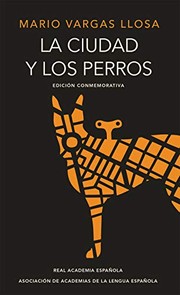 Mario Vargas Llosa · 1963The Time of the HeroLvl 6Medium pace
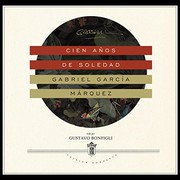 Gabriel García Márquez · 1967One Hundred Years of SolitudeLvl 6Medium pace