

Aura
Carlos Fuentes · 1928–2012 · Mexico
Originally Aura (Spanish) · translated by Lysander Kemp
Why it matters
A historian answers an advertisement to organize a dead man's papers and finds himself drawn into his elderly employer's shuttered house, and into obsession with her elusive young niece, told entirely in the second person. Sixty uncanny pages; Mexico's most perfect ghost story.
At a glance
Sustained second-person narration throughout gives an eerie, disorienting register.
Deep dive
A young historian takes a strange job transcribing a dead general's memoirs in a house that seems to run on its elderly owner's memory, and falls for a woman the house may be generating rather than sheltering.
Written for readers who have finished the book. No plot recap, and nothing here is safe to read first.
Themes & symbolism
Fuentes narrates the entire novella in second person future tense, tú leerás, tú entrarás, so Felipe Montero's decisions arrive as instructions rather than choices, a grammar that makes the reader complicit in a story about losing control of one's own will. Felipe answers a newspaper advertisement to edit the memoirs of the late General Llorente, moves into the dark, shuttered house on Calle Donceles belonging to the general's widow, Consuelo, and meets her niece Aura, whose beauty he responds to instantly and whose movements, gestures, and even eye color he never quite manages to describe with any more precision than he can describe Consuelo's.
Fuentes seeds the doubling everywhere before the ending confirms it: Aura and Consuelo are never in the same room at the same time, Aura's hands echo Consuelo's exact gestures a beat apart, and a ritual involving a skinned rabbit ties Aura's vitality to something Consuelo is actively performing rather than simply possessing. The general's memoirs, which Felipe was hired to organize, keep circling back to a young wife who looks exactly like Aura, and by the time Felipe notices the photograph of Llorente that looks exactly like himself, the novella has stopped being a ghost story about a house and become one about a soul reusing the same bodies.
The memoirs Felipe was hired to edit are not incidental period detail: Llorente was a monarchist officer who served the French-imposed Emperor Maximilian in the 1860s, then followed him into exile once the Second Mexican Empire collapsed, and Fuentes has him write the whole account in French, the language of an allegiance that was never really to Mexico at all. Felipe's job, tidying a dead monarchist's record of a regime that lost, quietly rehearses the fate the house has waiting for him, a fresh body borrowed to keep finishing someone else's unfinished business long after the cause it served is gone.
A Grammar That Won't Let You Look Away
The future-tense second person Fuentes uses throughout, unusual enough in Spanish that translators still argue over how to render its exact tense, keeps Felipe's story permanently one step ahead of itself: every action is foretold a sentence before it happens, which mimics the novella's real subject, a man being led through a sequence someone else has already scripted. Fuentes had used close, obsessive narration before, but never one that refused the reader the safety of a completed past tense, and the choice makes Aura feel less like a story being told than a spell being cast, with the reader standing in for whoever the house needs to arrive next.
The last seal: what actually happens, and why it lands the way it does.
The ending, explained
In bed with the woman he believes is Aura, Felipe embraces her in the dark and lights a candle to find himself holding Consuelo instead, the same aged, wrinkled body he met on his first day in the house. Consuelo tells him plainly what the mirrored gestures and the rabbit ritual have been building toward: Aura is her own younger self, conjured back through will, memory, and a kind of sustained magic the old woman has practiced since her husband's death, and Felipe himself carries General Llorente's features closely enough that Consuelo has effectively resurrected her marriage entire, down to both participants. She promises Felipe that Aura will return, and the novella ends on that promise rather than an escape, closing the loop rather than breaking it.
Where to go next
 Carlos Fuentes · 1958Where the Air Is ClearLvl 8Slow burn
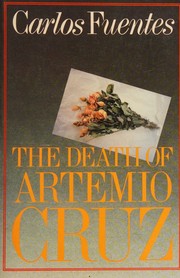 Carlos Fuentes · 1962The Death of Artemio CruzLvl 8Slow burn
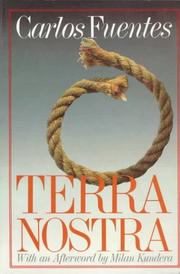 Carlos Fuentes · 1975Terra NostraLvl 10Slow burn
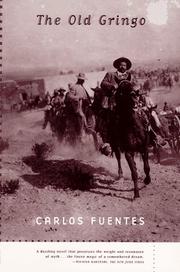 Carlos Fuentes · 1985The Old GringoLvl 5Medium pace
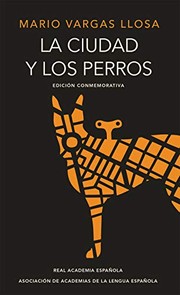 Mario Vargas Llosa · 1963The Time of the HeroLvl 6Medium pace
 Gabriel García Márquez · 1967One Hundred Years of SolitudeLvl 6Medium pace