
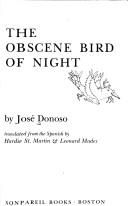
The Obscene Bird of Night
José Donoso · 1924–1996 · Chile
Originally El obsceno pájaro de la noche (Spanish)
Why it matters
A mute servant in a decaying convent narrates a hallucinatory hall of masks, monsters, and shifting bodies. Donoso pushes the Boom's machinery toward nightmare: the Latin American novel at its most vertiginous.
At a glance
Shifting, unreliable identities and hallucinatory imagery dissolve any stable narrator or timeline.
Deep dive
A novel that builds an entire protective mythology around a deformed child, and asks — through a narrator who may not even be who he claims — where shelter stops and imprisonment starts.
Written for readers who have finished the book. No plot recap, and nothing here is safe to read first.
Themes & symbolism
The convent's old women surround a wealthy family's deformed infant, Boy, with nothing but other deformed and unusual bodies from birth, so that he will never learn he differs from any external standard of normalcy. This warped, tender construction, an entire artificial reality built solely to shield one person from a painful truth, is the novel's central metaphor for what narrative and identity themselves do: protect by imprisoning, comfort by falsifying, so thoroughly that the shelter and the cage become indistinguishable. Donoso fuses this with the Chilote folklore of the imbunche, a figure sewn shut and sealed into helplessness, to give the metaphor a body rather than leaving it abstract.
Humberto Peñaloza, the servant sometimes called Mudito, narrates across a fracturing, multiplying identity that at times speaks as the mute servant, at times as Boy himself, at times as other characters entirely, with the novel declining to certify which voice, if any, represents an objective truth beneath the shifting narration. This isn't confusion for its own sake: identity here is radically unstable rather than fixed, and the convent's population of the elderly, abandoned, and deformed makes social and physical marginality the novel's whole world rather than its exception. Even by the Boom's own standards of formal ambition, this is the tradition pushed all the way to nightmare, difficulty itself functioning as the novel's argument about how ungraspable a self actually is.
It matters that Mudito may not even be genuinely mute at all; his silence, like so much else in the book, is never confirmed as physical fact rather than chosen role or imposed condition, and that ambiguity extends outward to everything else the narration claims about itself. The old women who tend Boy and later tend Mudito occupy a similar double position, simultaneously captors and caregivers, their devotion to protecting the vulnerable indistinguishable from their capacity to entrap them, which is what keeps the novel's central metaphor from ever resolving into simple horror or simple tenderness.
Gothic convent, Chilote myth, modernist fracture
The decaying, labyrinthine convent supplies the Gothic architecture of sealed rooms and doubling; Chilote folklore supplies the imbunche and the witches; a modernist, then near-postmodernist fragmentation of perspective supplies the refusal to stabilize any of it into a single coherent account. Donoso layers these three inheritances rather than choosing between them, which is why the book reads less like a haunted-house novel with regional color than like an entirely new grammar for describing a self that never held together in the first place. Where Donoso's Boom contemporaries tended to use formal daring in service of eventual illumination, however oblique, this novel treats illumination itself as a false promise, using its difficulty to enact the very dissolution of coherent selfhood it describes.
The last seal: what actually happens, and why it lands the way it does.
The ending, explained
Rather than resolving into a single stable identity behind all the novel's shifting narration, the final movement dissolves further: whatever consolidated version of the narrating consciousness remains is sewn into a sack by the convent's old women, a literal enactment of the imbunche myth that has run beneath the whole book. It is total physical and narrative erasure, the collapse of a self that was never fixed to begin with. Donoso refuses conventional closure entirely, ending in the same hallucinatory register the novel sustained throughout, with identity, reality, and narrative authority all dissolved together rather than clarified.
Where to go next
 José Donoso · 1978A House in the CountryLvl 8Slow burn
 Guillermo Cabrera Infante · 1967Three Trapped TigersLvl 9Slow burn
 Augusto Roa Bastos · 1974I, the SupremeLvl 9Slow burn
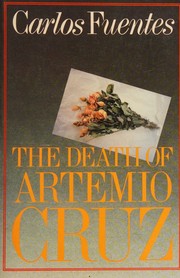 Carlos Fuentes · 1962The Death of Artemio CruzLvl 8Slow burn
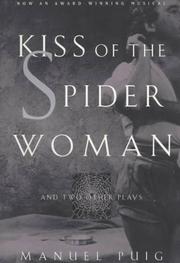 Manuel Puig · 1976Kiss of the Spider WomanLvl 6Fast paced
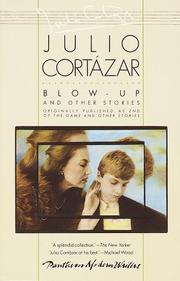 Julio Cortázar · 1959Blow-Up and Other StoriesLvl 6Medium pace