
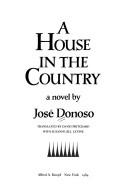
A House in the Country
José Donoso · 1924–1996 · Chile
Originally Casa de campo (Spanish) · translated by David Pritchard and Suzanne Jill Levine
Why it matters
Thirty-five wealthy children are left alone at a country estate while their parents attend to business elsewhere, and the estate quietly devours itself. Donoso's allegory of Pinochet's Chile, narrated by an author who keeps interrupting his own fable.
At a glance
A self-interrupting narrator and dense political allegory complicate a seemingly simple fable.
Deep dive
Thirty-three cousins are left alone at a Chilean country estate for a single day while the adults ride off on an excursion, and Donoso spends the whole novel asking what happens to a household's rules once the people enforcing them are simply gone.
Written for readers who have finished the book. No plot recap, and nothing here is safe to read first.
Themes & symbolism
The Ventura family's country house runs on an elaborate, almost feudal hierarchy: the cousins at the center, servants and the Majordomo arranged around them, and beneath everyone, the native workers who haul the estate's gold under conditions the children have been raised never to look at directly. When the adults depart for their day-long picnic, taking every servant with them and leaving the Majordomo's staff in unsupervised charge, Donoso doesn't stage a simple Lord of the Flies collapse into savagery. He stages something closer to a coup, the existing chain of command reorganizing itself under new management the moment its original authors leave the property, which is a more exact and more damning image of how power actually changes hands than any scene of children reverting to chaos would have been.
Donoso began the novel before Chile's 1973 coup and finished it after, and the book absorbs that history directly. He has said certain speeches given by characters in the novel are lifted nearly verbatim from real statements by Salvador Allende and Augusto Pinochet, and the Venturas' capacity to leave for an afternoon and return to find their entire domestic order rearranged without their permission reads as a direct, if displaced, rendering of a ruling class discovering that the institutions built to serve it can just as easily be turned against it. The mythical, invented setting doesn't soften the allegory. It generalizes it, since a house that could be any wealthy family's country estate implicates the whole class, not one government.
Wealth That Requires Not Looking
The gold the native laborers carry through the background of nearly every scene is never explained, contested, or even acknowledged by most of the Ventura children, and that silence is Donoso's sharpest instrument: an entire fortune's source sits in plain view throughout the novel, doing its work on the family's comfort while remaining literally beneath their attention. When the household order starts to fracture during the adults' absence, the buried relationship between the Venturas' wealth and the labor producing it is exactly what surfaces, since a hierarchy built on studied inattention has no defense once the people at its bottom stop cooperating with being ignored.
The last seal: what actually happens, and why it lands the way it does.
The ending, explained
The adults return from their excursion to find the household's carefully maintained order visibly disturbed, the Majordomo's staff having consolidated real control over the property and the children marked, some physically, by what happened while their parents were away. Rather than reckon with what the collapse revealed about the family's own foundations, the Venturas move to restore the appearance of normal life as quickly as possible, disciplining the visible disorder while leaving the underlying arrangement of servants, natives, and inherited wealth untouched and unquestioned. Donoso denies the adults any real reckoning, since their capacity to paper over one afternoon's uprising and resume calling the house theirs is precisely the mechanism, restoration without reform, that keeps a ruling class in power after its authority has already been shown to be borrowed rather than owned.
Where to go next
 José Donoso · 1970The Obscene Bird of NightLvl 9Slow burn
 Guillermo Cabrera Infante · 1967Three Trapped TigersLvl 9Slow burn
 Augusto Roa Bastos · 1974I, the SupremeLvl 9Slow burn
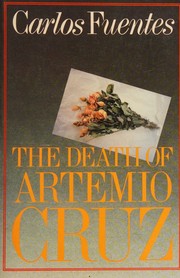 Carlos Fuentes · 1962The Death of Artemio CruzLvl 8Slow burn
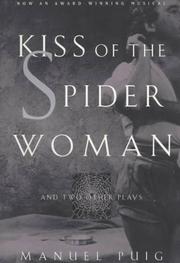 Manuel Puig · 1976Kiss of the Spider WomanLvl 6Fast paced
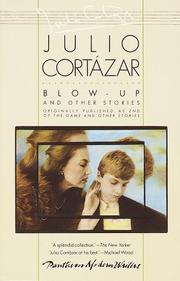 Julio Cortázar · 1959Blow-Up and Other StoriesLvl 6Medium pace