
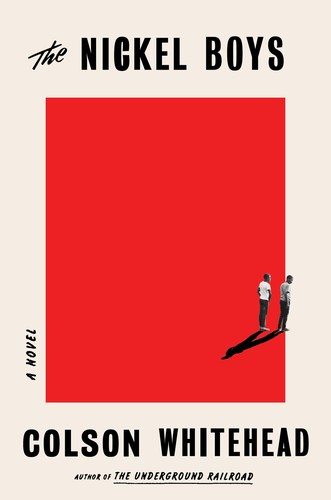
The Nickel Boys
Colson Whitehead · b. 1969 · United States
Why it matters
Two Black boys endure a brutal Jim Crow-era Florida reform school based on a real institution whose horrors were only recently exhumed. Whitehead's second consecutive Pulitzer winner, spare where The Underground Railroad was expansive.
At a glance
Restrained, controlled prose despite the harrowing material.
Deep dive
Two friends at a brutal 1960s reform school stake out opposite answers to the same question — does nonviolent idealism actually survive an institution built to punish it — and Whitehead spends fifty years finding out which one was right.
Written for readers who have finished the book. No plot recap, and nothing here is safe to read first.
Themes & symbolism
Whitehead alternates chapters between Elwood's ordeal at Nickel Academy in the 1960s and, decades later, an adult man in New York running a moving company under the name Elwood Curtis — only revealing near the end that this adult narrator is actually Turner, Elwood's friend from Nickel, who survived their escape attempt while Elwood was shot dead by pursuers, and who has spent fifty years living as the friend he couldn't save rather than as himself. The device isn't deployed for shock so much as a formal enactment of the novel's real argument: institutional violence like Nickel's erases the boys who pass through it so thoroughly that even surviving it can require disappearing.
Elwood's literal-minded, dangerous faith in nonviolent moral argument, carried through a treasured Martin Luther King Jr. record, is set against Turner's harder-won cynicism about whether the system can ever be appealed to honestly — their friendship stages the era's central argument between idealism and survivalism inside an institution built to punish both equally. Turner's decision, decades later, to finally speak under his real name as investigators exhume Nickel's mass graves is the novel's answer: idealism doesn't triumph exactly, but bearing witness, even fifty years late and under a borrowed name, is offered as its own form of the fidelity Elwood always practiced.
Whitehead's prose stays flat and controlled even at the school's worst moments — the beatings delivered in a locked shed nicknamed the White House are described with the same restraint as a boy doing chores — and that refusal to sensationalize is a deliberate choice rather than an omission. The horror lands harder for being underplayed, since the novel trusts the facts of what happened at real reform schools like this one to carry their own weight without prose straining to supply outrage the reader is already bringing.
Based on a Real School
Whitehead modeled Nickel Academy directly on the Arthur G. Dozier School for Boys in Florida, whose unmarked graves were confirmed by forensic anthropologists starting in 2012, decades after survivor testimony about abuse and unexplained deaths went largely unheeded. The novel's epilogue, where investigators and a memorial website solicit survivor accounts, tracks the real institution's reckoning closely enough that the fiction functions as its own act of testimony alongside the actual case.
The last seal: what actually happens, and why it lands the way it does.
The ending, explained
During the escape, a Nickel staff member shoots and kills Elwood while Turner gets over the fence and vanishes into the woods. Rather than return to his own identity — which would mean admitting he survived and Elwood didn't — Turner takes Elwood's name and quietly builds a life as someone else, unable to fully mourn a death he's never officially acknowledged. When the Dozier-style investigation surfaces and only white survivors are being asked for public accounts, Turner — after confessing everything to his wife — comes forward under his real name to testify for Elwood and the other Black boys the school destroyed, a reckoning that arrives decades too late to save anyone but stands, in the novel's quiet final logic, as the truest use Turner has ever made of his friend's memory.
Where to go next
 Colson Whitehead · 2016The Underground RailroadLvl 5Fast paced
 Toni Morrison · 1987BelovedLvl 8Slow burn
 Jesmyn Ward · 2017Sing, Unburied, SingLvl 5Medium pace
 Ralph Ellison · 1952Invisible ManLvl 7Medium pace
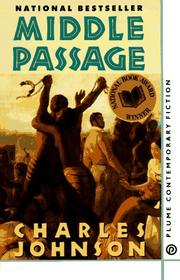 Charles Johnson · 1990Middle PassageLvl 5Fast paced
 Percival Everett · 2001ErasureLvl 6Fast paced