
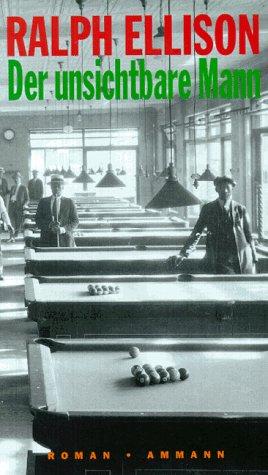
Invisible Man
Ralph Ellison · 1913–1994 · USA
Why it matters
From a Southern college to a Harlem basement wired with 1,369 bulbs: the great American novel of identity, refusing every role offered it. One book, twenty years of American literature's center of gravity.
At a glance
Surreal set pieces and shifting symbolic registers complicate a picaresque structure.
Deep dive
Why the narrator never gets a name, and why the briefcase he carries through the whole book — stuffed with other people's ideas of who he should be — matters more than any single betrayal in it.
Written for readers who have finished the book. No plot recap, and nothing here is safe to read first.
Themes & symbolism
The narrator is never named — a formal choice that makes the title literal on every page, since a name is the most basic form of social visibility a person can be granted or denied. Ellison stages his invisibility as a series of roles handed to him by others, each seemingly an opportunity and each actually a trap: the Battle Royal that opens the book has white town leaders force Black boys to fight blindfolded for their entertainment before handing the narrator a scholarship, fusing "opportunity" and "humiliation" into a single transaction that becomes the novel's template. Dr. Bledsoe's oily campus diplomacy, the Brotherhood's Marxist choreography, Ras the Exhorter's Black nationalism — each offers the narrator a script, an identity written by someone else's politics, and each ends in betrayal once he stops being useful to it.
The basement, illegally wired with 1,369 stolen bulbs, is the book's central irony made physical: true self-possession, for this narrator, requires stealing power from a system that refuses to acknowledge he needs any. His briefcase, filled across the novel with his high school diploma, an anonymous note warning him to slow down, a grinning paper minstrel doll salvaged from Tod Clifton's body after his death, and a link of leg-iron given to him by a former convict, becomes a portable museum of every identity imposed on him — objects that were never fuel for a self, only souvenirs of other people's uses for him.
The Brotherhood and the Break With the Party
The Brotherhood, thinly veiling the Communist Party USA, initially looks like the novel's most sophisticated trap because it speaks the language of solidarity rather than paternalism — the narrator is trained, renamed, given real oratorical power in Harlem. But Ellison, drawing on his own disillusioning years around Party-adjacent Harlem politics, shows the organization sacrificing Black members' actual interests to abstract doctrine the moment national strategy shifts, culminating in its cold indifference to Tod Clifton's death. The Brotherhood isn't villainous in the way Bledsoe or the Battle Royal's organizers are — it's worse, because its betrayal comes dressed as brotherhood.
A Jazz Novel
Ellison, a trained musician before he was a novelist, builds the book on improvisation over borrowed forms rather than strict imitation — the prologue's riff on a Louis Armstrong record ("What did I do to be so black and blue?"), the debt to Dostoevsky's Notes from Underground in the narrator's subterranean, argumentative voice, the folk sermons and blues interludes that surface mid-scene. The result reads less like a linear bildungsroman than a set of variations circling the same unresolved question of identity, breaking and reassembling literary conventions the way a soloist breaks and reassembles a standard.
The last seal: what actually happens, and why it lands the way it does.
The ending, explained
Chased into a Harlem riot he didn't start and pursued by Ras's men, the narrator falls through a manhole while fleeing and finds himself trapped underground — which turns out to be where the whole novel has been narrated from; the prologue's voice and the ending are the same moment. In the dark, he burns the paper contents of his briefcase one by one for light, watching his diploma, the anonymous note, and Clifton's dancing minstrel doll go up in flame, and understands that each had only ever been someone else's idea of who he should be. He decides to stay underground, tapping stolen power to write the very story we've been reading, calling his retreat "hibernation," not defeat. The closing line — "who knows but that, on the lower frequencies, I speak for you?" — reframes invisibility as a delayed, unresolved claim on the reader, not a surrender.
Where to go next
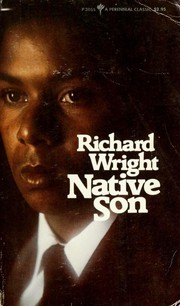 Richard Wright · 1940Native SonLvl 5Fast paced
 James Joyce · 1914DublinersLvl 3Slow burn
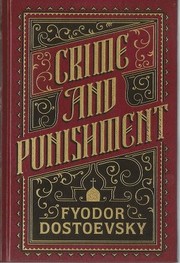 Fyodor Dostoevsky · 1866Crime and PunishmentLvl 6Fast paced
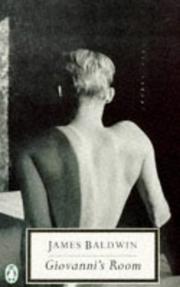 James Baldwin · 1956Giovanni's RoomLvl 5Medium pace
 James Alan McPherson · 1977Elbow RoomLvl 5Medium pace
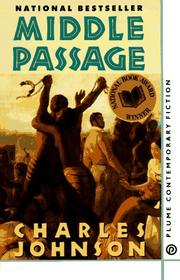 Charles Johnson · 1990Middle PassageLvl 5Fast paced