
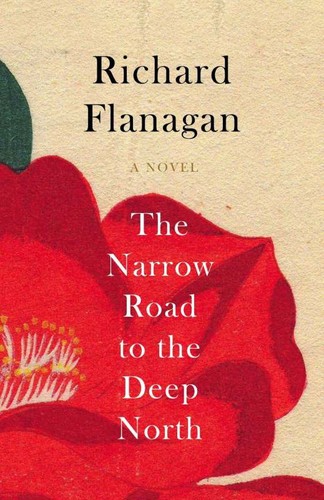
The Narrow Road to the Deep North
Richard Flanagan · b. 1961 · Australia
Why it matters
An Australian doctor endures (and fails to fully survive) his own conscience while leading fellow POWs through the Thai-Burma death railway's horror. Flanagan's Booker winner, drawn from his father's captivity, is as much about the damage of surviving as of dying.
At a glance
Nonlinear timeline across decades and unflinching violence balanced by clear, propulsive prose.
Deep dive
How Bashō's serene travelogue title becomes the bitterest possible irony for a death march, and why heroism here is something Dorrigo has to survive privately.
Written for readers who have finished the book. No plot recap, and nothing here is safe to read first.
Themes & symbolism
Flanagan borrows his title from Bashō's Oku no Hosomichi, a seventeenth-century journey toward beauty and enlightenment, and turns it inside out: the narrow road here is a literal track hacked through Thai-Burma jungle by starving, dying men, a journey toward nothing but more railway. The irony isn't subtle and isn't meant to be — it's the frame that lets Flanagan hold the sublime and the atrocious in the same sentence, since the POWs' endurance is genuinely sublime even as the enterprise itself is obscene. Dorrigo's reluctant leadership works the same seam: he becomes a legend to men whose survival he mostly couldn't secure, and the gap between the myth his men need and the doctor who privately believes he failed them defines the rest of his life.
The Amy plot is the novel's other engine, and it's built entirely out of contingency rather than tragedy in the classical sense — a bombing, misdirected letters, two people each wrongly certain the other is dead. Flanagan is making a case about war's collateral damage that has nothing to do with bullets: an entire private life detonated by bureaucratic accident, and no one to blame for it. Dorrigo's marriage to Ella and his public career as war hero and serial adulterer are what a life looks like when its real center of gravity has been amputated rather than resolved — grief with nowhere to go becomes charisma, then cruelty.
Three Postwars
Flanagan splits his attention after the war between Dorrigo, Nakamura, and the Korean guard Choi Sang-min, and none of them process what they did the same way. Nakamura rebuilds a respectable civilian life by narrating his own wartime conduct as duty rather than atrocity, a self-mythology the postwar world is largely happy to let him keep. Choi, lower in the hierarchy and therefore more exposed to postwar justice, becomes a scapegoat for cruelties that were systemic. Set against Dorrigo's public sainthood, the triptych refuses the comforting idea that only the losing side gets away with its own myths — everyone here survives on a story they've told themselves.
The last seal: what actually happens, and why it lands the way it does.
The ending, explained
Decades on, Dorrigo is a celebrated, decorated surgeon whose marriage to Ella has curdled into distance and infidelity; the war made him a great man in public record while leaving him privately convinced of his own failure. Amy is never reunited with him — the missed connection is never undone or redeemed, just carried. Flanagan lets Dorrigo die an old man still hollowed out by that unlived life, the heroism intact in the history books and worthless to him personally. The final note is the durable gap between how a life reads from outside — decorated, admired — and what it actually cost the person living it, a gap the novel never closes.
Where to go next
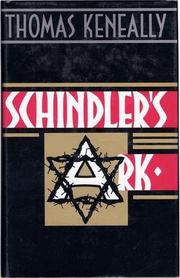 Thomas Keneally · 1982Schindler's ArkLvl 4Fast paced
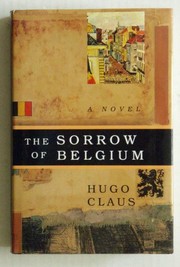 Hugo Claus · 1983The Sorrow of BelgiumLvl 6Medium pace
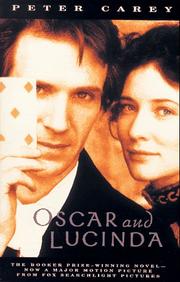 Peter Carey · 1988Oscar and LucindaLvl 6Medium pace
 Eleanor Catton · 2013The LuminariesLvl 7Medium pace
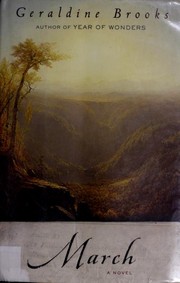 Geraldine Brooks · 2005MarchLvl 5Medium pace
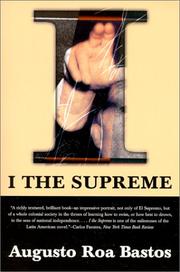 Augusto Roa Bastos · 1974I, the SupremeLvl 9Slow burn