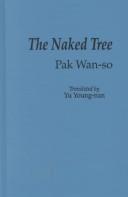
The Naked Tree
Park Wan-suh · 1931–2011 · South Korea
Originally Namok (Korean) · translated by Yu Young-nan
Why it matters
A young woman working an American army PX during the Korean War is drawn to an older, war-shattered painter numbing his grief in cheap portraiture. Park's prize-winning debut, written at forty from the wreckage of her own wartime years.
At a glance
A quietly interior wartime narrative builds through mood and restraint rather than incident.
Deep dive
Why a portrait painter reduced to sketching American soldiers' sweethearts for cash at a wartime PX still counts, in this novel's eyes, as the most serious artist left in Seoul.
Written for readers who have finished the book. No plot recap, and nothing here is safe to read first.
Themes & symbolism
Lee Kyung takes a job at the American PX during the Korean War hand-tinting cheap portraits GIs send home, work that trades entirely on sentiment and speed rather than skill, and finds herself drawn to Ok Hui-do, an older painter reduced to the same commercial grind despite training as a serious artist before the war scattered his career along with everything else. Park Wan-suh, who worked a nearly identical PX job herself as a young woman, gives Kyung a crush that is really a form of hope: if a man this evidently gifted can be surviving inside such a degraded trade, then art itself might have survived the war too, buried rather than destroyed.
Kyung's fascination with Ok is complicated rather than resolved by a quieter, steadier affection from a colleague at the PX, whose devotion she never fully returns and barely lets herself examine, and by her jealousy of Ok's wife, who represents a domestic stability Kyung both envies and doesn't quite want for herself. The novel is less interested in resolving this triangle than in using it to keep Kyung's attention fixed on the question of what, exactly, a person owes their own capacity to make something beautiful when survival is already using up everything they have.
Park Soo-keun Behind the Fiction
Ok Hui-do is closely modeled on Park Soo-keun, a real Korean painter known for textured, muted depictions of ordinary postwar life, who did in fact work informally at a wartime PX doing portraits for American soldiers before his later work found real recognition. Park Wan-suh's own employment there gives the novel its documentary precision about the PX's specific commerce in sentiment, and reading Ok as a portrait of an artist she genuinely observed sharpens the novel's insistence that his commercial work was never a betrayal of his gift, only its most difficult surviving form.
The last seal: what actually happens, and why it lands the way it does.
The ending, explained
Years after the war, married now and settled into an ordinary domestic life she once might have scorned, Kyung attends an exhibition of paintings Ok made privately and never sold, work that reveals he never stopped being the serious artist she'd hoped he still was underneath the PX portraits. Among them hangs a bare, wintry tree she remembers him painting during the war, and where she once read it as an image of desolation, matching how bleak that period felt to live through, she now recognizes in the same bare branches the shape of a tree simply waiting out a season, certain to leaf again. The novel closes on that revised reading rather than on any reunion, treating Kyung's changed eye as the real resolution: what survival costs a person is real, but it doesn't have the last word on what the survivor is able to see.