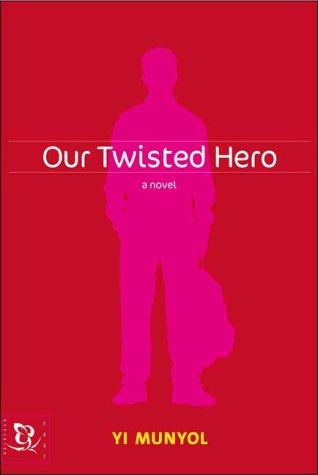
Our Twisted Hero
Yi Mun-yol · b. 1948 · South Korea
Originally Uridului Ilgeureojin Yeongung (Korean) · translated by Kevin O'Rourke
Why it matters
A rural classroom submits to a manipulative, tyrannical class monitor until a new student refuses to comply. A compact, widely taught allegory for dictatorship's seductions and the costs of complicity.
At a glance
Compact, straightforward allegory told through a single clear narrator.
Deep dive
The uncomfortable question the novel is really asking: not whether Sok-dae's tyranny can be beaten, but what it costs the boy who first resists it to keep resisting.
Written for readers who have finished the book. No plot recap, and nothing here is safe to read first.
Themes & symbolism
Sok-dae's power was never simple brutality; it ran on consent manufactured through favors, fixed results, and a teacher too incurious to check his own trust, which is exactly how the novel wants its allegory read. Yi is writing directly, if never explicitly, about the Park Chung-hee dictatorship: a system that lasted not because everyone was fooled but because enough people found it more comfortable, and eventually more profitable, to go along. The classroom's small economy of privileges and punishments maps cleanly onto a state's, and the novel trusts the reader to make that leap without ever naming it outright.
The real center of the book isn't Sok-dae at all, it's Byong-t'ae's slow, humiliating conversion from principled resister to one of the regime's most loyal beneficiaries. His classmates don't reward his early resistance with solidarity; they punish it with isolation, because they've already made their peace with a system that works, materially, in their favor. When Byong-t'ae finally capitulates, he isn't broken by force so much as persuaded by comfort, and that persuasion is far more damning than anything Sok-dae himself does — it indicts the ordinary human preference for a functioning, unjust system over a principled, costly resistance to it. Yi's decision to make Byong-t'ae both the moral compass of the book's early pages and its most compromised figure by the end is what keeps the allegory from ever feeling like a simple fable about a bad ruler and his victims.
A Classroom Standing In For a Country
The new teacher's arrival, and the public dismantling of Sok-dae's rigged little empire, plays like a change of regime rather than a change of teachers — and Yi is careful not to let it read as a clean liberation. The class doesn't emerge chastened or wiser as a body; individual students simply adjust to a new authority the way they adjusted to the old one, which is the novel's quiet suggestion about how societies actually metabolize the end of an authoritarian system: not through collective reckoning, but through the same adaptive compliance that sustained it. Set against South Korea's own transition out of dictatorship, the scene reads as a warning rather than a celebration.
What Complicity Buys
Byong-t'ae's arc matters because he's the narrator, not a background casualty — the story is being told by someone who benefited from exactly the system he once tried to expose, and who has to live with having found that beneficial. His shame isn't retroactive outrage at Sok-dae; it's the harder, quieter shame of remembering how easy compliance turned out to be once resistance stopped paying off, which is what makes the novel land as self-indictment as much as social allegory.
The last seal: what actually happens, and why it lands the way it does.
The ending, explained
Years later, grown, the narrator runs into Sok-dae by chance and learns he's gone on to a similarly manipulative, outwardly successful adult career — and watches him get arrested for fraud on the spot. It's not a satisfying comeuppance; it arrives too late, too small, and too disconnected from any real reckoning with what Sok-dae's rule cost the people under it, including the narrator himself. Yi refuses the clean moral close a lesser allegory would supply: the system's defeat doesn't undo what it produced in its subjects, and the narrator is left holding the knowledge that he, like almost everyone else in that classroom, chose complicity the moment resistance stopped being free.