
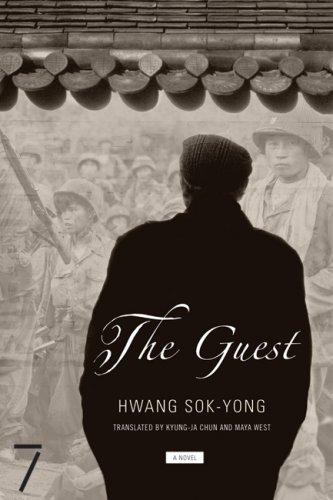
The Guest
Hwang Sok-yong · b. 1943 · South Korea
Originally Sonnim (Korean) · translated by Kyung-Ja Chun and Maya West
Why it matters
A Korean-American reverend returns to his childhood village to confront a massacre both North and South Korea would rather forget. Written with the documentary conscience of a novelist who served years in prison for crossing the border himself.
At a glance
Shifting ghost-narrators and a shamanic ritual structure fracture the timeline.
Deep dive
The dead here get to narrate their own massacre in turns — killers and killed alike — because Hwang builds the novel as a ritual, not a history lesson.
Written for readers who have finished the book. No plot recap, and nothing here is safe to read first.
Themes & symbolism
The title comes from a Korean shamanic euphemism for smallpox — a devastating affliction introduced from outside that a community had to appease rather than simply resist. Hwang extends the metaphor to the two ideologies that tore the village apart during the Korean War: Christianity and Marxism-Leninism, both imported belief systems that, like the disease, arrived from elsewhere and turned neighbors into killers in their name. Calling foreign ideology a 'guest' reframes the massacre away from either side's preferred narrative of righteous violence and toward something closer to a shared affliction that used Korean bodies as its vector.
Formally, the novel does something unusual: instead of a single narrator delivering a verdict on the Sinchon massacre, it moves between the voices of the dead themselves — Christian and communist, perpetrator and victim, sometimes the same person at different moments of complicity and suffering — structured explicitly on the model of a gut, the shamanic ritual meant to let restless, vengeful spirits finally speak and be released. The novel isn't reconstructing history from outside it; it's performing the ceremony that would actually let the dead rest, refusing the neatness of a single, authoritative account in favor of an accumulation of testimonies that resist reduction to either North or South Korea's official mythology.
Ritual as narrative structure
Most historical novels about atrocity adopt some version of documentary distance. Hwang instead borrows the actual shape of a Korean exorcism ceremony and makes it the book's architecture — overlapping first-person testimonies standing in for the successive stages of a gut, with Reverend Yosop's present-day return serving as the officiant rather than the protagonist in any conventional sense. The effect is that reading the novel enacts something closer to witnessing a ritual than following a plot: the goal isn't suspense about what happened, but the accumulation of enough voices, guilt, and grief that release becomes possible.
A novelist who crossed the line himself
Hwang Sok-yong was imprisoned in South Korea after illegally traveling to the North on an unauthorized visit undertaken partly in the spirit of cultural reconciliation. That biography sits behind the novel's insistence on hearing both sides without adjudicating blame in either state's favor — Hwang had already paid a personal price for treating the border, and the history on either side of it, as something other than settled propaganda. It's this firsthand knowledge of both Koreas' official narratives, and of what it costs to question either one, that keeps the novel's reconciliation project from reading as naive even-handedness rather than hard-won moral clarity.
The last seal: what actually happens, and why it lands the way it does.
The ending, explained
The ritual doesn't end with a verdict assigning blame to one side, which is exactly the point: both North and South Korean official histories insist the killing was entirely the other side's fault, and Hwang's structure — letting Christian and communist ghosts alike voice their own guilt and grievance — makes clear that both narratives are self-serving distortions of a mutual atrocity. What the novel offers instead of blame is release: the dead, finally heard on their own terms rather than conscripted into a state narrative, can be mourned rather than weaponized. Yosop's visit closes not as an investigation resolved but as an act of witness completed — reconciliation achieved through multiplicity of testimony rather than through establishing who was right.
Where to go next
 Hwang Sok-yong · 1985The Shadow of ArmsLvl 6Medium pace
 Park Wan-suh · 1992Who Ate Up All the Shinga?Lvl 4Medium pace
 Yi Mun-yol · 1987Our Twisted HeroLvl 3Fast paced
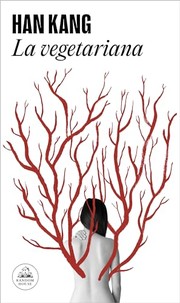 Han Kang · 2007The VegetarianLvl 6Fast paced
 Lily Tuck · 2004The News from ParaguayLvl 6Medium pace
 Jayne Anne Phillips · 2023Night WatchLvl 6Slow burn