
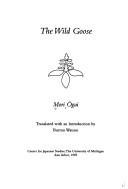
The Wild Goose
Ōgai Mori · 1862–1922 · Japan
Originally Gan (Japanese) · translated by Kingo Ochiai and Sanford Goldstein
Why it matters
A moneylender's mistress and the student who quietly watches her from afar circle desire that never quite finds release. Restrained, elegant prose from one of the two founding masters of the modern Japanese novel.
At a glance
Restrained, classically balanced prose with a simple, single-thread plot.
Deep dive
Why Ogai tells a story about two people who almost meet through a narrator remembering it thirty-five years later, and what that distance changes about how much blame anyone gets to keep.
Written for readers who have finished the book. No plot recap, and nothing here is safe to read first.
Themes & symbolism
Otama is deceived into what she believes is a respectable marriage, only to learn her new husband Suezo is a moneylender already married elsewhere, keeping her as a mistress in a house he's bought and furnished for exactly that purpose. Ogai renders her confinement architecturally rather than melodramatically: a comfortable house that is, in every way that matters, a cage, with her daily habit of watching the street from her window standing in for the only freedom the arrangement leaves her.
Okada, a medical student who walks past her window on his way to swim most evenings, becomes the object of a hope Otama never manages to voice to him directly, and the entire near-romance between them exists almost entirely in glances and imagined futures rather than a single real conversation. The unnamed narrator, reconstructing all of this decades later from what Okada, his old friend, eventually told him, makes the distance itself part of the novel's subject: a connection so faint it never technically became an event is nonetheless preserved, in careful retrospective detail, as though it mattered as much as one that did.
Suezo himself is drawn with more shading than the plot strictly requires. He genuinely believes he has been generous to Otama, providing a comfortable house and a stable income after a hard early life of his own, and Ogai lets that self-image sit uncontested by the narrative even as the novel's own architecture, the locked domestic comfort of Otama's confinement, makes clear how little his generosity actually cost him compared to what it costs her.
The Goose Okada Never Meant to Kill
On the evening Otama has finally resolved to speak to Okada when he next passes, he is instead walking with friends, who idly throw stones at a flock of wild geese resting by a pond and, more by accident than intent, kill one. Ogai stages the moment with no particular emphasis, letting its coincidence with Otama's unspoken resolve do all the work: a small, almost thoughtless act closes off a connection neither party ever chose to end, and the title's dead goose stands afterward as the emblem of an entire relationship that expires before it begins.
The last seal: what actually happens, and why it lands the way it does.
The ending, explained
Unaware that Otama had finally worked up the nerve to approach him, Okada leaves shortly afterward to continue his medical studies in Germany, foreclosing the connection without either of them ever having openly acknowledged it existed. The narrator, closing his account decades on, notes only that Otama's arrangement with Suezo simply continued after Okada's departure, with no further news of her worth recording. Ogai declines any dramatic resolution on purpose: the point of telling the story from such distance is to show how completely an entire life's one real chance at change can pass by disguised as nothing more than an ordinary evening.
Where to go next
 Ōgai Mori · 1890The Dancing GirlLvl 4Medium pace
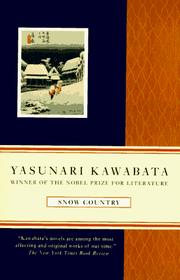 Yasunari Kawabata · 1947Snow CountryLvl 5Slow burn
 Natsume Sōseki · 1914KokoroLvl 4Medium pace
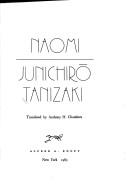 Jun'ichirō Tanizaki · 1925NaomiLvl 4Fast paced
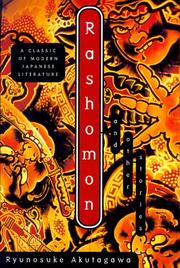 Ryūnosuke Akutagawa · 1915Rashōmon and Other StoriesLvl 5Fast paced
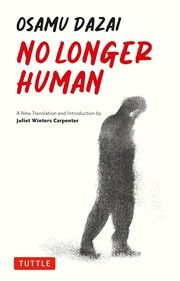 Osamu Dazai · 1948No Longer HumanLvl 4Medium pace