
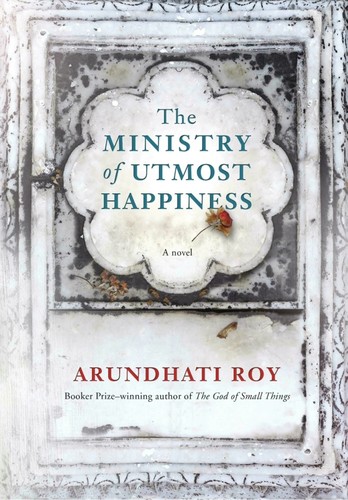
The Ministry of Utmost Happiness
Arundhati Roy · b. 1961 · India
Why it matters
A hijra, a resistance fighter, and an abandoned baby cross paths from Old Delhi to Kashmir. Roy's sprawling second novel, twenty years after her first, gathers modern India's outcasts and conflicts into one teeming, tender chorus.
At a glance
Sprawling, digressive multi-strand structure spanning decades and a huge cast of characters.
Deep dive
A hijra who has made her home in a Delhi graveyard and a woman whose great love disappeared into the Kashmir insurgency spend the novel converging on the same unlikely household, built from opposite ends of the subcontinent's worst decades.
Written for readers who have finished the book. No plot recap, and nothing here is safe to read first.
Themes & symbolism
Anjum's life, surviving the 2002 Gujarat riots as a hijra caught among Hindu men hunting Muslims, then withdrawing from Old Delhi's hijra community to make her home in a graveyard, gives Roy her clearest image of the novel's whole method: building a family, and eventually a functioning guesthouse called Jannat, out of people and spaces the official nation has already written off.
Tilo's history with Musa, a Kashmiri militant, and Naga, a journalist who becomes her husband of convenience, carries the novel's most sustained journalistic material, torture, disappearances, the everyday machinery of occupation under the Armed Forces Special Powers Act, and functions as Roy's most direct extension of her own decades of activist writing on Kashmir into fiction.
The novel's fractured, multi-voiced structure, refusing a single protagonist or a clean chronological line, mirrors its own argument: that a plural, contested India can't be told through the coherent, unified narrative form a nation-state prefers to tell about itself, and that a graveyard full of society's rejects is a more honest architecture for the story than any single house would be. It's a deliberately unglamorous vision of what utmost happiness actually requires, not a triumph but a household willing to keep its dead and its living, its hijras and its orphans and its rescued animals, in the same warm, crowded company.
Two Miss Jebeens: A Novel Built Around a Repeated Name
One Miss Jebeen, a child killed amid Kashmir's violence, is buried in Srinagar's overcrowded Martyrs' Graveyard; a second Miss Jebeen, an infant found abandoned on a Delhi sidewalk, is taken in decades later at Jannat Guest House, and Roy's decision to give both children the same name insists that loss and renewal in this history are never fully separable, one child's absence directly shaping the welcome the next one receives.
Jannat Guest House as a Counter-Nation
The graveyard community Anjum assembles, hijras, a Dalit man passing under a Brahmin name, an army deserter, eventually Tilo and the second Miss Jebeen, functions as Roy's argument for a plural India built from its rejects rather than its official categories, a nation improvised on unclaimed ground because the claimed ground has no room left for any of them.
The last seal: what actually happens, and why it lands the way it does.
The ending, explained
Musa, Tilo's on-and-off love and a fighter in the Kashmiri insurgency the novel treats with unusual documentary specificity, spends a last night at Jannat Guest House before returning to Kashmir for what both of them understand may be the final time; word eventually reaches Tilo that he has been killed there. Rather than break her, the loss settles her: she moves permanently into Anjum's graveyard household with the second Miss Jebeen, and starts teaching the neighborhood's children. Roy closes not on grief but on an ordinary evening, Anjum walking the baby through Delhi's streets past a dung beetle going about its own small business, the graveyard's improvised family standing, by the novel's design, as the more durable nation than the one fighting over Kashmir just outside its walls.
Where to go next
 Arundhati Roy · 1997The God of Small ThingsLvl 7Slow burn
 Salman Rushdie · 1981Midnight's ChildrenLvl 8Medium pace
 Marlon James · 2014A Brief History of Seven KillingsLvl 8Fast paced
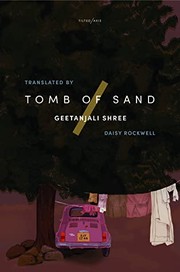 Geetanjali Shree · 2018Tomb of SandLvl 8Slow burn
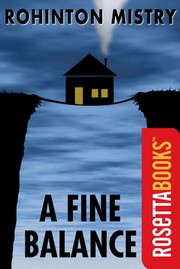 Rohinton Mistry · 1995A Fine BalanceLvl 4Medium pace
 William Faulkner · 1930As I Lay DyingLvl 9Medium pace