
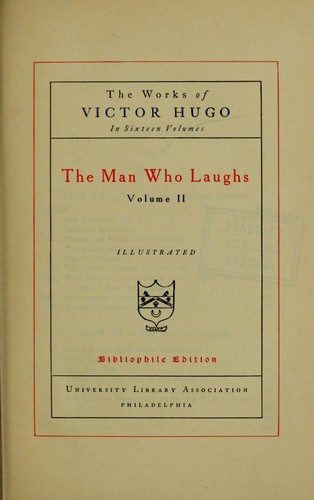
The Man Who Laughs
Victor Hugo · 1802–1885 · France
Originally L'Homme qui rit (French)
Why it matters
Disfigured as a child into a permanent grin by traffickers who mutilate outcast children for profit, Gwynplaine grows up among fairground freaks to become an unlikely voice against aristocratic cruelty: Hugo's gothic melodrama, later reborn as the visual template for the Joker.
At a glance
Dense philosophical digression and a sprawling structure demand patience.
Deep dive
Why the surgery a band of child traffickers performed on Gwynplaine's face becomes Hugo's argument about exactly whose suffering an aristocratic society is actually capable of hearing.
Written for readers who have finished the book. No plot recap, and nothing here is safe to read first.
Themes & symbolism
Gwynplaine's face has been carved by the comprachicos, child traffickers who mutilate children into marketable curiosities, into a permanent, monstrous grin that no grief or fury he actually feels can ever contradict; Hugo builds the entire novel around that single cruelty, since Gwynplaine's mouth reads as constant hilarity to everyone who looks at him regardless of what he is actually saying, which means his real interior life, rage, love, despair, is structurally unreadable to the society around him. It is Hugo's bluntest image yet for how the poor and the deformed get received by the powerful: not as people whose expressions carry information, but as entertainment whose face has already decided, for them, how it will be interpreted.
Ursus, the itinerant showman who raises Gwynplaine and the infant blind girl Dea he finds beside her frozen mother, builds a fairground act, the Laughing Man, around the very disfigurement that isolates Gwynplaine, monetizing the exact wound Hugo wants the reader to recognize as an atrocity; the show's popularity depends on audiences never distinguishing between a performer's chosen joke and a child's imposed injury, and Hugo lets that confusion stand as commentary on how completely commerce can launder cruelty into amusement. Dea's blindness gives the novel its one relationship untouched by that distortion, since she is the single person who has never seen Gwynplaine's grin and loves him entirely through voice, touch, and character instead.
The revelation that Gwynplaine is the long-lost legitimate heir to Lord Clancharlie briefly hands him a seat in the House of Lords, and Hugo uses the scene for the novel's sharpest political argument: Gwynplaine tries to deliver an impassioned speech about the poverty and injustice he has actually lived through, and the assembled peers, unable to see past his permanent grin, respond with mocking laughter regardless of his words, proof that a class this insulated will always find a way to hear suffering as comedy when it arrives in the wrong wrapping.
A Duchess Who Wants the Monster, Not the Man
Josiane, a scheming duchess drawn to Gwynplaine specifically because his disfigurement excites her, offers him a night of illicit passion once his true rank is revealed, only to lose all interest the instant she learns he is, in fact, a legitimate peer rather than a freak show performer; Hugo uses her whiplash reaction to show that Josiane's desire was never for Gwynplaine at all but for the transgression of touching something society had already marked as beneath her, an appetite that evaporates the moment the object stops being forbidden.
The last seal: what actually happens, and why it lands the way it does.
The ending, explained
Disgusted by the peers' mockery, Gwynplaine renounces the title and fortune he was only just handed and returns to find Ursus and Dea, discovering they have been expelled from England and are about to sail away, having believed him lost to his new aristocratic life for good. He reaches the ship in time to be reunited with Dea, but the strain and grief of their separation have already broken her fragile health beyond recovery, and she dies in his arms aboard the departing vessel, briefly and joyfully mistaking their reunion for the beginning of a shared life rather than its end. Gwynplaine, left with nothing, walks to the ship's rail and drowns himself in the river below, Hugo closing the novel on the one death in the book that finally lets his face stop being misread, since no one is left alive to laugh at it.
Where to go next
 Victor Hugo · 1829The Last Day of a Condemned ManLvl 3Slow burn
 Victor Hugo · 1831The Hunchback of Notre-DameLvl 5Slow burn
 Victor Hugo · 1862Les MisérablesLvl 5Slow burn
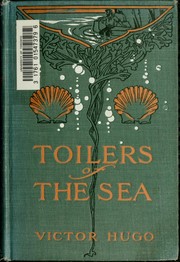 Victor Hugo · 1866Toilers of the SeaLvl 5Fast paced
 Victor Hugo · 1874Ninety-ThreeLvl 5Medium pace
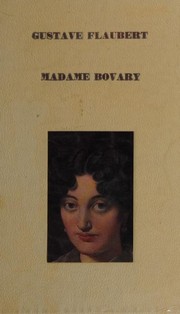 Gustave Flaubert · 1857Madame BovaryLvl 5Slow burn