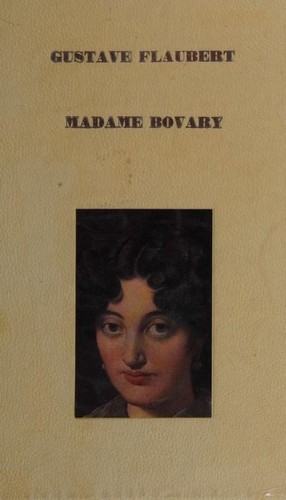
Madame Bovary
Gustave Flaubert · 1821–1880 · France
Originally Madame Bovary (French)
Why it matters
Prosecuted for immorality and acquitted into immortality: a provincial wife's romantic fantasies meet reality's bill. The first novel where style itself is the morality: the model of exactitude every later novelist must accept or fight.
At a glance
Celebrated for its exacting style indirect libre, demanding close attention to shifting perspective.
Deep dive
How Flaubert's free indirect style fuses Emma's clichés with the narrator's irony so tightly you can't find the seam — and why the novel's final chapters refuse her the one thing her fantasies always promised.
Written for readers who have finished the book. No plot recap, and nothing here is safe to read first.
Themes & symbolism
Flaubert's free indirect discourse delivers Emma's romantic banalities in the narrator's own sentences, with no quotation marks to separate her fantasy from his judgment of it. That formal choice is the novel's real subject: style replaces authorial moralizing, and the precision of the prose — Flaubert famously rewrote pages hunting for "le mot juste" — becomes the only verdict the book ever renders on her. It's the founding document of the modern realist novel: after Bovary, a writer can no longer narrate a character's inner life as simply, unselfconsciously true.
Emma's tragedy is that she reads. Formed by convent schooling and Romantic novels' scripts about transcendent passion and picturesque suffering, she tries to live inside those scripts with Rodolphe and then Léon, and both affairs deliver banality and eventually predation — Rodolphe's calculated breakup letter, Léon's tepid, convenient devotion. Running alongside the romantic delusion is a second, more mundane trap: the merchant Lheureux's credit, the actual ledgers that ruin her. Flaubert pairs the fantasy of transcendence with the material fact of debt, so Emma is destroyed as much by consumer credit as by adultery — modernity's ordinary machinery, not just her own bad reading, closes the trap.
The Obscenity Trial
Flaubert and his publisher were prosecuted in 1857 for offenses against public morality and religion, the state objecting to the novel's treatment of adultery and its refusal to punish Emma with authorial condemnation rather than simple consequence. The acquittal made the book a sensation before most of France had read it, and the trial's real subtext — that a novel could depict immorality without narrating a moral — is exactly the stylistic innovation described above. Flaubert didn't defend Emma; he simply declined to prosecute her himself, and the court noticed. The novel had first appeared serialized in the Revue de Paris the previous year, and it was that magazine publication, reaching a wide public before any book covers existed to contain it, that actually triggered the prosecution — proof that what alarmed the state wasn't the affair itself so much as how easily readers could recognize their own appetites in Emma's.
The last seal: what actually happens, and why it lands the way it does.
The ending, explained
Facing the seizure of her possessions and abandoned by both Rodolphe and Léon, Emma swallows arsenic. Flaubert renders her dying in unsparing physical detail — convulsions, blackened vomit, the smell — deliberately denying her the poetic death scene her reading had promised her; the body wins the argument the fantasies had been losing all along. Charles, discovering her debts and love letters after her death, is destroyed by grief and disillusion and dies himself soon after, penniless. Their daughter Berthe is passed to relatives and ends up working in a cotton mill — the novel's final cost lands on the one character who did nothing to earn it.