
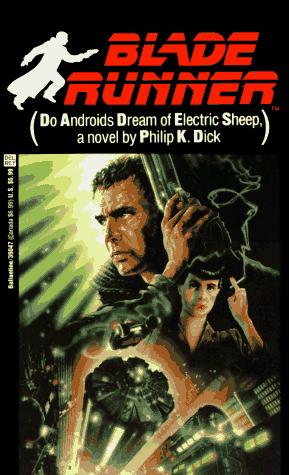
Do Androids Dream of Electric Sheep?
Philip K. Dick · 1928–1982 · United States
Why it matters
A bounty hunter tasked with 'retiring' escaped androids increasingly can't tell them from the humans he's sworn to protect. The novel that became Blade Runner, and speculative fiction's essential meditation on empathy and personhood.
At a glance
Terse, propulsive prose but conceptually dense philosophical questions.
Deep dive
What Rick Deckard's own empathy score would probably look like by the last chapter, and why owning a fake electric sheep embarrasses him more than anything his job requires him to do to androids.
Written for readers who have finished the book. No plot recap, and nothing here is safe to read first.
Themes & symbolism
In Dick's post-nuclear San Francisco, real animals have nearly gone extinct, and owning one has become the ultimate status marker under a mandatory religion, Mercerism, that measures moral worth in empathy the way money measures wealth. Rick keeps an electric sheep on his roof because he can't afford a real one, a private, specific shame that only makes sense in a world where Mercerism has turned authentic feeling into something you're expected to be able to afford, exactly like a car or a house.
The Voight-Kampff test he administers to suspected androids measures empathy through involuntary physical response to questions about cruelty to animals, built on the premise that only androids can fake having a conscience. But the novel spends its length quietly dismantling that premise: Rick's colleague Phil Resch openly enjoys killing, and Rick himself retires three androids in a single afternoon with barely a flicker of hesitation, especially once the bounty gets him closer to a real goat. Sleeping with Rachael Rosen, an android who later tells him she's slept with other bounty hunters specifically to compromise their nerve for the job, blurs the line the test claims to draw cleanly, and Rick keeps loving her anyway, which the book treats as evidence, not exception.
Buster Friendly's Exposure of Mercer, and Why It Changes Nothing
Buster Friendly, broadcasting nearly around the clock, reveals Mercerism as an elaborate hoax staged by an aging alcoholic actor decades earlier. Yet out in the desert not long after, Rick has a genuinely mystical Mercer-style experience anyway, finding a toad he believes is a real, supposedly extinct species. Dick's actual interest isn't whether the religion is fraudulent, it's whether the feeling it produces still counts even after the fraud is exposed, since the toad turns out to be electric too, and Rick's wife Iran buys it fake fly food regardless, out of the same impulse to care that started the whole test in the first place.
J.R. Isidore, the radiation-damaged 'chickenhead' who shelters Pris and the Baty androids, is the novel's clearest empathy case precisely because no test would ever certify him: his intelligence has been legally downgraded by the state, yet he's the character most instinctively generous toward androids and humans alike, sheltering Pris out of simple loneliness rather than any tested capacity for feeling. Dick uses him to argue that the Voight-Kampff apparatus was measuring the wrong thing all along, since the empire of bureaucratic classification the novel runs on, special, android, chickenhead, keeps failing exactly the people and things most worth protecting.
The last seal: what actually happens, and why it lands the way it does.
The ending, explained
Rick retires the last three Nexus-6 androids, including Pris, identical in model to Rachael, an act that costs him any remaining sense that hunting them was righteous rather than simply a job with a bounty attached. Back home he finds Rachael has pushed his goat off the roof out of spite for what he did to Pris, and Iran discovers the electric toad's malfunction but feeds it anyway. Dick ends not on revelation but on maintenance: the fake keeps getting cared for exactly like the real thing would, because by then caring, not the object's authenticity, is the only test anyone in the book actually passes.
Where to go next
 Philip K. Dick · 1962The Man in the High CastleLvl 6Medium pace
 Octavia Butler · 1979KindredLvl 4Fast paced
 Yevgeny Zamyatin · 1924WeLvl 5Fast paced
 Ursula K. Le Guin · 1969The Left Hand of DarknessLvl 6Medium pace
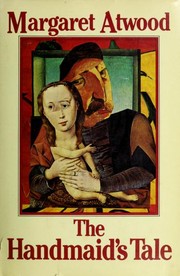 Margaret Atwood · 1985The Handmaid's TaleLvl 5Medium pace
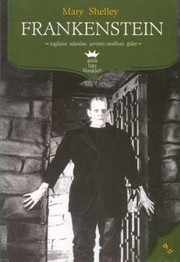 Mary Shelley · 1818FrankensteinLvl 4Medium pace