
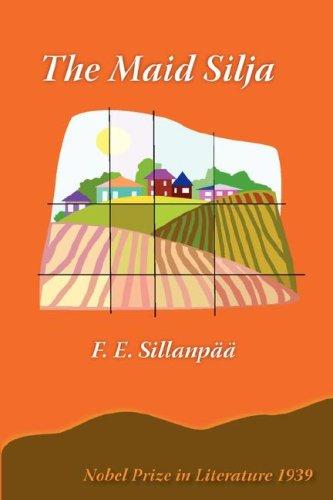
The Maid Silja
Frans Eemil Sillanpää · 1888–1964 · Finland
Originally Nuorena nukkunut (Finnish) · translated by Alexander Matson
Why it matters
The last daughter of a failed farming family lives out her days in service, treasuring one midsummer of love even as an illness she can feel closing in shadows every scene. Finnish literature's tenderest pastoral: a life society barely noticed given the full dignity of tragedy.
At a glance
Gentle pace and a time-looping structure; the story itself is simplicity.
Deep dive
Why Sillanpää tells you how his heroine's story ends before he tells you anything else about her, and what that reversal does to every scene that follows.
Written for readers who have finished the book. No plot recap, and nothing here is safe to read first.
Themes & symbolism
The novel's opening lines report, flatly, that Silja's short life ended a week after one particular midsummer, before a single scene of her actual life has been shown, and Sillanpää builds everything that follows inside that foreknowledge: the one summer of love with the student Armas, the years of service on wealthier farms after her parents' deaths, even the ordinary rhythms of Finnish rural work, all carry a shadow the characters themselves can't see but the reader never gets to forget.
Sillanpää studied biology before literature, and his narration treats Silja with the same patient, unsentimental attention a field naturalist gives a creature living out a short natural cycle: nothing about her decline is moralized as tragedy imposed from outside, it simply follows, the way weather follows season, from poverty, overwork, and an illness the novel never needs to dramatize because its opening has already told the reader where it leads. The seasons themselves structure the book almost as firmly as Silja's own biography does, her happiest passages arriving with the long light of the northern summer and her decline tracking the year's turn toward autumn, so that Finland's own climate reads as complicit in her fate rather than merely backdrop to it.
The Finnish Civil War as Silja's Deep Background
Silja's parents' story, told in the novel's first half before hers takes over, plays out against the ruin of the 1918 Finnish Civil War, a conflict that gutted the farming family's stability and set the terms of poverty Silja inherits without ever fighting in it herself. Sillanpää's refusal to let the war become the foreground, background instead to a maid's ordinary service and one summer's love, is its own quiet argument: a nation's catastrophe is lived by most of its people not as history but as the reason the good farm became a poor one. The 1939 Nobel committee, awarding the prize as Soviet bombers were already crossing into Finland, effectively endorsed that same argument on the world stage: a small country's literature of quiet rural loss, not its politics, was what the rest of Europe was finally being asked to notice.
The last seal: what actually happens, and why it lands the way it does.
The ending, explained
Silja falls ill and dies of pneumonia in the sauna of the farm where she's in service, alone in the way she has effectively been alone since her parents died, her one real happiness, a single midsummer with Armas, a match the class distance between them was always going to make temporary, already years behind her. Sillanpää lets the death be as unremarkable, in the telling, as everything else in her circumscribed life, no deathbed speech, no gathered mourners, consistent with a novel that opened by announcing this exact outcome and spent its length making the reader care anyway, precisely because it never pretended otherwise.
Where to go next
 Knut Hamsun · 1890HungerLvl 5Medium pace
 Sigrid Undset · 1920Kristin LavransdatterLvl 6Slow burn
 Leopoldo Alas "Clarín" · 1885La RegentaLvl 6Slow burn
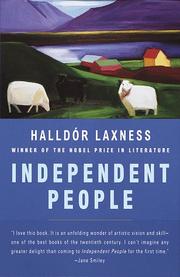 Halldór Laxness · 1934Independent PeopleLvl 6Medium pace
 Fyodor Dostoevsky · 1866Crime and PunishmentLvl 6Fast paced
 Theodore Dreiser · 1900Sister CarrieLvl 4Medium pace