

The Magus
John Fowles · 1926–2005 · England
Why it matters
A young Englishman takes a teaching post on a remote Greek island and is drawn into an eccentric millionaire's elaborate, reality-warping psychological games. Fowles's seductive, maze-like novel of illusion and manipulation.
At a glance
Layered unreliable narration and nested fictions within fictions.
Deep dive
What Maurice Conchis is actually testing Nicholas Urfe for on his private Greek island, and how far the 'godgame' goes before anyone admits it's a game.
Written for readers who have finished the book. No plot recap, and nothing here is safe to read first.
Themes & symbolism
Nicholas Urfe takes a teaching post on Phraxos mostly to escape Alison Kelly, a woman he's treated carelessly in London, and the island's wealthy recluse Maurice Conchis draws him into a sequence of staged scenarios, masques, hypnosis, actors playing shifting roles as sisters, doubles, and wartime ghosts, that Fowles never lets the reader, or Nicholas, fully separate from reality. The uncertainty is deliberate: Conchis's 'godgame' works only if its subject can't tell where the performance ends, and Fowles extends that same uncertainty to the reader, given no more reliable a vantage point on events than Nicholas has himself.
Conchis's own wartime account, a story about a Nazi occupation of the island and an impossible choice he claims to have faced under German command, is delivered with total conviction and later partially contradicted, and Fowles never resolves which version, if either, is true. The unreliability isn't a puzzle to be solved so much as the novel's actual argument: Nicholas has spent his whole life treating other people, Alison especially, as supporting characters in his own story, and Conchis's elaborate theater exists to force him into the position of someone else's supporting character for once, with no script and no certainty about how it ends.
Lily, Julie, and the Twin Who Might Not Exist
Conchis's household includes a young woman Nicholas knows as Lily, later Julie de Seitas, who may or may not have an identical twin sister also working the games, and the confusion Fowles builds around whether Nicholas is dealing with one actress or two is never fully cleared up even after the novel's other mysteries get partial explanations. It is the clearest instance of Fowles refusing the reader a stable text to stand on, doubling a character the way the whole godgame doubles reality, until Nicholas's growing feelings for whichever woman he's actually talking to become as compromised by uncertainty as everything else Conchis has staged. Fowles drew the confusion partly from his own years teaching English on the real island of Spetses, folding a genuine, unresolved entanglement of his own into a fiction about staged entanglement.
The last seal: what actually happens, and why it lands the way it does.
The ending, explained
Nicholas returns to London still uncertain how much of Phraxos was real and finds Alison, who he'd believed dead as part of Conchis's staged psychodrama, alive and connected to the same theatrical network that ran the island games all along. The reunion Fowles stages in a London park refuses the resolution the whole novel has been withholding: Alison strikes Nicholas, and the narrative breaks off before either forgiveness or a final separation is confirmed, a line from T.S. Eliot about the 'still point of the turning world' left to stand in for an ending the book pointedly declines to supply. Fowles rewrote this scene for a 1977 revised edition without making it any more conclusive, itself the clearest sign the ambiguity was never a flaw to be fixed.
Where to go next
 John Fowles · 1969The French Lieutenant's WomanLvl 6Medium pace
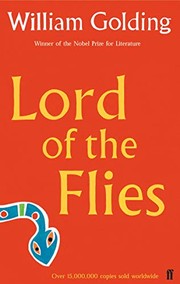 William Golding · 1954Lord of the FliesLvl 3Fast paced
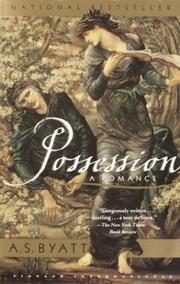 A. S. Byatt · 1990PossessionLvl 7Medium pace
 Rachel Cusk · 2014OutlineLvl 6Slow burn
 Iris Murdoch · 1978The Sea, the SeaLvl 6Slow burn
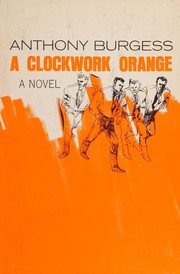 Anthony Burgess · 1962A Clockwork OrangeLvl 7Fast paced