
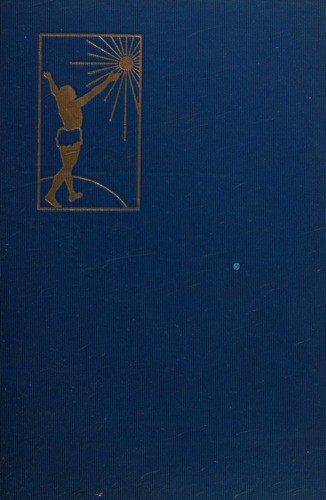
The Long Journey
Johannes V. Jensen · 1873–1950 · Denmark
Originally Den lange rejse (Danish) · translated by A. G. Chater
Why it matters
From an ice-age forest to Columbus's Atlantic crossing, humanity's whole ascent retold as a chain of mythic heroes discovering fire, ships, and gods. Genesis rewritten by Darwin: the strangest and most ambitious epic in the Nobel's early history.
At a glance
Visionary leaps across millennia, with mythic rather than novelistic logic binding the parts.
Deep dive
What a Danish Darwinist thought the human species was actually chasing across sixty thousand years of ice, fire, and open ocean, long before anyone called it evolution's plot.
Written for readers who have finished the book. No plot recap, and nothing here is safe to read first.
Themes & symbolism
Jensen invented what he called 'myths,' short prose leaps from close observation to vision, and built The Long Journey's six volumes as that method scaled to the size of the species itself: an ice-age hunter discovering fire, a shipbuilder discovering the sea, Columbus discovering a continent nobody in Europe knew was there, each treated with the same mythic compression rather than novelistic cause and effect.
Told across sixty thousand years without a single continuous protagonist, the sequence substitutes recurring human capacities, curiosity, restlessness, the refusal to accept a horizon as final, for character, so that the real hero of the whole cycle turns out to be a trait passed forward through generations of otherwise unconnected people rather than any one man's arc.
Jensen's own Darwinism, unfashionable to state so plainly inside literary fiction even in 1908, gets treated not as a debunking of Genesis but as its replacement myth: natural selection rewritten with the same narrative hunger for meaning that scripture supplies, evolution told as an epic rather than laid out as a mechanism. He wrote the six volumes out of chronological order across fourteen years, circling back to fill in earlier eras only once the later ones were already drafted, a compositional method that mirrors the book's own argument: the past keeps getting rewritten in light of where the journey eventually leads.
Columbus as the Ice Age's Last Descendant
The cycle's final volume lands, deliberately, on Columbus's Atlantic crossing, the same restless impulse that sent the earliest hunters chasing migrating herds now aimed at open water and an unknown coast. Jensen means the juxtaposition literally: the fifteenth-century admiral and the nameless ice-age forebear who first followed fire out of a cave are, in the book's logic, the identical creature performing the identical act, curiosity outrunning safety, sixty thousand years and one unbroken instinct apart. Placing a documented historical figure at the end of a sequence that opens in pure myth is Jensen's boldest structural gamble, and it pays off only because he has spent five volumes training the reader to read documented history and prehistoric legend as the same species of story.
Where to go next
 Sigrid Undset · 1920Kristin LavransdatterLvl 6Slow burn
 Knut Hamsun · 1890HungerLvl 5Medium pace
 Henrik Pontoppidan · 1904Lucky PerLvl 6Medium pace
 Isak Dinesen (Karen Blixen) · 1937Out of AfricaLvl 5Slow burn
 Karl Gjellerup · 1906The Pilgrim KamanitaLvl 5Slow burn
 Władysław Reymont · 1904The PeasantsLvl 5Slow burn