
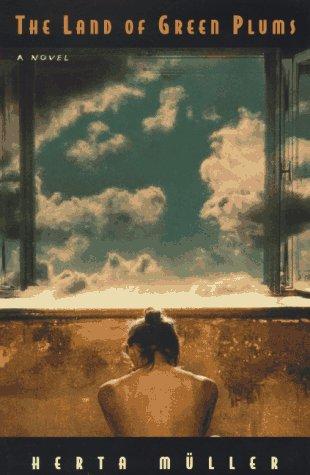
The Land of Green Plums
Herta Müller · b. 1953 · Germany / Romania
Originally Herztier (German) · translated by Michael Hofmann
Why it matters
Young friends in Ceaușescu's Romania are surveilled, interrogated, and picked off one by one for their quiet nonconformity. Müller's Nobel-cited novel of totalitarian paranoia, rendered in dense, image-driven prose.
At a glance
Dense, recursive, image-driven prose resists straightforward narrative progression.
Deep dive
Why a handful of friends under Ceausescu-era surveillance learn to fear the taste of unripe fruit almost as much as they fear the men reading their mail, and what that says about a state that has colonized even hunger.
Written for readers who have finished the book. No plot recap, and nothing here is safe to read first.
Themes & symbolism
The green plums of the title belong to the guards and soldiers the narrator watches gorging on unripe fruit straight off the trees, stomachs visibly aching afterward, a compulsive, self-punishing greed that Muller ties to a whole system built on people consuming whatever is put in front of them regardless of the cost. For the narrator and her friends, remembering childhood hunger and the plums nobody was allowed to eat until ripe becomes a private vocabulary for danger, something that predates the dictatorship and outlasts any single informer.
Muller writes the surveillance itself at the level of the body: fingernail clippings left behind after an apartment search, a strand of hair moved half a centimeter on a shelf, evidence that someone has been inside your rooms without needing to say so. Letters arrive already opened and resealed, a small daily violence that trains the four friends, the narrator, Edgar, Kurt, and Georg, to write in code even to each other, until suspicion of betrayal becomes as corrosive as the actual informer, Captain Pjele, whose interrogations run through the whole book like weather.
Lola's Belt and the Diary the Party Read Aloud
Early in the novel, the narrator's dormitory roommate Lola is found dead, apparently by her own hand, and the Party responds not with sympathy but with theater, expelling her from the Communist Youth posthumously and reading her private diary aloud at a mandatory meeting to hold her up as a moral warning. The scene sets the pattern for everything that follows: the state does not just watch its citizens, it repossesses their most private writing and turns it into propaganda, which is exactly the fate the narrator spends the rest of the book trying, and largely failing, to keep her own friends' deaths from suffering.
A Nobel Citation Written in Two Languages at Once
Müller grew up in a German-speaking minority village in Romania before moving to Bucharest and, eventually, into exile in West Berlin in 1987, and the novel's German prose keeps a Romanian ear inside it, proverbs, official slogans, playground rhymes translated so literally they sound freshly strange rather than idiomatic. The Swedish Academy's 2009 citation praised her for writing, in its words, with the concentration of poetry and the frankness of prose to depict the landscape of the dispossessed, a description that fits this novel's short, hard paragraphs better than almost anything else in her body of work.
The last seal: what actually happens, and why it lands the way it does.
The ending, explained
Georg and then Kurt die after the group has scattered into exile, both deaths ruled suicides, a fall and a hanging, and both arriving with just enough ambiguity that the narrator can never be sure whether the state finally caught up with them or whether the years of pressure did the state's work for it. She survives into resettlement in Germany carrying a guilt with no clean object: she cannot prove which of her circle, if any, was informing on the rest, and Muller refuses to supply that answer, leaving the narrator's grief permanently unresolved rather than solved by exile.
Where to go next
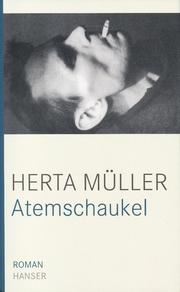 Herta Müller · 2009The Hunger AngelLvl 7Slow burn
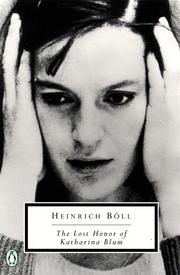 Heinrich Böll · 1974The Lost Honour of Katharina BlumLvl 4Fast paced
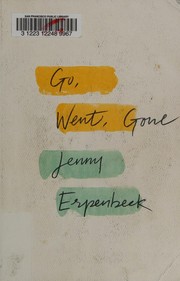 Jenny Erpenbeck · 2015Go, Went, GoneLvl 5Medium pace
 Elfriede Jelinek · 1983The Piano TeacherLvl 7Slow burn
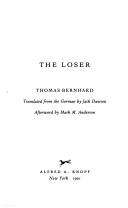 Thomas Bernhard · 1983The LoserLvl 8Slow burn
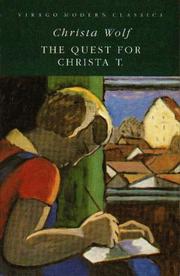 Christa Wolf · 1968The Quest for Christa T.Lvl 7Slow burn