
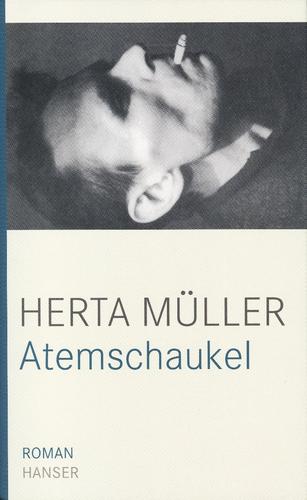
The Hunger Angel
Herta Müller · b. 1953 · Germany / Romania
Originally Atemschaukel (German) · translated by Philip Boehm
Why it matters
A young Transylvanian German is deported to a Soviet labour camp, where starvation becomes a haunting, almost living presence. Müller renders totalitarian deprivation in images sharp enough to cut.
At a glance
Dense, hallucinatory imagery and a nonlinear structure evoke starvation's distorted time.
Deep dive
A nineteen-year-old is deported to a Soviet labor camp for the crime of his German surname, and Müller writes the five years that follow almost entirely through the vocabulary hunger invents for itself.
Written for readers who have finished the book. No plot recap, and nothing here is safe to read first.
Themes & symbolism
Müller builds the novel on the real historical deportation of ethnic Germans from Romania to Soviet forced-labor camps beginning in January 1945 — a Red Army reprisal, ordered from Moscow, that swept up tens of thousands of Transylvanian and Banat Germans regardless of any individual connection to Nazi collaboration — and gives that history to Leo Auberg, a gay seventeen-year-old whose deportation is, in a sense, almost a relief: it removes him from a Sibiu where his sexuality already has to be hidden, replacing one kind of danger with another. The novel is careful never to let the camp's suffering redeem or simplify Leo's identity; both persecutions coexist without either canceling the other out.
The book's central invention is its vocabulary for hunger itself — the recurring figure of the 'hunger angel,' a personified companion-tormentor that visits Leo with escalating intimacy as starvation deepens, alongside dozens of coined terms (the 'heart-shovel,' units of bread weighed to the gram, the specific textures of cinder and coal dust) that Müller uses to render starvation as a total, obsessive language rather than a simple deprivation. That vocabulary was developed directly out of interviews and shared drafts with the poet Oskar Pastior, himself a survivor of the same deportation, whose actual camp experience underlies Leo's fictional one even though the novel is Müller's own invented narrative rather than Pastior's memoir.
Leo's eventual return home doesn't function as liberation in any simple sense: Müller is explicit that the camp reorganizes a person permanently around hunger and survival math, so that decades later, back in a Romania that has no public vocabulary for what deportees endured and under a Ceaușescu regime with its own machinery of surveillance and scarcity, Leo remains structurally unable to fully re-enter ordinary civilian time — the novel insists that some experiences don't resolve into recovery, only into a permanently altered relationship with need itself.
A Collaboration Cut Short
Müller and Pastior originally planned to co-write a book based on his camp memories, conducting extensive joint interviews and even traveling together to research the novel, before Pastior's sudden death in 2006 left Müller to complete it alone, publishing Atemschaukel in 2009 without a co-author credit despite how directly it drew on his testimony. Müller — herself from Romania's German-speaking Banat minority and no stranger to state surveillance, having been targeted by the Securitate for her own dissident writing before emigrating — won the Nobel Prize in Literature later that same year, with the Swedish Academy citing her work's ability to depict, in her words, 'the landscape of the dispossessed' with the density of poetry and the frankness of prose.
The last seal: what actually happens, and why it lands the way it does.
The ending, explained
Released after five years and returned to a Romania that treats deportees' history as an embarrassment to be left unspoken, Leo comes home changed in ways his family can't recognize and largely doesn't ask about — his mother's throwaway remark about how thin he looks lands as an obscenity against everything unspeakable he's just survived, and the gap never really closes. Müller doesn't stage a dramatic reckoning; the novel's late pages instead follow Leo across the following decades still governed by camp habits — hoarding food, unable to feel safe with abundance, a permanent internal ledger of hunger that outlives any actual scarcity — while Romania's postwar silence about the deportations denies him even public acknowledgment. The final image of an old man still instinctively rationing, still haunted by the hunger angel in a life of relative plenty, refuses any ending where survival equals healing: Leo comes home, but the home that could have received who he became was never built.
Where to go next
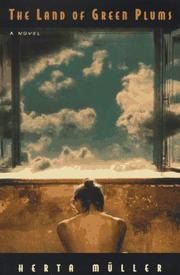 Herta Müller · 1994The Land of Green PlumsLvl 8Slow burn
 Heinrich Böll · 1974The Lost Honour of Katharina BlumLvl 4Fast paced
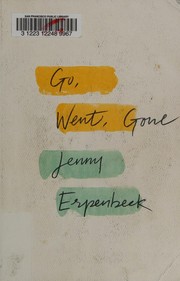 Jenny Erpenbeck · 2015Go, Went, GoneLvl 5Medium pace
 Elfriede Jelinek · 1983The Piano TeacherLvl 7Slow burn
 Thomas Bernhard · 1983The LoserLvl 8Slow burn
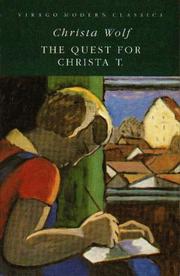 Christa Wolf · 1968The Quest for Christa T.Lvl 7Slow burn