
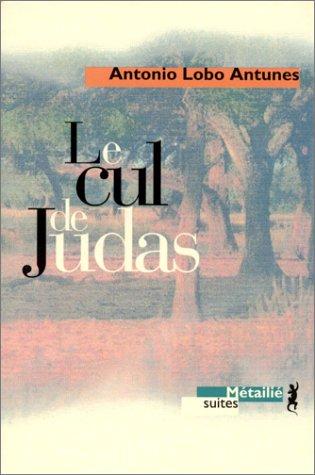
The Land at the End of the World
António Lobo Antunes · b. 1942 · Portugal
Originally Os Cus de Judas (Portuguese)
Why it matters
A traumatized veteran of Portugal's colonial war in Angola unloads his rage and disgust in one unbroken monologue to a woman he's picked up for the night. Lobo Antunes's breakthrough fuses Faulkner's cascading sentence with Céline's scorched disgust into modern Portuguese fiction's founding act of witness.
At a glance
Long, digressive, near-unpunctuated sentences demand total, sustained concentration.
Deep dive
What one night's monologue to a stranger picked up in a Lisbon bar has to do with a war most of the country wanted to forget it fought.
Written for readers who have finished the book. No plot recap, and nothing here is safe to read first.
Themes & symbolism
Lobo Antunes gives the whole novel to a single unnamed veteran talking, without real interruption, to a woman he doesn't know and may never see again, and the choice of listener matters: she is a stranger precisely so nothing he says to her carries social consequence, which is what finally lets Angola come out of him uncensored, in fragments that refuse chronological order because trauma, the novel insists, was never going to arrive in one.
The monologue circles obsessively rather than narrates in sequence: a single image, the colonial war's landscape, a dying comrade, the numbing routine of a field hospital, will surface, vanish under some other memory, and return pages later charged with new, worse detail, a structure closer to how memory actually works under duress than to how a war novel is supposed to be organized. Portugal itself, not just Angola, comes under the same unsparing treatment: the veteran's disgust extends to the country that sent him and then wanted the whole war quietly forgotten once it lost.
Faulkner and Céline Meeting in a Field Hospital
Lobo Antunes has been explicit about the debt: Faulkner's cascading, clause-stacking sentence supplies the structure for consciousness under pressure, while Céline's scorched, exclamatory disgust supplies the register for a narrator who has stopped believing in decorum. What's new is the specific Portuguese wound the fusion gets aimed at, a colonial war fought years after other European empires had already let go of theirs, prosecuted by a dictatorship refusing to admit it was already lost.
The Woman Who Never Gets to Answer
The addressed 'you' never speaks back in any way the reader can access directly, and that asymmetry is deliberate: this isn't a dialogue but a confession that requires a body in the room without requiring a person, and the novel's refusal to individuate her is itself a comment on what the veteran actually needs from company after Angola, presence rather than understanding. By the time dawn is close enough to end the night, the imbalance has become the book's real subject: a man capable of talking without stopping for hours has still said nothing that resembles an actual exchange, proof that speech and communication are not the same operation.
Where to go next
 Joyce Carol Oates · 1969themLvl 6Medium pace
 Bảo Ninh · 1990The Sorrow of WarLvl 6Slow burn
 William Faulkner · 1930As I Lay DyingLvl 9Medium pace
 Javier Marías · 1992A Heart So WhiteLvl 8Slow burn
 Elfriede Jelinek · 1983The Piano TeacherLvl 7Slow burn
 Louis-Ferdinand Céline · 1932Journey to the End of the NightLvl 6Fast paced