
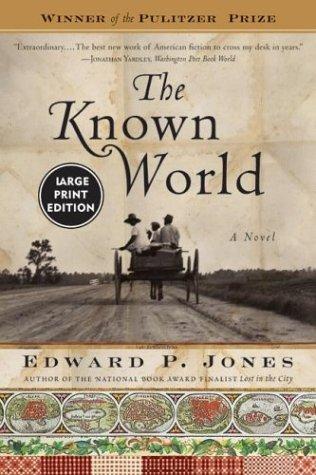
The Known World
Edward P. Jones · b. 1950 · United States
Why it matters
A formerly enslaved man becomes a slaveholder himself in antebellum Virginia, complicating every assumption about victim and perpetrator in the institution's machinery. Jones's Pulitzer winner is one of the strangest, most morally exacting novels ever written about slavery.
At a glance
A large cast and nonlinear, flash-forward structure complicate the antebellum setting.
Deep dive
The strangest premise in American slavery fiction — a formerly enslaved man who becomes a slaveholder — and why Jones refuses to let anyone in the book stay innocent.
Written for readers who have finished the book. No plot recap, and nothing here is safe to read first.
Themes & symbolism
Henry Townsend's arc dismantles the victim/perpetrator binary that most slavery narratives depend on: raised by parents who bought their own freedom and then bought him, he goes on to purchase and hold enslaved people of his own, having absorbed the institution's logic so completely that owning others reads to him as simple upward mobility. Jones isn't interested in condemning Henry as an aberration; the point is systemic — that slavery's incentive structure could recruit anyone within reach of its machinery, victim and beneficiary status turning out to be far less stable than the era's, or our own, moral shorthand wants them to be.
The antique map Henry keeps, showing a 'known world' that stops at its own borders, names the novel's real terrain: a society that has drawn its moral map to exclude everything past its own self-interest, from the corrupt patroller Skiffington's faith in law and order to Caldonia's genuinely difficult, compromised stewardship of the people her dead husband owned. Nothing here operates as pure evil or pure virtue — property itself is the corrupting current running under every relationship in the book, black and white, enslaved and enslaver alike.
Free Black characters like William Robbins's mixed-race children, or Henry's own parents, occupy an unstable middle rung that the novel refuses to resolve into either safety or solidarity — legal freedom in this world buys proximity to power without buying protection from it, and the same people fighting to keep their own families free are shown making the identical calculations that kept others enslaved. Jones's target isn't a single plantation's cruelty but the entire economy of law, deeds, and paper that made ownership of a person a rational, replicable transaction regardless of who was signing the deed.
A Documentary Voice That Already Knows the Ending
Jones's narrator moves in and out of an omniscient, almost archival register — citing population counts, land deeds, and the exact future years in which minor characters will die, sometimes decades past the novel's own timeframe — so that suspense about what happens is traded for scrutiny of how and why. That flash-forward structure keeps the book from building toward a single climax; instead it accumulates, incident by incident, into a portrait of an entire apparatus, refusing the reader the comfort of a single villain or a single resolution to root for.
The effect is closer to a false archive than a conventional novel — invented census figures and property records sit alongside genuinely researched historical detail about free Black slaveholders in the antebellum South, blurring where documentation ends and imagination begins. That blur is the point: the actual historical record of Black slaveholding has always been thin and uncomfortable, and Jones's pseudo-documentary voice fills the silence with exactly the kind of moral complexity official records were never built to hold.
The last seal: what actually happens, and why it lands the way it does.
The ending, explained
The Known World is built to accumulate rather than resolve — Jones reveals many characters' eventual fates in passing throughout the book rather than saving revelations for a final scene, so its ending functions less as a climax than as the last few tiles in a mosaic already mostly visible. The immediate plot follows Caldonia's uneasy management of the plantation after Henry Townsend's death, amid patrollers, rival landowners, and enslaved people maneuvering for whatever leverage the corrupt system allows them. Nothing is redeemed or punished on a tidy schedule; the novel's closing effect is cumulative and moral rather than dramatic, insisting that the institution implicated everyone it touched, and that no single reckoning could ever be equal to that scope.
Where to go next
 Amy Tan · 1989The Joy Luck ClubLvl 4Medium pace
 Pearl S. Buck · 1931The Good EarthLvl 3Medium pace
 Wallace Stegner · 1971Angle of ReposeLvl 6Medium pace
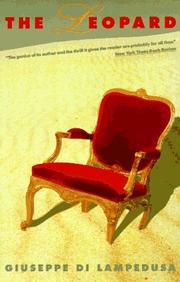 Giuseppe Tomasi di Lampedusa · 1958The LeopardLvl 6Slow burn
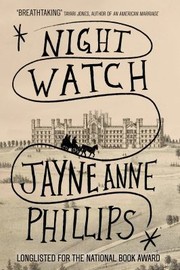 Jayne Anne Phillips · 2023Night WatchLvl 6Slow burn
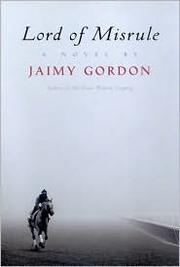 Jaimy Gordon · 2010Lord of MisruleLvl 6Slow burn