
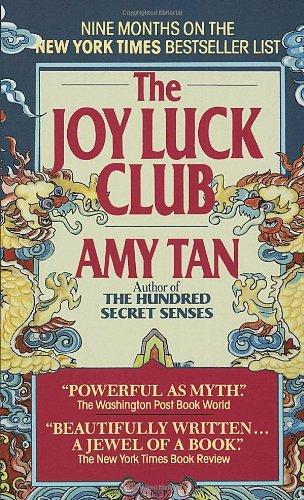
The Joy Luck Club
Amy Tan · b. 1952 · United States
Why it matters
Four Chinese immigrant mothers and their American daughters narrate their own stories across San Francisco and prewar China. Brought mother-daughter immigrant conflict to a massive mainstream readership.
At a glance
Alternating narrators, but each individual voice stays clear and direct.
Deep dive
Why the novel keeps splitting the same story between a mother and a daughter who each think they understand each other completely, and how far apart their two versions actually turn out to be.
Written for readers who have finished the book. No plot recap, and nothing here is safe to read first.
Themes & symbolism
Tan structures the book as sixteen interlocking narratives, mother and daughter each narrating the same relationship from the inside of an experience the other one can only guess at, and the gap between those tellings is the whole argument: Waverly's chess prodigy and Lindo's arranged-marriage escape, Rose's failing marriage and An-mei's mother's suicide, are all versions of the same lesson repeating across a generation that doesn't speak it fluently enough to receive it directly. The mahjong table where the Joy Luck Club meets is the book's central image of that transmission — a game of skill and chance played in a language the American-born daughters never quite learn, standing in for everything about China, war, and loss their mothers can't fully translate into English.
Food, jade, and games recur as the vocabulary mothers use when words fail across the language and generation gap — Waverly's mother teaching her chess strategy as life philosophy, An-mei's mother cutting her own flesh into a healing soup as an act of devotion too extreme for her American granddaughter to interpret correctly. The novel's structural bet is that American individualism, which tells the daughters that self-invention means leaving the mothers' stories behind, is itself a kind of amnesia, and that real selfhood for these daughters requires going back for the inheritance rather than escaping it.
A Breakout Book and Its Backlash
The Joy Luck Club became a publishing phenomenon in 1989, spending months on bestseller lists and reaching an enormous mainstream readership that had rarely encountered Chinese-American domestic life as literary fiction rather than exotic backdrop; the 1993 film adaptation extended that reach further. Its success also drew criticism, echoing debates around Kingston a decade earlier, that Tan's China trafficked in reductive, if effective, cultural shorthand — birth years, fortune-telling, arranged marriages — packaged legibly for a largely white readership. Tan has resisted being read as a cultural spokesperson, insisting the book is personal family material rather than ethnography, but the argument over who a book like this is written for, and what it owes to accuracy versus accessibility, has stayed attached to its legacy ever since.
The last seal: what actually happens, and why it lands the way it does.
The ending, explained
June, narrating in place of her recently deceased mother Suyuan, travels to China at the other mothers' urging to finally meet the infant twin daughters Suyuan was forced to abandon on a roadside decades earlier, while fleeing the Japanese invasion, believing that leaving them with whatever family might find them gave all three of them a better chance to survive than staying together and dying. June has spent the whole novel unsure she can fulfill her mother's wish, having always felt like a disappointment measured against Suyuan's hopes, and worried she doesn't know her mother's story well enough to tell it. Meeting her half-sisters at the airport, June sees her mother's face reassembled in front of her for the first time as a whole rather than a memory, and in a Polaroid the three sisters take together, watches her own features develop into visibility alongside theirs — the novel's closing claim that identity assembles itself across distance and loss rather than requiring unbroken lineage to be real.
Where to go next
 Amy Tan · 1991The Kitchen God's WifeLvl 4Medium pace
 Edward P. Jones · 2003The Known WorldLvl 6Slow burn
 Pearl S. Buck · 1931The Good EarthLvl 3Medium pace
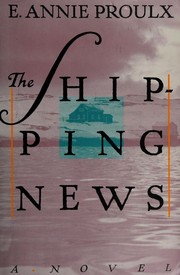 E. Annie Proulx · 1993The Shipping NewsLvl 5Medium pace
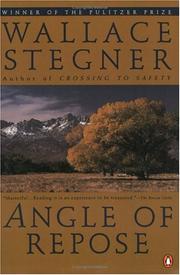 Wallace Stegner · 1971Angle of ReposeLvl 6Medium pace
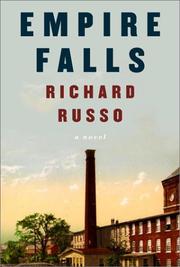 Richard Russo · 2001Empire FallsLvl 4Medium pace