
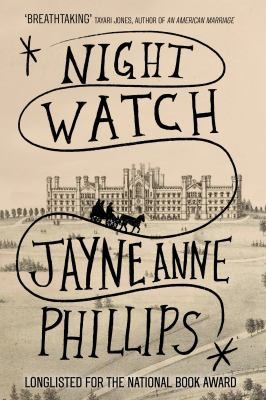
Night Watch
Jayne Anne Phillips · b. 1952 · USA
Why it matters
A mother and daughter fleeing Civil War violence in the West Virginia mountains, and a shell-shocked veteran who turns up at the same lunatic asylum where the daughter now works, are revealed through fractured chronology to be bound together. Phillips's Pulitzer winner is patient, elliptical historical fiction.
At a glance
Fractured, nonlinear chronology across multiple perspectives withholds connections until late.
Deep dive
A West Virginia asylum built to look humane becomes, against every intention behind it, one of the safer places two war-displaced women have anywhere to stand.
Written for readers who have finished the book. No plot recap, and nothing here is safe to read first.
Themes & symbolism
The Trans-Allegheny Lunatic Asylum, where ConaLee and her mute mother Eliza are delivered by a violent stranger claiming to be family, is drawn from a real Kirkbride-plan institution designed around the era's genuine belief that dignified, symmetrical architecture and structured routine could be therapeutic. Phillips's bitter irony is that the asylum, built on that humane premise, still functions as a place where women could be committed on a male relative's word alone — and that for ConaLee and Eliza, an institution meant to contain and correct female instability ends up offering more real safety and order than the war-ravaged Appalachian countryside they've fled.
The novel's fractured chronology — cutting between 1864, 1874, and 1883 rather than proceeding in order — enacts its subject rather than just housing it: trauma from the Civil War doesn't resolve on a timeline, it recurs, and the man who appears calling himself "Papa" and tyrannizing the household is only the most literal instance of a war whose casualties keep reappearing, unresolved and misnamed, a decade after the fighting ended.
The Real Trans-Allegheny Asylum
Phillips grounds the novel's institutional critique in the documented history of the actual Trans-Allegheny (Weston State) Hospital, whose admission records from the period include women committed for causes as vague as "grief," "novel reading," or simply a husband's say-so — evidence of how expansively and self-servingly nineteenth-century medicine defined female insanity. The asylum's Kirkbride architecture, with its long wings and abundant light meant to calm patients, is historically real, which makes the gap between the institution's stated humanity and the arbitrary power that could commit a woman to it in the first place land as documented fact rather than novelistic exaggeration.
Naming and Erasure
War strips names as thoroughly as it strips lives: unclaimed soldiers, an assumed "Papa" who isn't, a mother who has stopped speaking her own name — the novel treats the right to be correctly named and known as one more casualty of the war, alongside the more visible ones. ConaLee's steady insistence on the truth of who her mother is, maintained even when no adult around her will back her up, becomes the novel's quiet argument that memory kept by a child who refuses to be talked out of it is sturdier than official record.
Where to go next
 William Faulkner · 1930As I Lay DyingLvl 9Medium pace
 William Styron · 1979Sophie's ChoiceLvl 6Slow burn
 Lily Tuck · 2004The News from ParaguayLvl 6Medium pace
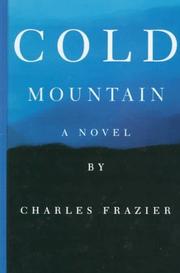 Charles Frazier · 1997Cold MountainLvl 4Medium pace
 António Lobo Antunes · 1979The Land at the End of the WorldLvl 8Slow burn
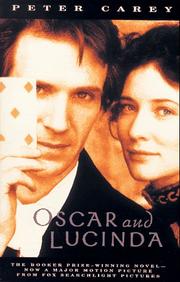 Peter Carey · 1988Oscar and LucindaLvl 6Medium pace