
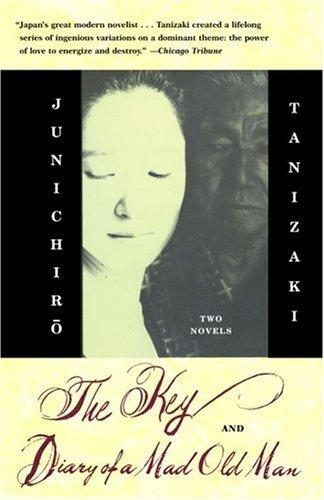
The Key
Jun'ichirō Tanizaki · 1886–1965 · Japan
Originally Kagi (Japanese) · translated by Howard Hibbett
Why it matters
A husband and wife, each suspecting the other reads their private diary, begin performing desire for an audience of one. Tanizaki's most formally daring novel: two unreliable confessions locked together like a cipher.
At a glance
Dual, dueling diary narrators whose unreliability must be triangulated by the reader.
Deep dive
Why a husband and wife's private diaries, each supposedly hidden from the other, read less like confession than like two people writing letters they already know exactly who will open.
Written for readers who have finished the book. No plot recap, and nothing here is safe to read first.
Themes & symbolism
The novel alternates entirely between two diaries, an unnamed fifty-five-year-old professor's and his wife Ikuko's, and the premise depends on a fiction each of them maintains for most of the book: that the other doesn't know these pages exist. The professor, anxious about his flagging virility and Ikuko's cooling interest, begins engineering situations meant to provoke her jealousy and desire, most calculatedly by taking nude photographs of her, first with a borrowed Polaroid and then with negative film, and making sure Kimura, a younger colleague circling their daughter Toshiko, gets a look at them. Tanizaki lets both diarists narrate their own manipulations as though recording private truth, and the dramatic irony compounds page by page as the reader starts to suspect, well before either character admits it, that both diaries are performances written for an audience of exactly one person each.
Kimura functions less as a rival than as a mechanism the professor deliberately installs into his own marriage, a jealousy-generating third party summoned specifically to reignite desire between a husband whose body is failing him and a wife whose obedience to social propriety has always outpaced her open desire. What the professor doesn't fully control is how effectively the device works on Ikuko herself, who begins meeting Kimura independent of her husband's engineering, and the novel becomes less a study of one man's scheme than a study of how completely a manipulation can outgrow the manipulator once another person's actual wants get involved in it.
Hormone Shots and the Body Keeping the Score
The professor's diary tracks his declining virility with the same clinical attention he gives Ikuko's photographs, and his solution, doctor-administered hormone injections meant to restore his potency, produces dangerously elevated blood pressure and memory lapses he records without fully grasping their significance. Tanizaki, writing in his early seventies and managing his own declining health, gives the novel's eroticism a genuinely mortal undertow that sets it apart from Quicksand or Naomi's more purely psychological damage: here the body's actual, measurable limits keep intruding on a scheme built entirely around appetite, until the difference between arousal and medical emergency becomes difficult for the professor, and for the reader, to tell apart.
The last seal: what actually happens, and why it lands the way it does.
The ending, explained
The professor's engineered jealousy plot costs him his health before it resolves anything else: the hormone treatments spike his blood pressure past what his body can sustain, and he suffers a stroke that leaves him partially recovered but fragile, then a second stroke that kills him. Ikuko's closing diary entries dismantle the fiction the whole book depended on, that either diary had ever been genuinely private: she admits she always knew her husband read her pages, that some of her fainting spells were performed rather than real, and she speculates that their daughter Toshiko arranged opportunities for her mother and Kimura to meet, possibly intending to marry Kimura herself as a cover that would let the affair continue under a socially acceptable roof. The professor dies having gotten exactly the desire he engineered, and having completely misjudged who was really directing the performance.
Where to go next
 Jun'ichirō Tanizaki · 1925NaomiLvl 4Fast paced
 Jun'ichirō Tanizaki · 1929Some Prefer NettlesLvl 4Slow burn
 Jun'ichirō Tanizaki · 1931QuicksandLvl 5Medium pace
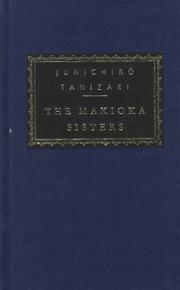 Jun'ichirō Tanizaki · 1948The Makioka SistersLvl 4Slow burn
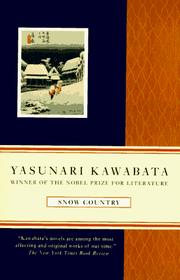 Yasunari Kawabata · 1947Snow CountryLvl 5Slow burn
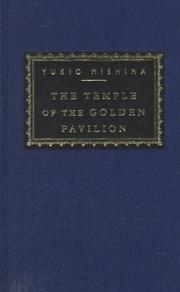 Yukio Mishima · 1956The Temple of the Golden PavilionLvl 6Slow burn