
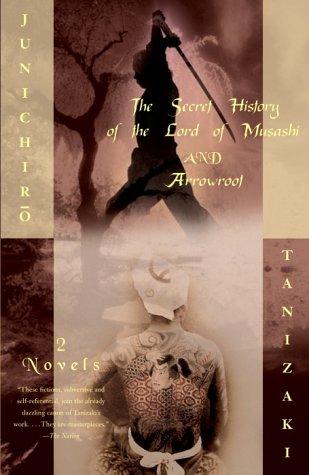
Some Prefer Nettles
Jun'ichirō Tanizaki · 1886–1965 · Japan
Originally Tade Kuu Mushi (Japanese) · translated by Edward Seidensticker
Why it matters
A dying marriage suspended between Western modernity and the pull of old Japan: a puppet theater, an Osaka mistress, a choice deferred. Tanizaki's own conversion westward-to-eastward, staged as fiction.
At a glance
Quiet, restrained domestic realism with little structural complexity.
Deep dive
A marriage that both parties have quietly agreed to end drags on for years anyway, and Tanizaki is more interested in why than in whether it finally does.
Written for readers who have finished the book. No plot recap, and nothing here is safe to read first.
Themes & symbolism
Kaname and Misako have already agreed, in principle, that the marriage is over. She has taken a lover, Aso, with her husband's tacit blessing, and both understand a divorce is coming eventually. What Tanizaki is actually studying is how long 'eventually' can be stretched by two people who prize good manners over honest confrontation. Nobody in this house raises a voice. Their son, Hiroshi, is the excuse both parents reach for whenever the decision gets close, and the novel treats that excuse as genuine without pretending it explains the whole delay.
Kaname's growing appetite for Osaka's puppet theater is where the novel does its real thinking. A bunraku puppet has no will of its own: it is dressed, posed, and voiced entirely by operators the audience has agreed to stop seeing. Kaname finds that arrangement restful in a way his marriage isn't, and his theater trips start arriving at the same rate his estrangement from Misako deepens. The women he's drawn to across the book, an imagined ideal wife first, then a real one, keep sharing the same quality: beautiful because someone else has fully authored them, undemanding because that authorship left no room for a will of their own to surface.
The Old Man's Museum of a Wife
O-hisa is the mistress of Misako's father, a young woman the old man has methodically dressed, coached, and installed inside a fantasy of Osaka's Edo-period past, down to her speech, her diet, and the puppet plays he takes her to see. Tanizaki refuses to let the reader settle whether this is tenderness or possession, and the refusal is the point: the old man's taste is sincere, his devotion to a vanishing tradition is sincere, and neither fact changes what he has done to a much younger woman kept for the pleasure of watching her perform a version of Japan he has decided is disappearing. Kaname watches all this with something closer to envy than judgment.
The Marriage Tanizaki Was Actually Living Through
The novel was serialized while Tanizaki's own marriage to his first wife, Chiyo, was collapsing under conditions strikingly close to Kaname and Misako's, an amicable deadlock neither spouse would break. Tanizaki resolved his, not long after, far more decisively than he allows his characters to resolve theirs: he formally transferred Chiyo to his close friend, the writer Sato Haruo, announcing the exchange in a joint newspaper notice that scandalized literary Tokyo. Reading the novel against that backdrop changes what its irresolution looks like. Kaname and Misako's endless, courteous non-decision reads less like indecision in the abstract and more like the very thing its author was, in real life, working up the nerve to stop doing.
Where to go next
 Jun'ichirō Tanizaki · 1925NaomiLvl 4Fast paced
 Jun'ichirō Tanizaki · 1931QuicksandLvl 5Medium pace
 Jun'ichirō Tanizaki · 1948The Makioka SistersLvl 4Slow burn
 Jun'ichirō Tanizaki · 1956The KeyLvl 5Medium pace
 Yasunari Kawabata · 1947Snow CountryLvl 5Slow burn
 Yukio Mishima · 1956The Temple of the Golden PavilionLvl 6Slow burn