
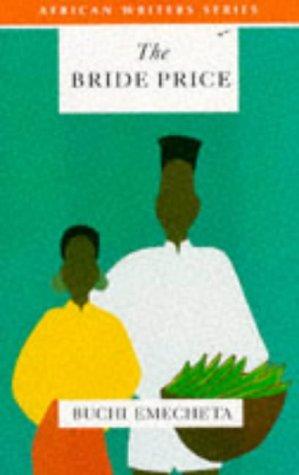
The Bride Price
Buchi Emecheta · 1944–2017 · Nigeria
Why it matters
Aku-nna falls for a schoolteacher of the wrong lineage, defying the custom that prices her like property to her own family. Emecheta lets the old world's verdict land with the force of Greek tragedy.
At a glance
A clear folkloric plot carries real weight beneath simple, direct sentences.
Deep dive
Aku-nna falls for Chike believing love in Lagos taught her something her father's village never could, and Emecheta spends the rest of the novel weighing what that belief is actually worth against a debt nobody has paid.
Written for readers who have finished the book. No plot recap, and nothing here is safe to read first.
Themes & symbolism
When Aku-nna's father dies, custom hands her and her mother to Okonkwo, her father's brother, as part of a widow-inheritance that pays no attention to what either woman wants; the move from Lagos to the village of Ibuza reads as a demotion, from a colonial city where Aku-nna was, however precariously, becoming a modern schoolgirl, to a household economy where her chief value is the bride price a future husband will pay for her. Emecheta is exact about the arithmetic: Okonkwo needs that payment to fund a second wife of his own, which is why Aku-nna's growing attachment to her teacher, Chike Ofulue, reads to him less as a daughter's disobedience than as a threat to his household budget.
Chike's disqualification has nothing to do with his character or his wealth, both of which exceed any rival's, and everything to do with descent: his family are the grandchildren of people once bought as slaves within Igbo society, a status Ibuza still treats as hereditary and permanent no matter how many generations of freedom or money separate the family from it. Emecheta uses Chike's caste, rather than his poverty, to strip away the excuse that the bride price system is simply about money, exposing it instead as a mechanism for policing lineage.
The village belief that an unpaid bride price curses a daughter to die in her first childbirth hangs over the entire second half of the novel as prophecy, and Emecheta lets it work on two registers at once: as inherited superstition powerful enough to organize a whole community's expectations, and as a diagnosis of how thoroughly that same community has trained its daughters to expect their own bodies to fail them the moment they act outside its terms.
A Debt Left Outstanding as Punishment
Okonkwo is offered the bride price for Aku-nna more than once, and turns it down each time not out of principle but out of injured pride: Chike's father sends emissaries repeatedly, money in hand, and Okonkwo's refusal to accept it is less a defense of tradition than a punishment aimed at the daughter who eloped without his blessing. Emecheta never lets the curse float free of this very human pettiness. Ibuza's belief system supplies the vocabulary for what happens to Aku-nna, but it is Okonkwo's spite, not ancestral law, that leaves the debt outstanding in the first place.
The last seal: what actually happens, and why it lands the way it does.
The ending, explained
Aku-nna marries Chike without the bride price ever being paid, and years later dies giving birth to their daughter. The village receives the death exactly as prophecy foretold, proof that the unpaid debt reached her in the end. Emecheta complicates that reading rather than confirming it: Aku-nna had access to only rudimentary medical care during a difficult delivery, and the novel's closing pages register her death as much a failure of infrastructure and neglect working together as a supernatural verdict. Her last words to Chike insist their daughter will prove, publicly, how completely they loved each other, a claim Ibuza custom reserves for children conceived in genuine passion.
Where to go next
 Buchi Emecheta · 1974Second-Class CitizenLvl 4Medium pace
 Buchi Emecheta · 1979The Joys of MotherhoodLvl 4Medium pace
 Chinua Achebe · 1958Things Fall ApartLvl 4Medium pace
 Tsitsi Dangarembga · 1988Nervous ConditionsLvl 4Medium pace
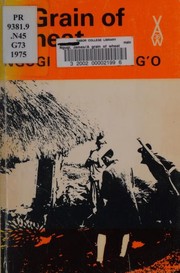 Ngũgĩ wa Thiong'o · 1967A Grain of WheatLvl 6Slow burn
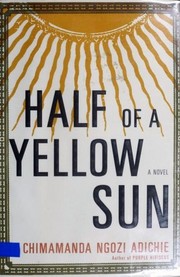 Chimamanda Ngozi Adichie · 2006Half of a Yellow SunLvl 4Fast paced