
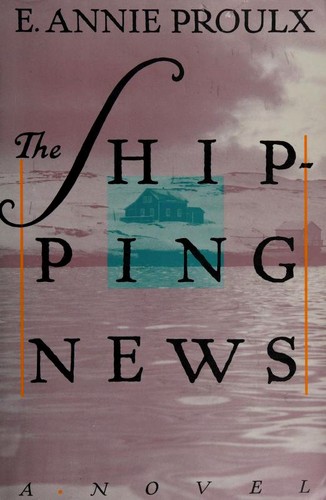
The Shipping News
E. Annie Proulx · b. 1935 · United States
Why it matters
A hapless journalist retreats with his daughters to his ancestral Newfoundland outport, rebuilding a life amid fog, shipwreck lore, and eccentric relatives. Proulx's National Book Award and Pulitzer winner turns clipped, elliptical prose into its own kind of weather.
At a glance
Clipped, fragmentary sentences and Newfoundland dialect take some acclimation.
Deep dive
Why every chapter opens with a diagram of a knot, and what it takes for a man named after a coil of unused rope to finally be put to work.
Written for readers who have finished the book. No plot recap, and nothing here is safe to read first.
Themes & symbolism
A quoyle is a coiled length of rope stowed flat on deck, ready but idle, and Proulx builds the whole novel out of that pun: her Quoyle arrives in Newfoundland as inert potential, a man his own father called a failure and his wife Petal treated as furniture, until the outport slowly puts him to use. Each chapter opens with an epigraph lifted from the real nineteenth-century Ashley Book of Knots, and the definitions — a hitch that binds under strain, a bend that slips, a knot tied wrong that becomes impossible to undo — track Quoyle's psychology so precisely that the manual functions as a second, silent narrator, diagnosing him before the prose does.
The Quoyle ancestral house on the point is the darker half of the inheritance: built by wreckers who lured ships onto the rocks with false lights to loot the cargo and murder survivors, it sits cabled to the rock by the same literal knots the epigraphs keep defining, a family's violence held down rather than resolved. Aunt Agnis's long-buried disclosure — that Quoyle's father sexually abused her when they were children — turns the house from picturesque relic into the novel's real crime scene, and Quoyle's task, never stated outright, is to inhabit that house without inheriting what it was built to do. Even the daughters, Bunny and Sunshine, carry pieces of the same inheritance forward in miniature — Bunny's nightmares about a green house and a monstrous dog read as a child's-eye echo of violence she has no vocabulary for yet, proof the damage doesn't stay safely contained to one generation.
The Gammy Bird's Theory of News
Editor Jack Buggit wants a car wreck on the front page every week whether or not one occurred, and colleague Tert Card fabricates a sexual-abuse column from thin air, treating readers as an appetite to be fed rather than a public to be informed. Quoyle's own beat, the shipping news, starts as the paper's dullest assignment and becomes the site of his recovery precisely because it rewards the one skill his marriage never let him practice: reporting what is actually true, plainly, and standing behind it.
Newfoundland's Weather as Narrative Voice
Proulx's clipped, subjectless sentences — fragments that mimic the outport dialect and the fog rolling off the water — do for the prose what the knot epigraphs do for the chapters: withhold connective tissue until the reader learns to supply it, the same adjustment Quoyle himself has to make to a place that communicates in silences, shrugs, and understatement rather than his old newsroom's noise.
The last seal: what actually happens, and why it lands the way it does.
The ending, explained
A storm finally tears the ancestral house from its cables and drags it into the sea, taking with it the physical seat of the family's violence — the wrecking, the abuse — in one clean, uninsurable loss that nobody in Killick-Claw treats as tragedy. Quoyle, freed of the structure rather than diminished by it, settles into a plainer house in town and into a real partnership with Wavey Prowse, a widow as guarded and quietly damaged as he is. Proulx's closing lines insist that love doesn't always announce itself as a single decisive event; sometimes, as with Quoyle, it simply accumulates, the way a coil of rope becomes useful the moment someone finally picks it up.
Where to go next
 Amy Tan · 1989The Joy Luck ClubLvl 4Medium pace
 John Galsworthy · 1922The Forsyte SagaLvl 5Medium pace
 Carol Shields · 1993The Stone DiariesLvl 5Medium pace
 John Casey · 1989SpartinaLvl 4Medium pace
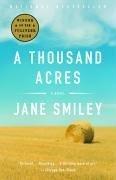 Jane Smiley · 1991A Thousand AcresLvl 5Medium pace
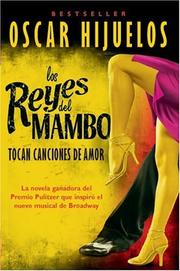 Oscar Hijuelos · 1989The Mambo Kings Play Songs of LoveLvl 5Medium pace