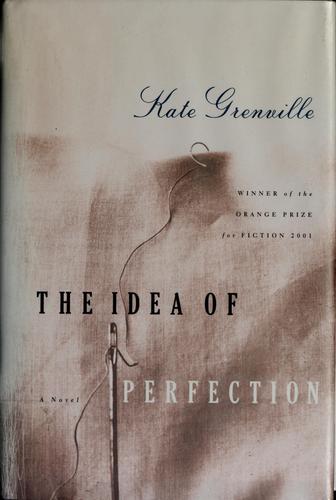
The Idea of Perfection
Kate Grenville · b. 1950 · Australia
Why it matters
A shy engineer sent to demolish a heritage timber bridge falls for the outspoken museum curator campaigning to save it, in a fictional rural New South Wales town. A gentle, character-driven romance about awkward, unglamorous people and small-town heritage politics.
At a glance
Plain, warm prose and a linear plot make for an easy, companionable read.
Deep dive
What a bridge engineer sent to condemn a crooked wooden crossing and a museum curator sent to catalogue the town's patched, mended relics discover about their own bodies in a place that cannot agree on what is worth keeping.
Written for readers who have finished the book. No plot recap, and nothing here is safe to read first.
Themes & symbolism
Douglas Cheeseman arrives in Karakarook to assess the town's old wooden bridge for demolition, a nineteenth-century crossing the local heritage council wants preserved as a tourist relic and the shire wants replaced with a straight concrete span. Grenville uses the argument as more than local color: Douglas himself is missing a finger and self-conscious about his knock knees, and Harley Savage, sent by the same museum board to help assemble a pioneer collection, is plain, twice-divorced, and has spent years believing her body disqualifies her from being loved. The bridge's crookedness becomes the real subject before either of them notices it, something built slightly wrong that has held for a hundred years anyway, outlasting the tidier replacements failing elsewhere in the district.
Harley's museum work runs on the same logic from the other direction. She wants to display the town's patched quilts and mended, make-do textiles rather than curate a scrubbed pioneer myth, insisting the visible seams are the actual history rather than an embarrassment to be pressed out of it. Grenville keeps circling back to that vocabulary, patch, mend, seam, wherever the human plot needs it too.
The Felicity Porcelline subplot supplies the theme's harder edge. Felicity, the bank manager's wife, polices her own aging face and body with a private, joyless discipline, and the same town that admires her for it turns its suspicion, once sheep start turning up dead on the town's edge, on Alfred Chang, the local butcher and one of Karakarook's only Chinese-Australian residents. Grenville draws a direct line between the want of an unblemished town, an unblemished face, and the need for a conveniently identifiable culprit: perfection, chased hard enough, always needs somewhere to put what it cannot tolerate in itself.
Alfred Chang and the Wild Dog
The scare over a dog killing sheep on the town's outskirts gives Karakarook a mystery it would rather solve with prejudice than evidence, and Chang, courteous and entirely uninvolved, becomes the obvious suspect simply by being visibly different in a town that has never had to examine its own reflexes. Felicity, drawn to him against her own instincts, is the one character positioned to see through the town's logic, precisely because her private war with her own imperfections has already taught her how flimsy a community's idea of who belongs really is.
The last seal: what actually happens, and why it lands the way it does.
The ending, explained
A flood on the river settles the bridge question the council could never resolve on its own. Douglas, out checking the crossing as the water rises, ends up in the current trying to save Harley's dog rather than filing a report, and the old bridge, tested by the exact force it was condemned for supposedly being unable to withstand, holds, flexing with the current while the newer, straighter structures nearby take the worse damage. It is the engineering argument the whole novel has been making sideways: rigidity fails under pressure and give survives it. Douglas and Harley, each certain until now that their own flaws made them unfit for anyone, end the book together, their scars catalogued rather than hidden, in a town that keeps its crooked bridge standing.