
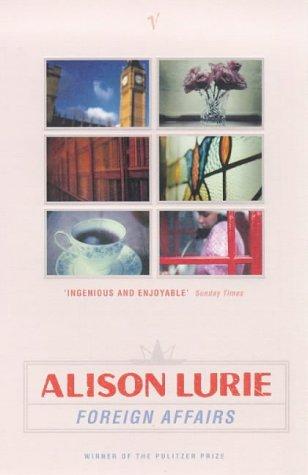
Foreign Affairs
Alison Lurie · 1926–2020 · USA
Why it matters
A prim, unglamorous Cornell professor and a brash Oklahoma engineer, thrown together in London on separate research trips, both stumble into romances neither expected. Lurie's Pulitzer winner is comedy of manners at its most socially exacting, vanity and loneliness observed with equal precision.
At a glance
Straightforward, witty prose and conventional structure make for an easy, pleasurable read.
Deep dive
Two American academics abroad, two versions of English romance gone sideways — and a dog only one of them can see.
Written for readers who have finished the book. No plot recap, and nothing here is safe to read first.
Themes & symbolism
Vinnie Miner's self-pity is literalized as Fido, an imaginary, needy, dirty-white dog that grows or shrinks with her mood and that she must keep refusing to let in. Her surprise affair with Chuck Mumpson — loud, unsophisticated, exactly the kind of American tourist her carefully cultivated Anglophilia is designed to look down on — undoes her sense of herself as someone whose refined taste in England has earned her a kind of honorary Englishness. Chuck's own project, tracking down his English ancestral village, mirrors Vinnie's: both are constructing a fiction of belonging to a country that owes neither of them anything, and Lurie treats that mutual self-invention with more tenderness than the novel's satirical opening chapters lead you to expect.
Fred Turner's parallel plot with the glamorous actress Rosemary Radley is built to look like the real romance and the real England — beautiful, well-connected, effortlessly charming — and Lurie spends the whole book quietly inverting that hierarchy. Rosemary's charm turns out to mask alcoholism and a instability that surfaces, devastatingly, when Fred discovers she has an entire hidden persona as a working-class cleaning woman she becomes when drunk enough to lose her grip on the performance of gentility. Vinnie's unglamorous, class-crossing affair, which she spends the whole book being faintly embarrassed by, is the one that turns out to be sincere.
Academic Anglophilia as Satire
Vinnie is a scholar of children's literature and a career Anglophile whose research trip to London is itself an act of cultural cosplay — she has modeled her manners, her taste, even her self-image on the comedy-of-manners novelists she studies. Lurie, herself a career academic, is merciless and precise about this type: the American scholar who mistakes fluency in a country's literature for citizenship in its actual social world, and who discovers, too late to be comfortable about it, how much of that fluency was always performance rather than belonging.
A Title With Two Meanings
The title works on both registers the novel actually runs on: diplomatic foreign affairs, the polite fiction of nations getting along, and the more private, more embarrassing kind that Vinnie and Fred are each conducting. Lurie keeps the two meanings in constant, quiet friction — an academic conference on Anglo-American relations sits in the same book as two love affairs that are themselves miniature negotiations between two countries' worth of manners, expectations, and self-image, and the comedy comes from watching characters mistake the diplomatic register for the personal one and vice versa.
The last seal: what actually happens, and why it lands the way it does.
The ending, explained
Chuck dies suddenly of a heart attack back in Oklahoma, reported to Vinnie secondhand through his daughter — she gets no final scene, no chance to decide what the affair meant while he was alive to hear it. Grief teaches her retroactively that it was more than the class-slumming she'd told herself it was. Returning alone to her London flat, she finally lets the imaginary Fido in rather than driving him off, a small capitulation to her own neediness after a book spent denying it — though Lurie's last beat undercuts even that growth, showing Vinnie sliding almost immediately back into the same self-protective self-pity, since real change, the novel insists, is slower and rarer than one loss can produce.
Where to go next
 Jane Austen · 1813Pride and PrejudiceLvl 3Medium pace
 Andrew Sean Greer · 2017LessLvl 3Fast paced
 Kate Grenville · 1999The Idea of PerfectionLvl 3Medium pace
 Ann Patchett · 2001Bel CantoLvl 3Medium pace
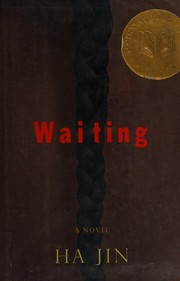 Ha Jin · 1999WaitingLvl 4Medium pace
 Oscar Hijuelos · 1989The Mambo Kings Play Songs of LoveLvl 5Medium pace