
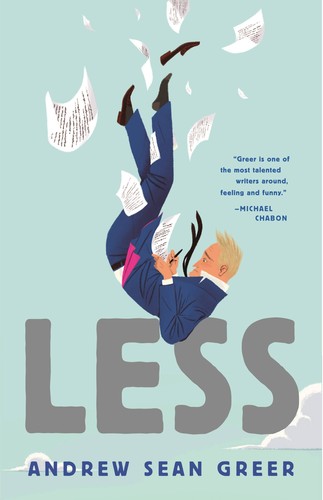
Less
Andrew Sean Greer · b. 1970 · USA
Why it matters
A minor novelist about to turn fifty accepts a string of embarrassing literary invitations across the globe rather than attend his ex-boyfriend's wedding, and stumbles into something like grace along the way. Greer's Pulitzer winner is comic fiction that earns its tenderness honestly.
At a glance
Light, wry, episodic comic prose makes for a fast, accessible read.
Deep dive
Why a novel built almost entirely out of pratfalls and mistaken invitations turns out to be the tenderest thing Greer could have written about failing upward in public.
Written for readers who have finished the book. No plot recap, and nothing here is safe to read first.
Themes & symbolism
Arthur Less runs from Freddy Pelu's wedding into a circuit of literary humiliations — a German seminar he can't speak the language for, an award ceremony that turns out to honor someone else, a desert retreat where he ends up hospitalized — that read, event by event, as slapstick, but accumulate into something closer to a spiritual ordeal. Greer keeps insisting, through the narration's own commentary, that Less is "the first homosexual ever to grow old," a joke that carries real freight: gay literary fiction had rarely been permitted comedy, let alone comedy this generous, and Less's fear of being a fool is inseparable from a culture that had only recently stopped treating his life as tragic material by default.
The title's pun does real structural work — Less is a minor novelist (his own manuscript, also called Swift, is a comedy about a middle-aged gay man wandering a city, dismissed by his own ex as "a bad novel" before its very shape turns out to redeem it) convinced his whole life amounts to a diminishment: of Robert, the great poet he spent years attached to; of Freddy, whom he's about to lose to someone more "serious." The blue suit he wears through every fiasco, patched and re-tailored across continents, becomes a stand-in for the self he keeps presenting for judgment and keeps, against his own expectations, surviving intact.
Comedy as an Argument
Greer's real formal gamble is treating farce as adequate to genuine pain — Less's grief over Robert's decline, his shame at turning fifty alone, his terror of being unlovable are delivered inside pratfalls rather than despite them, and the novel's Pulitzer win reads, in hindsight, as an institutional concession that comic fiction can carry as much weight as anything solemn. It's a rebuttal, gently made, to the assumption embedded in the phrase "universal appeal" — the very phrase an editor uses, within the novel, to reject Swift for centering a gay man's midlife crisis.
Who Has Been Telling This Story
Late in the novel, the narration's warm, faintly omniscient voice resolves into a specific person: Freddy Pelu, piecing Less's disastrous circuit together after the fact, from postcards, phone calls, and his own imagination of scenes he never witnessed. The reveal recasts everything that preceded it — the narrator's affectionate exasperation with Less's cowardice was never distance, it was love watching from just offstage, which is why the book reads, once you know who's holding the pen, less like satire than like a very long, very patient act of forgiveness.
The last seal: what actually happens, and why it lands the way it does.
The ending, explained
Less finally makes it home to find that the wedding he fled never needed fleeing — Freddy steps back from marrying someone else, and the two men land, almost wordlessly, back in each other's company. There's no grand declaration; Greer stages the reunion with the same understatement Less has spent the whole book failing to manage in more dramatic settings. The narrator reveal reframes the reunion further still: Freddy has been narrating his own love story as though it belonged to someone else, watching Less from a comic distance that finally collapses, on the last page, into first person.
Where to go next
 Alison Lurie · 1984Foreign AffairsLvl 3Medium pace
 Kate Grenville · 1999The Idea of PerfectionLvl 3Medium pace
 Ann Patchett · 2001Bel CantoLvl 3Medium pace
 Ha Jin · 1999WaitingLvl 4Medium pace
 Oscar Hijuelos · 1989The Mambo Kings Play Songs of LoveLvl 5Medium pace
 Madeline Miller · 2011The Song of AchillesLvl 3Medium pace