

Bel Canto
Ann Patchett · b. 1963 · United States
Why it matters
Terrorists take a birthday party hostage for months in an unnamed South American mansion, and opera (a world-famous soprano is among the captives) becomes the one language captors and captives can share. Inspired by a real Lima hostage crisis, warm where its premise could have turned merely grim.
At a glance
A single contained setting and warm, accessible prose keep a tense premise easy to read.
Deep dive
Why a birthday party hostage siege in an unnamed South American vice-presidential mansion turns, over the weeks that follow, into the closest thing several of the hostages and their captors ever get to falling in love.
Written for readers who have finished the book. No plot recap, and nothing here is safe to read first.
Themes & symbolism
Patchett stages the novel around a lightly fictionalized version of the 1996-97 Japanese embassy hostage crisis in Lima, moving the setting to an unnamed South American capital and replacing the ambassador's residence with the vice president's mansion, where a birthday party thrown for a Japanese industrialist, Mr. Hosokawa, in honor of his one indulgence, hearing the opera soprano Roxane Coss perform live, is overrun by a ragtag guerrilla group aiming for a president who never showed up. Patchett's real interest isn't the politics of the siege, which stays deliberately vague and unnamed throughout, it's what happens to hostages and captors alike once the standoff stretches from hours into months: language barriers dissolve through Gen, Hosokawa's translator, who ends up interpreting half the mansion's private lives along with its diplomacy, and mutual hostility gives way to opera lessons, chess games, and, in Gen's case, a genuine courtship with a young guerrilla, Carmen.
Roxane Coss's singing functions across the novel as the one language every hostage and captor shares without translation, and Patchett uses it to argue that beauty doesn't transcend the situation's danger so much as it temporarily suspends everyone's stake in resolving it: guerrillas who arrived willing to fight for their cause spend their evenings listening to arias instead, hostages stop counting days, and the mansion becomes a makeshift society organized around music rather than politics, one Patchett is careful never to let anyone forget is still surrounded by armed soldiers waiting outside.
Lima, 1996, Unnamed
Patchett based the siege directly on the real four-month occupation of the Japanese ambassador's residence in Lima by Túpac Amaru guerrillas, which ended when Peruvian commandos stormed the building through tunnels dug over months. She strips out every specific political marker from her version, no named country, no named president, no named guerrilla organization, converting a documented act of political violence into something closer to fable, which lets her focus entirely on the improvised intimacy inside the walls rather than on the geopolitics that put everyone there.
Gen's Impossible Job
Gen Watanabe, Hosokawa's translator, ends up as the mansion's only real point of contact across every language barrier in the building, French, Russian, Spanish, Japanese, Quechua, fielding not just diplomatic exchanges but marriage proposals, confessions, and jokes he has to render faithfully for people who otherwise have no way to reach each other at all. Patchett makes Gen's exhausting, constant labor of translation a quiet argument about what actually holds the makeshift household together, not shared values or a shared cause, but one overworked young man's willingness to keep carrying everyone else's meaning across the gap.
The last seal: what actually happens, and why it lands the way it does.
The ending, explained
When government forces finally storm the mansion after months of stalemate, the assault is fast, lethal, and nearly indiscriminate: most of the guerrillas are killed in the first minutes, including Carmen, and Mr. Hosokawa, the industrialist whose birthday brought Roxane Coss to the party in the first place, is shot trying to shield her from the crossfire, a final act of devotion to the one person the siege let him actually know rather than simply admire from an audience seat. Patchett refuses the rescue any triumph: the operation ends the makeshift household the novel spent months building, and the surviving hostages walk out into a world that has no idea what they lived through together. A short epilogue jumps forward to find Gen and Roxane married and settled in Italy, the one relationship the siege produced that outlasts it, though Patchett lets that survival read as much like an act of mourning everyone else as like a happy ending.
Where to go next
 Andrew Sean Greer · 2017LessLvl 3Fast paced
 Suzanne Berne · 1997A Crime in the NeighborhoodLvl 4Medium pace
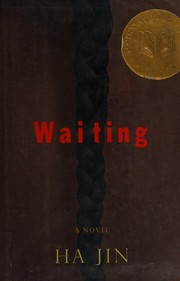 Ha Jin · 1999WaitingLvl 4Medium pace
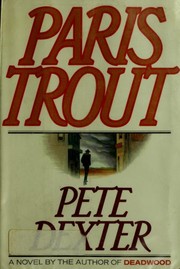 Pete Dexter · 1988Paris TroutLvl 4Fast paced
 Oscar Hijuelos · 1989The Mambo Kings Play Songs of LoveLvl 5Medium pace
 Alison Lurie · 1984Foreign AffairsLvl 3Medium pace