
The House on the Hill
Cesare Pavese · 1908–1950 · Italy
Originally La casa in collina (Italian)
Why it matters
A teacher hiding in the hills above Turin during the Nazi occupation confronts his own passivity as friends join the partisan resistance. Pavese's quiet, guilt-ridden novel of moral failure under fascism.
At a glance
Terse, brooding introspection paced by long silences rather than incident.
Deep dive
What it costs a man to survive a war by refusing to take either side, and why a road full of dead strangers finally breaks through the detachment that kept him alive.
Written for readers who have finished the book. No plot recap, and nothing here is safe to read first.
Themes & symbolism
Corrado retreats to the hills above Turin in 1943 not to fight but to watch, boarding with the spinster Elvira and her mother while Allied bombers level the city below him and the September armistice splits Italy into a civil war between Fascist militia and the partisans hiding in the same hills he sleeps in. Pavese gives him every excuse a coward could ask for, a scientist's temperament, a teacher's habit of observation, a genuine fear of guns, and lets Corrado use all of them, narrating his own paralysis with a clarity that never once tips into self-forgiveness.
Cate, the lover he abandoned years earlier in Turin, resurfaces running messages for the Resistance and raising a boy named Dino who might be Corrado's son; he never asks outright, and she never tells him, and that unresolved paternity becomes the shape of everything else he refuses to claim, a country, a cause, a child. His old friends among the partisans, Fonso and Giorgio among them, are captured and shot one by one while Corrado keeps moving south toward his own village, and the gap between his survival and their deaths is the debt the whole novel is quietly totting up.
Pavese surrounds Corrado's paralysis with a countryside rendered in loving, exact detail, the grape harvest ripening in the valley below, the particular slant of autumn light on the hillside vineyards, Corrado cataloguing vine rows and chestnut woods with the same trained attention he brings to the people around him. The prose's devotion to natural cycle, ripening, harvest, the turn of season, gives Corrado a vocabulary in which to keep speaking without ever committing to anything human, and Pavese lets the reader notice, well before Corrado does, that a naturalist's careful noticing can double as a hiding place.
Every War Is a Civil War
Midway through, Corrado floats the line that made the book famous outside Italy, that every war is at bottom a civil war, neighbor against neighbor rather than nation against nation, a claim 1943 Italy was proving literally as Fascists and partisans from the same villages killed each other in the hills. Pavese wrote this while carrying his own unresolved guilt over the Resistance: he spent the war years largely outside the fighting and joined the Communist Party only after Liberation, and Corrado's paralysis reads less like invented psychology than a writer interrogating his own choices at one remove. Pavese killed himself the year after the novel's publication, and the book's refusal to let its narrator off easy has always been read against that fact.
Elvira's Claim That Corrado Never Answers
Elvira, the spinster landlady's daughter who houses Corrado through most of the novel, nurses a plain, wordless devotion to him that he simply lets go unanswered. Pavese sets her quietly beside Cate and Dino as a third instance of the same refusal, a woman, a possible son, a household, none of them claimed, so that Corrado's wartime paralysis reads as continuous with a much older habit of withholding himself from anyone who might hold him to something.
The last seal: what actually happens, and why it lands the way it does.
The ending, explained
Walking home through the Langhe hills after Liberation, Corrado passes a row of dead young militiamen left by the road, boys barely older than his students, and for the first time looks at war dead directly instead of hearing about them secondhand. The sight does not convert him into a partisan retroactively; it simply strips away the excuses, letting him recognize that his survival was bought by refusing to choose a side while men he knew chose and paid for it. Pavese ends on Corrado alone with that knowledge rather than any absolution, home in a village that has also lost its own dead, the war's civil character confirmed one last time in bodies that used to be neighbors.
Where to go next
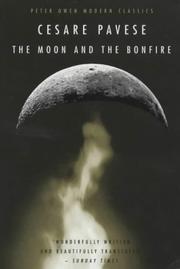 Cesare Pavese · 1950The Moon and the BonfiresLvl 6Slow burn
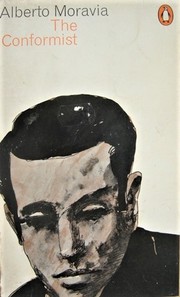 Alberto Moravia · 1951The ConformistLvl 5Medium pace
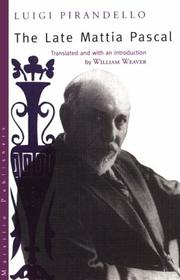 Luigi Pirandello · 1904The Late Mattia PascalLvl 5Medium pace
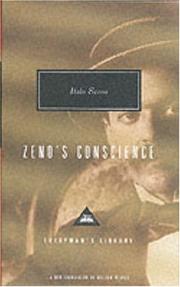 Italo Svevo · 1923Zeno's ConscienceLvl 6Medium pace
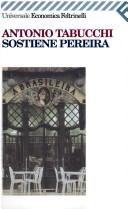 Antonio Tabucchi · 1994Pereira MaintainsLvl 4Medium pace
 Gabriele D'Annunzio · 1889The Child of PleasureLvl 6Slow burn