
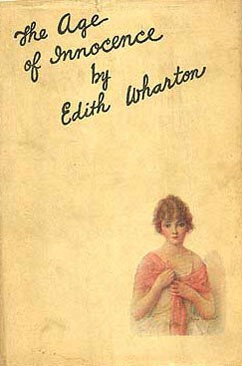
The Age of Innocence
Edith Wharton · 1862–1937 · USA
Why it matters
Newland Archer between the bride convention chose and the woman who would have been a life. The first Pulitzer awarded a woman: renunciation anatomized with irony that spares no one, least of all the reader.
At a glance
Wharton's irony is subtle, but the prose itself moves smoothly and clearly.
Deep dive
Newland Archer spends thirty years mourning a woman he could have chosen. Why Wharton waits until the final page to find out whether freedom, when it finally arrives unforced, is something he still actually wants.
Written for readers who have finished the book. No plot recap, and nothing here is safe to read first.
Themes & symbolism
Old New York functions in the novel as an elaborate language for never saying what you mean, and Wharton's narration stays fluent in it even while dissecting it — describing the "hieroglyphic world" where the real communication happens through withdrawn invitations, timed dinners, and flowers, never through speech. Newland flatters himself as the one man capable of reading past the code, but the novel's real irony is that he's the worst reader in it: the person who understands the tribe's grammar most completely, May Welland, is the one he dismisses as too simple to have any.
May's supposed innocence is the novel's most calculated reveal. She tells Ellen she's pregnant before it's true, moving Ellen out of Newland's reach through an announcement rather than a confrontation — total mastery of a social language Newland thinks he alone commands. Wharton lets this land only in retrospect, decades later, when Newland's son casually confirms May knew everything all along; the woman written off as a naive convention turns out to be the novel's most effective operator, protecting her marriage without ever raising her voice.
Ellen Olenska carries the charge of everything Old New York has agreed not to look at — a countess fleeing a bad marriage, coded through European dress, unconventional rooms, and a directness the drawing rooms can't metabolize. Newland's desire for her is inseparable from his desire for a self outside the tribe's rules, which is why the yellow roses he sends her, and the conventional lilies of the valley he sends May, do more character work than most of his dialogue: the flowers know what he won't say.
Wharton's Divided Loyalty
Writing in 1920 from the vantage of a Gilded Age New York annihilated by the First World War, Wharton — herself an insider-exile of that exact society — gives the novel a double charge: satirical enough to expose the tribe's cruelty and provincialism, elegiac enough to mourn its vanished order all the same. "Innocence" in the title reads finally as willed blindness, a society's collective agreement not to look at what everyone already knows, and Wharton's own prose refuses to fully forgive it even as it can't quite stop loving it.
The Van der Luydens' Endorsement
Early on, the reclusive, supremely powerful van der Luydens throw a dinner to publicly shelter Ellen from gossip after she's been snubbed elsewhere — an intervention that reads as rescue but functions as containment: society absorbs its own scandal by formally blessing it, foreclosing rather than granting Ellen any real escape from the rules she's accused of breaking. It's the same maneuver the tribe later performs on Newland, arranging his life so comprehensively around him that no one ever has to forbid him from leaving. He simply never does.
The last seal: what actually happens, and why it lands the way it does.
The ending, explained
Twenty-six years later, an aging, widowed Newland is in Paris with his adult son Dallas, who — knowing nothing of the old scandal but sensing the shape of it — arranges a visit to Countess Olenska's apartment and all but pushes his father toward the door. Newland walks there, sits on a bench across the street watching a servant light the lamps inside, and then gets up and leaves without going in, sending Dallas up alone with an excuse. He chooses to keep Ellen as an idea rather than risk her as a fact — the past intact, unrevised by whatever the present version of her might actually be. It's renunciation as habit outliving its original cause, and Wharton offers no rescue from it: the door was open the whole time.
Where to go next
 Edith Wharton · 1905The House of MirthLvl 5Medium pace
 Henry James · 1881The Portrait of a LadyLvl 6Slow burn
 Willa Cather · 1918My ÁntoniaLvl 3Medium pace
 Thomas Hardy · 1891Tess of the d'UrbervillesLvl 4Medium pace
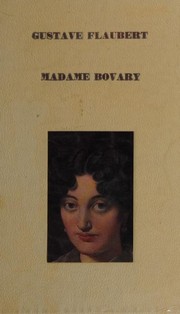 Gustave Flaubert · 1857Madame BovaryLvl 5Slow burn
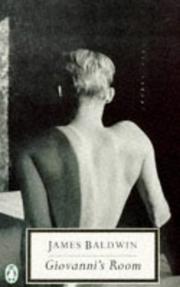 James Baldwin · 1956Giovanni's RoomLvl 5Medium pace